


Pulmonary hypertension in hemolytic disorders: pulmonary vascular disease: the global perspective
- PMID: 20522578
- PMCID: PMC2882115
- DOI: 10.1378/chest.09-3057
Pulmonary hypertension in hemolytic disorders: pulmonary vascular disease: the global perspective
Abstract
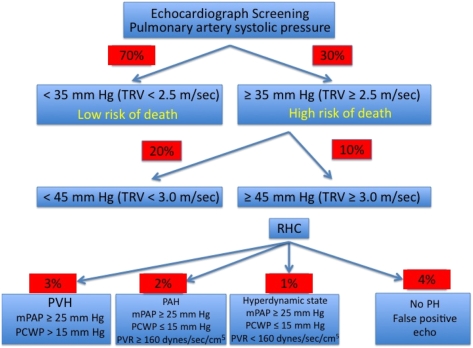
The inherited hemoglobin disorders sickle cell disease and thalassemia are the most common monogenetic disorders worldwide. Pulmonary hypertension is one of the leading causes of morbidity and mortality in adult patients with sickle cell disease and thalassemia, and hemolytic disorders are potentially among the most common causes of pulmonary hypertension. The pathogenesis of pulmonary hypertension in hemolytic disorders is likely multifactorial, including hemolysis, impaired nitric oxide (NO) bioavailability, chronic hypoxemia, chronic thromboembolic disease, chronic liver disease, and asplenia. In contrast to patients with traditional forms of pulmonary arterial hypertension, patients with hemolytic disorders have a mild-to-moderate degree of elevation in mean pulmonary pressures, with mild elevations in pulmonary vascular resistance. The hemodynamic etiology of pulmonary hypertension in these patients is multifactorial and includes pulmonary arterial hypertension, pulmonary venous hypertension, and pulmonary hypertension secondary to a hyperdynamic state. Currently, there are limited data on the effects of any specific treatment modality for pulmonary hypertension in patients with hemolytic disorders. It is likely that maximization of treatment of the primary hemoglobinopathy in all patients and treatment with selective pulmonary vasodilators and antiproliferative agents in patients with pulmonary arterial hypertension would be beneficial. However, there is still a major need for large multinational trials of novel therapies for this patient population.
Figures


References
-
- World Health Organization Monogenic diseases. [Accessed May 2, 2009]. http://www.who.int/genomics/public/geneticdiseases/en/index2.html#SCA.
-
- Cavalli-Sforza LL, Menozzi P, Piazza A. The History and Geography of Human Genes. Princeton, NJ: Princeton University Press; 1994.
-
- Stuart MJ, Nagel RL. Sickle-cell disease. Lancet. 2004;364(9442):1343–1360. - PubMed
MeSH terms
Grants and funding
LinkOut - more resources
Full Text Sources
Other Literature Sources
Medical
