


Creation of a genome-wide metabolic pathway database for Populus trichocarpa using a new approach for reconstruction and curation of metabolic pathways for plants
- PMID: 20522724
- PMCID: PMC2923894
- DOI: 10.1104/pp.110.157396
Creation of a genome-wide metabolic pathway database for Populus trichocarpa using a new approach for reconstruction and curation of metabolic pathways for plants
Abstract
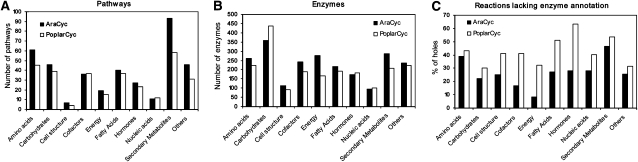
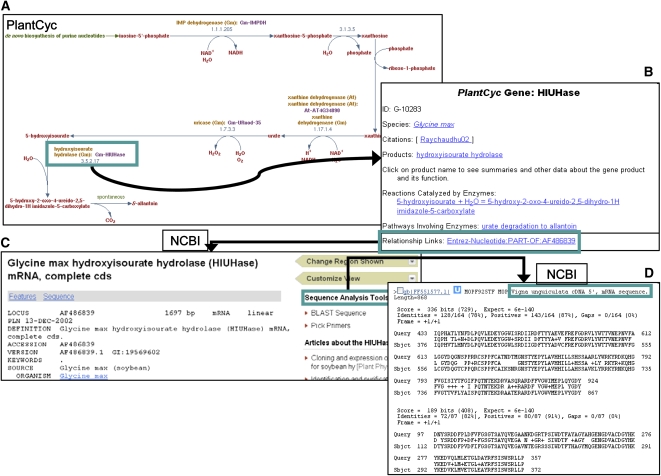
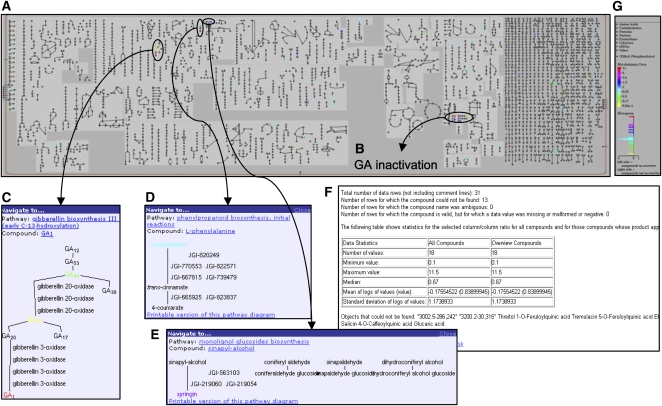
Metabolic networks reconstructed from sequenced genomes or transcriptomes can help visualize and analyze large-scale experimental data, predict metabolic phenotypes, discover enzymes, engineer metabolic pathways, and study metabolic pathway evolution. We developed a general approach for reconstructing metabolic pathway complements of plant genomes. Two new reference databases were created and added to the core of the infrastructure: a comprehensive, all-plant reference pathway database, PlantCyc, and a reference enzyme sequence database, RESD, for annotating metabolic functions of protein sequences. PlantCyc (version 3.0) includes 714 metabolic pathways and 2,619 reactions from over 300 species. RESD (version 1.0) contains 14,187 literature-supported enzyme sequences from across all kingdoms. We used RESD, PlantCyc, and MetaCyc (an all-species reference metabolic pathway database), in conjunction with the pathway prediction software Pathway Tools, to reconstruct a metabolic pathway database, PoplarCyc, from the recently sequenced genome of Populus trichocarpa. PoplarCyc (version 1.0) contains 321 pathways with 1,807 assigned enzymes. Comparing PoplarCyc (version 1.0) with AraCyc (version 6.0, Arabidopsis [Arabidopsis thaliana]) showed comparable numbers of pathways distributed across all domains of metabolism in both databases, except for a higher number of AraCyc pathways in secondary metabolism and a 1.5-fold increase in carbohydrate metabolic enzymes in PoplarCyc. Here, we introduce these new resources and demonstrate the feasibility of using them to identify candidate enzymes for specific pathways and to analyze metabolite profiling data through concrete examples. These resources can be searched by text or BLAST, browsed, and downloaded from our project Web site (http://plantcyc.org).
Figures
References
-
- Akatsuka T, Kodama O, Sekido H, Kono Y, Takeuchi S. (1985) Novel phytoalexins (oryzalexins A, B and C) isolated from rice blast leaves infected with Pyricularia oryzae. Part 1: Isolation, characterization and biological activities of oryzalexins. Agric Biol Chem 49: 1689–1694
-
- Altschul SF, Gish W, Miller W, Myers EW, Lipman DJ. (1990) Basic local alignment search tool. J Mol Biol 215: 403–410 - PubMed
-
- Ashraf N, Ghai D, Barman P, Basu S, Gangisetty N, Mandal MK, Chakraborty N, Datta A, Chakraborty S. (2009) Comparative analyses of genotype dependent expressed sequence tags and stress-responsive transcriptome of chickpea wilt illustrate predicted and unexpected genes and novel regulators of plant immunity. BMC Genomics 10: 415. - PMC - PubMed
-
- Broekaert WF, Delaure SL, De Bolle MF, Cammue BP. (2006) The role of ethylene in host-pathogen interactions. Annu Rev Phytopathol 44: 393–416 - PubMed
-
- Busov V, Meilan R, Pearce DW, Rood SB, Ma C, Tschaplinski TJ, Strauss SH. (2006) Transgenic modification of gai or rgl1 causes dwarfing and alters gibberellins, root growth, and metabolite profiles in Populus. Planta 224: 288–299 - PubMed
Publication types
MeSH terms
Grants and funding
LinkOut - more resources
Full Text Sources
Research Materials
