


Analgesic and anti-inflammatory activity of Argyreia speciosa root
- PMID: 20523865
- PMCID: PMC2875733
- DOI: 10.4103/0253-7613.56066
Analgesic and anti-inflammatory activity of Argyreia speciosa root
Abstract
Objective: To study analgesic and anti-inflammatory activities of a methanolic extract (ME) of Argyreia speciosa (AS) root powder.
Materials and methods: The study was carried out using male albino mice (20-25 gm) and male wistar rats (100-150gm). The ME was prepared using soxhlet extraction process. The effect of ME of A. speciosa was investigated for analgesic activity using acetic acid-induced abdominal constriction, tail immersion method and hot plate method. The anti-inflammatory activity of ME of AS roots was studied using carrageenan-induced rat paw edema.
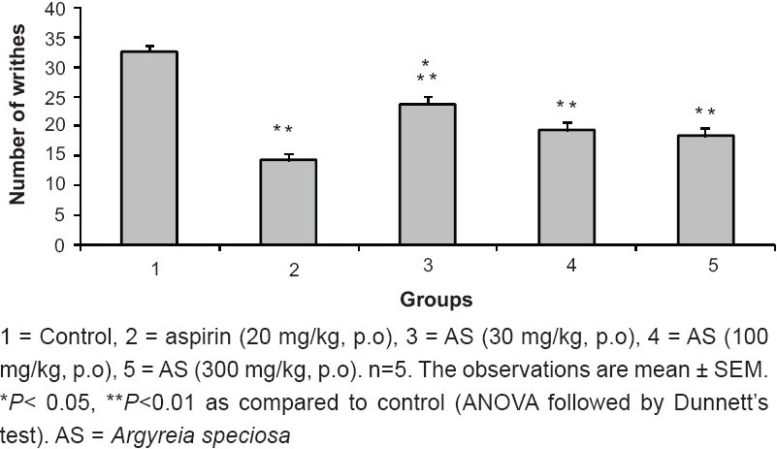
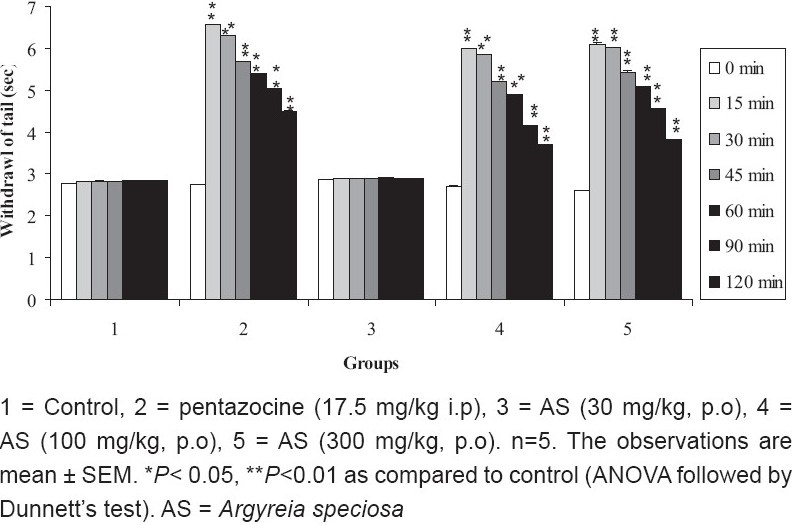
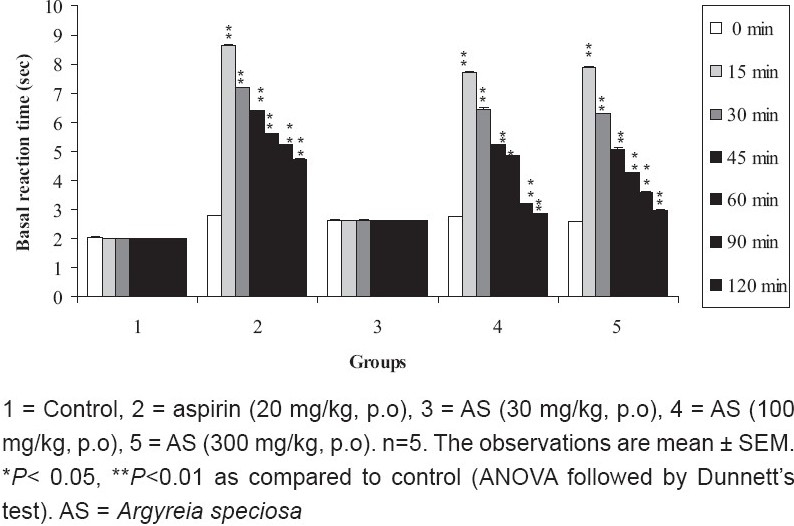
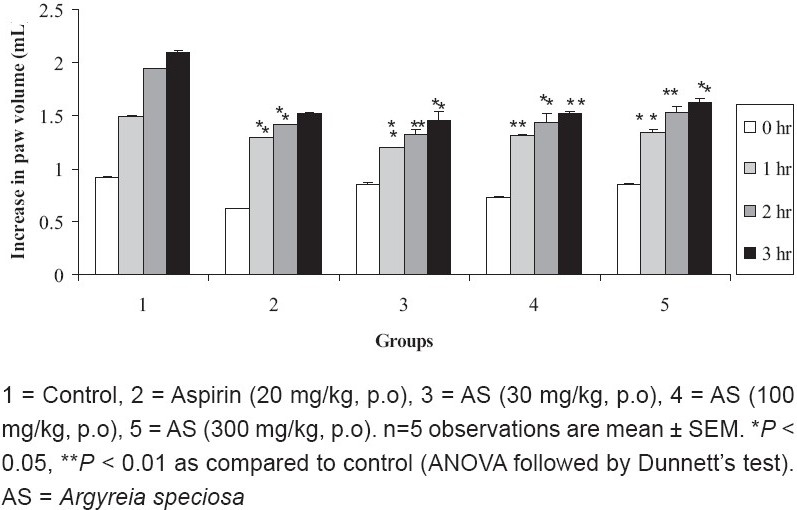
Result: The ME of A. speciosa root was used in pain and inflammation models. The analgesic activity of AS at the dose of (30,100, and 300 mg/kg p.o) showed significant (P<0.01) decrease in acetic acid-induced writhing, whereas ME of A. speciosa at the dose of (100, 300 mg/kg p.o) showed significant (P<0.01) increase in latency to tail flick in tail immersion method and elevated mean basal reaction time in hot plate method. The ME of the A. speciosa at doses (30, 100, and 300mg/kg) showed significant (P < 0.01) inhibition of carrageenan induced hind paw edema in rats.
Conclusion: The ME of A. speciosa showed significant analgesic and anti-inflammatory activity in mice and rat.
Keywords: Argyreia speciosa; analgesic; anti-inflammatory; methanolic extracts.
Figures
References
-
- Kirtikar KR, Basu BD. Indian medicinal plants. Deharadun: Shiva Offset Press; 1994. pp. 1707–9.
-
- Warrier PK, Nambiar VP, Ramankutty C. Indian medicinal plants: A compendium of 500 species. Delhi: Orient Longman; 1994. pp. 191–4.
-
- Sharma PC, Yelne MB, Dennis TJ. In database on medicinal plants used in Ayurveda. Vol. 2. New Delhi: Central Council for Research in Ayurveda and Siddha; 2004. p. 550.
-
- Srivastava A, Shukla YN. Aryl esters and a coumarin from Argyreia speciosa. Indian J Chem. 1998;37:192–4.
-
- Shukla YN, Srivastava A, Sushilkumar A. Coumarin glucoside from Argyreia speciosa roots. Indian Drugs. 2001;38:487–8.
LinkOut - more resources
Full Text Sources
Research Materials
