


Aerosol therapy for the treatment of osteosarcoma lung metastases: targeting the Fas/FasL pathway and rationale for the use of gemcitabine
- PMID: 20528149
- PMCID: PMC3133834
- DOI: 10.1089/jamp.2009.0812
Aerosol therapy for the treatment of osteosarcoma lung metastases: targeting the Fas/FasL pathway and rationale for the use of gemcitabine
Abstract
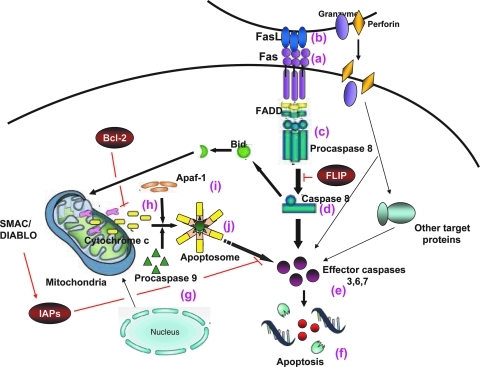
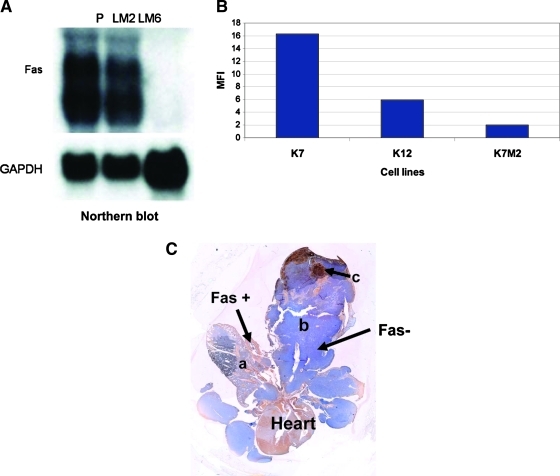
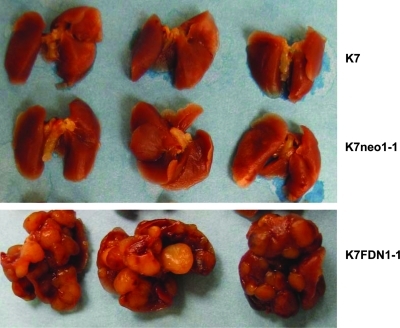
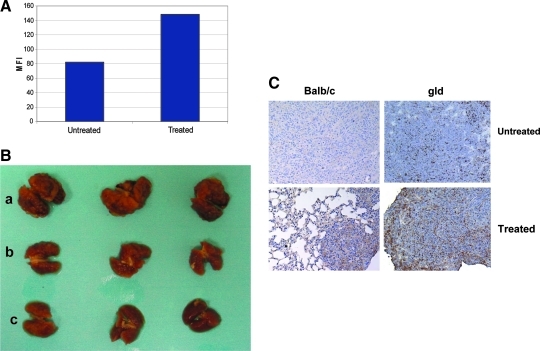
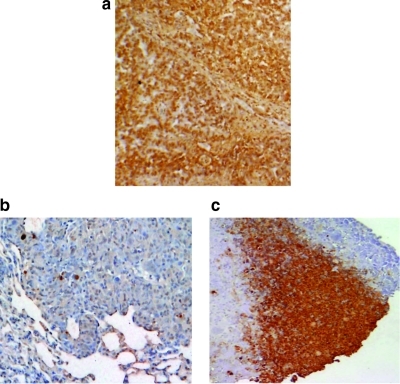
Lung metastases are the main cause of death in patients with osteosarcoma (OS). Salvage chemotherapy has been largely unsuccessful in improving the long-term survival of these patients. Understanding the mechanisms that play a role in the metastatic process may identify new therapeutic strategies. We have demonstrated that the cell surface Fas expression, the Fas/FasL signaling pathway, and the constitutive expression of FasL in the lung microenvironment play a critical role in the metastatic potential of OS cells. Here we review the status of Fas expression in two sets of OS cells, human SAOS and LM7 and murine K7 and K7M2, which differ in their ability to metastasize to the lungs. We demonstrated that Fas expression inversely correlated with metastatic potential. Evaluation of Fas expression in a set of lung metastases from patients demonstrated low or no Fas expression consistent with our hypothesis that Fas+ osteosarcoma cells cannot form metastases. The absence of FasL in the lung allows Fas+ osteosarcoma cells to form metastases indicating that the microenvironment is an important contributor to the metastatic potential of osteosarcoma cells. Disruption of the signal transduction pathway using Fas-associated death domain dominant negative (FDN) also allowed Fas+ cells to form lung metastases. Aerosol Gemcitabine (GCB) upregulated Fas expression and induced tumor regression in wild-type Balb/c mice but not Fas L-deficient mice. In conclusion, Fas constitutes an early defense mechanism that allows Fas+ tumor cells to undergo apoptosis when in contact with constitutive FasL in the lung. Fas- cells or cells with a corrupted Fas pathway evade this defense mechanism and form lung metastases. The aerosol delivery of chemotherapeutic agents that upregulate Fas expression may benefit patients with established pulmonary metastases.
Figures
References
-
- Young JL., Jr Ries LG. Silverberg E. Horm JW. Miller RW. Cancer incidence, survival, and mortality for children younger than age 15 years. Cancer. 1986;58(2 Suppl):598–602. - PubMed
-
- Hudson M. Pediatric osteosarcoma: therapeutic strategies, results, and prognostic factors derived from a 10-year experience. J Clin Oncol. 1990;8:1988–1997. - PubMed
-
- Jaffe N. Osteosarcoma. Pediatr Rev. 1991;12:333–343. - PubMed
-
- Jaffe N. Recent advances in the chemotherapy of metastatic osteogenic sarcoma. 1972. Clin Orthop Relat Res. 1991;270:4–7. - PubMed
-
- Jaffe N. The classic: recent advances in chemotherapy of metastatic osteogenic sarcoma. 1972. Clin Orthop Relat Res. 2005;438:19–21. - PubMed
Publication types
MeSH terms
Substances
Grants and funding
LinkOut - more resources
Full Text Sources
Other Literature Sources
Medical
Research Materials
Miscellaneous
