Mitochondrion-related organelles in eukaryotic protists
- PMID: 20528687
- PMCID: PMC3208401
- DOI: 10.1146/annurev.micro.62.081307.162826
Mitochondrion-related organelles in eukaryotic protists
Abstract
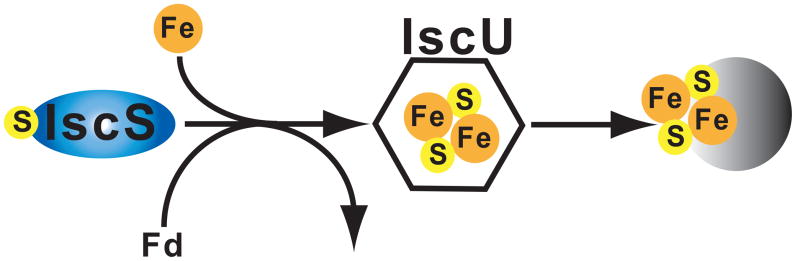
The discovery of mitochondrion-type genes in organisms thought to lack mitochondria led to the demonstration that hydrogenosomes share a common ancestry with mitochondria, as well as the discovery of mitosomes in multiple eukaryotic lineages. No examples of examined eukaryotes lacking a mitochondrion-related organelle exist, implying that the endosymbiont that gave rise to the mitochondrion was present in the first eukaryote. These organelles, known as hydrogenosomes, mitosomes, or mitochondrion-like organelles, are typically reduced, both structurally and biochemically, relative to classical mitochondria. However, despite their diversification and adaptation to different niches, all appear to play a role in Fe-S cluster assembly, as observed for mitochondria. Although evidence supports the use of common protein targeting mechanisms in the biogenesis of these diverse organelles, divergent features are also apparent. This review examines the metabolism and biogenesis of these organelles in divergent unicellular microbes, with a focus on parasitic protists.
Figures

References
-
- Abrahamsen MS, Templeton TJ, Enomoto S, Abrahante JE, Zhu G, et al. Complete genome sequence of the apicomplexan, Cryptosporidium parvum. Science. 2004;304:441–5. - PubMed
-
- Aguilera P, Barry T, Tovar J. Entamoeba histolytica mitosomes: organelles in search of a function. Exp Parasitol. 2008;118:10–6. - PubMed
-
- Ali V, Shigeta Y, Tokumoto U, Takahashi Y, Nozaki T. An intestinal parasitic protist, Entamoeba histolytica, possesses a non-redundant nitrogen fixation-like system for iron-sulfur cluster assembly under anaerobic conditions. J Biol Chem. 2004;279:16863–74. - PubMed
-
- Andersson SG, Zomorodipour A, Andersson JO, Sicheritz-Ponten T, Alsmark UC, et al. The genome sequence of Rickettsia prowazekii and the origin of mitochondria. Nature. 1998;396:133–40. - PubMed
Publication types
MeSH terms
Substances
Grants and funding
LinkOut - more resources
Full Text Sources
Miscellaneous