


HIV prevalence among female sex workers, drug users and men who have sex with men in Brazil: a systematic review and meta-analysis
- PMID: 20529289
- PMCID: PMC2898825
- DOI: 10.1186/1471-2458-10-317
HIV prevalence among female sex workers, drug users and men who have sex with men in Brazil: a systematic review and meta-analysis
Abstract
Background: The Brazilian response towards AIDS epidemic is well known, but the absence of a systematic review of vulnerable populations horizontal line men who have sex with men (MSM), female sex workers (FSW), and drug users (DU) remains a main gap in the available literature. Our goal was to conduct a systematic review and meta-analysis of studies assessing HIV prevalence among MSM, FSW and DU, calculating a combined pooled prevalence and summarizing factors associated the pooled prevalence for each group.
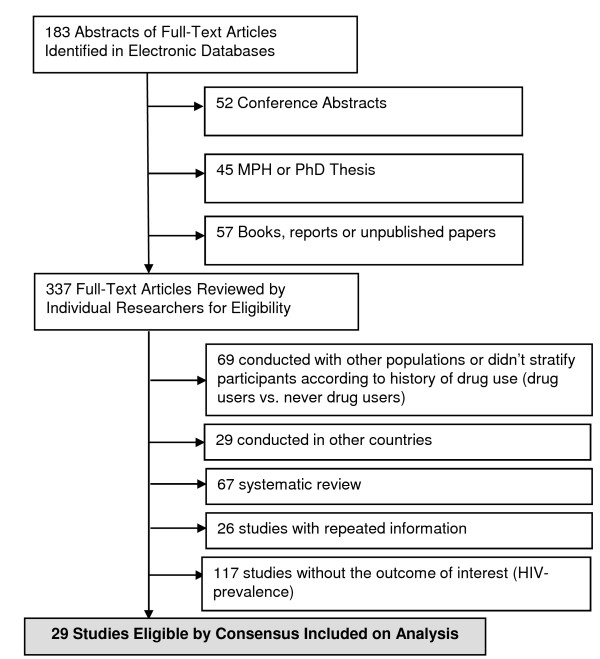
Methods: Nine electronic databases (MEDLINE via PubMed, EMBASE, Cochrane CENTRAL, AIDSLINE, AMED, CINAHL, TOXNET, SciELO, and ISI-Web of Science) were searched for peer-reviewed papers published in English, French, Spanish or Portuguese, from 1999 to 2009. To be included in the review, studies had to measure HIV prevalence and/or incidence as the primary outcome among at least one specific population under analysis.
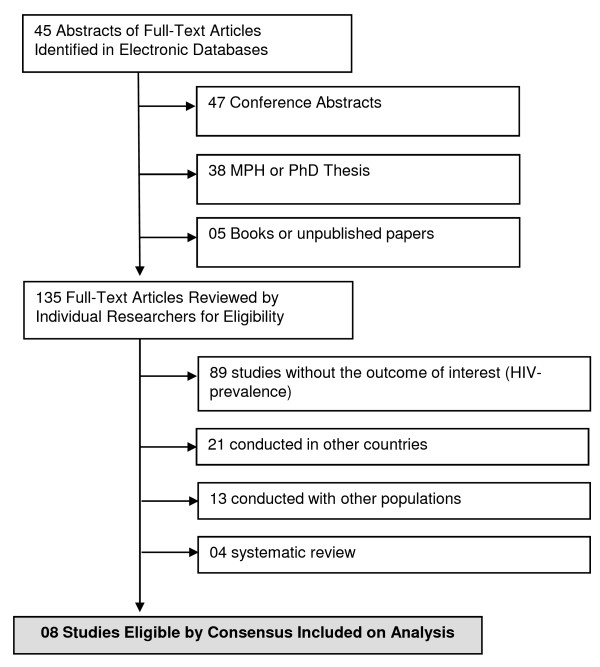
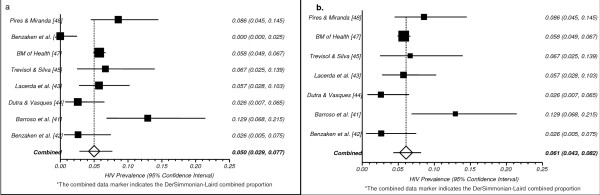
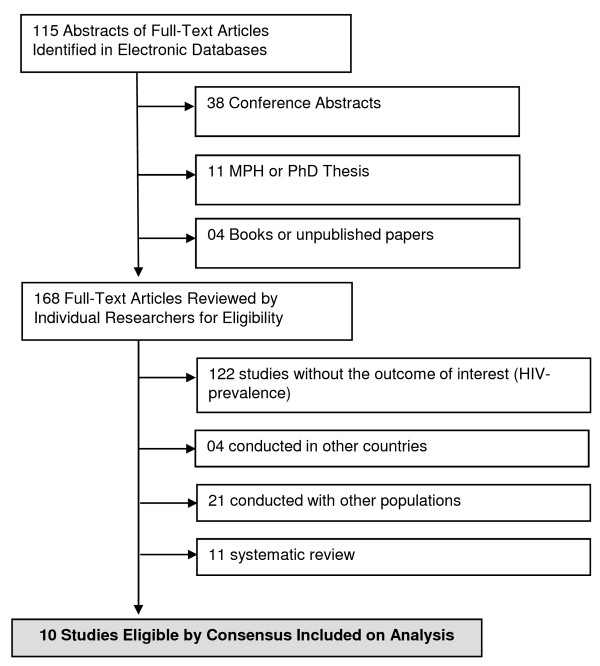
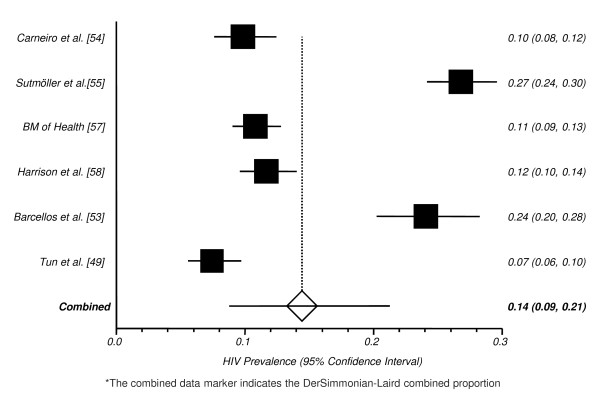
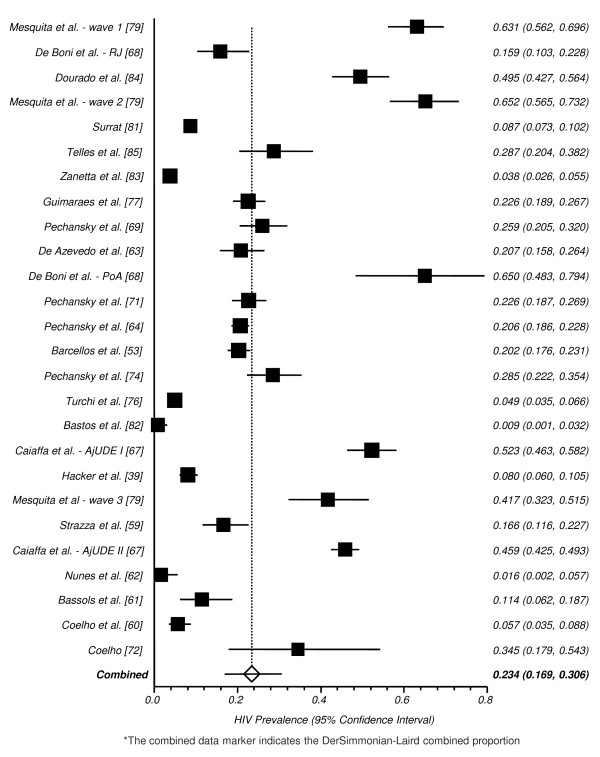
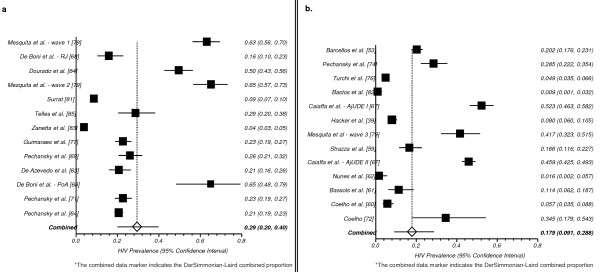
Results: The studies targeting the three populations analyzed mostly young participants aged 30 years or less. Among FSW, eight studies were selected (3,625 participants), consistently identifying higher condom use with sexual clients than with occasional and stable partners. The combined HIV prevalence for FSW was 6.2 (95% CI: 4.4-8.3). Ten studies targeting MSM were identified (6,475 participants). Unprotected anal intercourse was commonly reported on those studies, but with great variability according to the nature of the relationship - stable vs. occasional sex partners--and sexual practice--receptive vs. insertive anal sex. Pooled HIV prevalence for MSM was 13.6 (95% CI: 8.2-20.2). Twenty nine studies targeting DU were identified (13,063 participants). Those studies consistently identified injection drug use and syringe/needle sharing as key predictors of HIV-infection, as well as engagement in sex work and male-to-male sex. The combined HIV prevalence across studies targeting DU was 23.1 (95% CI: 16.7-30.2).
Conclusions: FSW, MSM and DU from Brazil have a much risk of acquiring HIV infection compared to the general population, among which HIV prevalence has been relatively low (~0.6%). Those vulnerable populations should be targeted by focused prevention strategies that provide accurate information, counseling and testing, as well as concrete means to foster behavior change (e.g. access to condoms, drug abuse treatment, and clean syringes in the case of active injecting drug users), tailored to gender and culture-specific needs. Programs that provide these services need to be implemented on public health services throughout the country, in order to decrease the vulnerability of those populations to HIV infection.
Figures
References
-
- World Health Organization/Joint United Nations Programme on HIV/AIDS (WHO/UNAIDS) 2008 Report on the Global AIDS Epidemic. Geneva: WHO and UNAIDS; 2008. p. 9.
-
- World Health Organization/Joint United Nations Programme on HIV/AIDS (WHO/UNAIDS) 2009 Report on the Global AIDS Epidemic. Geneva: WHO and UNAIDS; 2009.
Publication types
MeSH terms
LinkOut - more resources
Full Text Sources
Medical
Miscellaneous
