


Cell therapy, a new standard in management of chronic critical limb ischemia and foot ulcer
- PMID: 20529449
- PMCID: PMC5478382
- DOI: 10.3727/096368910X514170
Cell therapy, a new standard in management of chronic critical limb ischemia and foot ulcer
Abstract
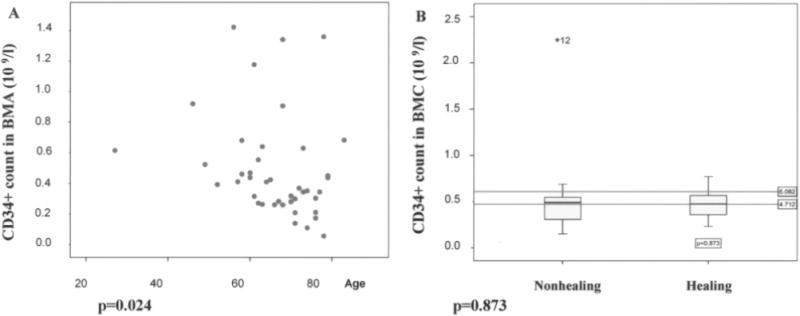
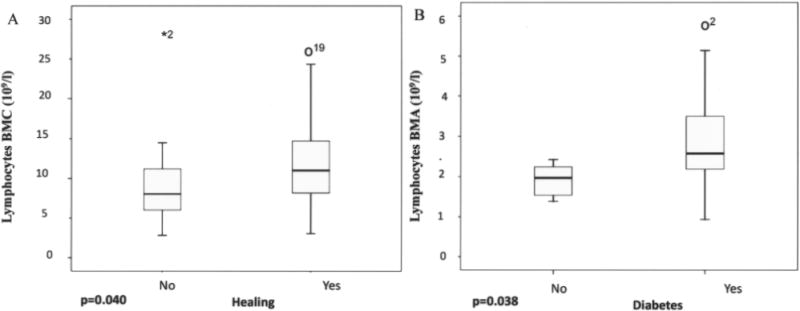
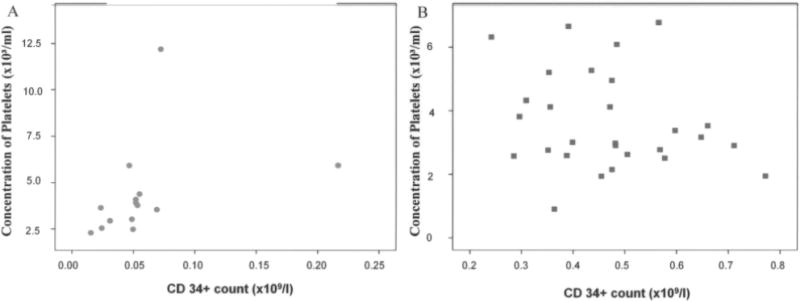
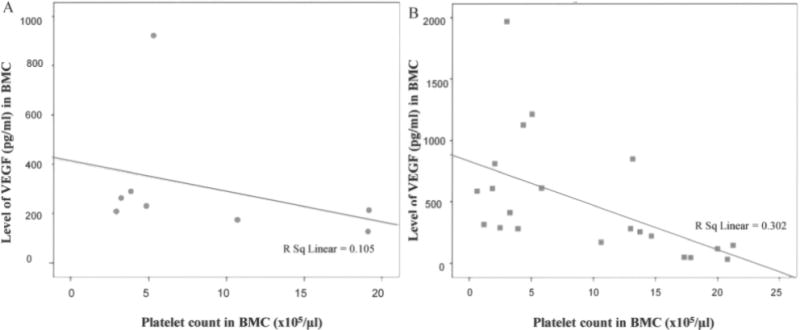
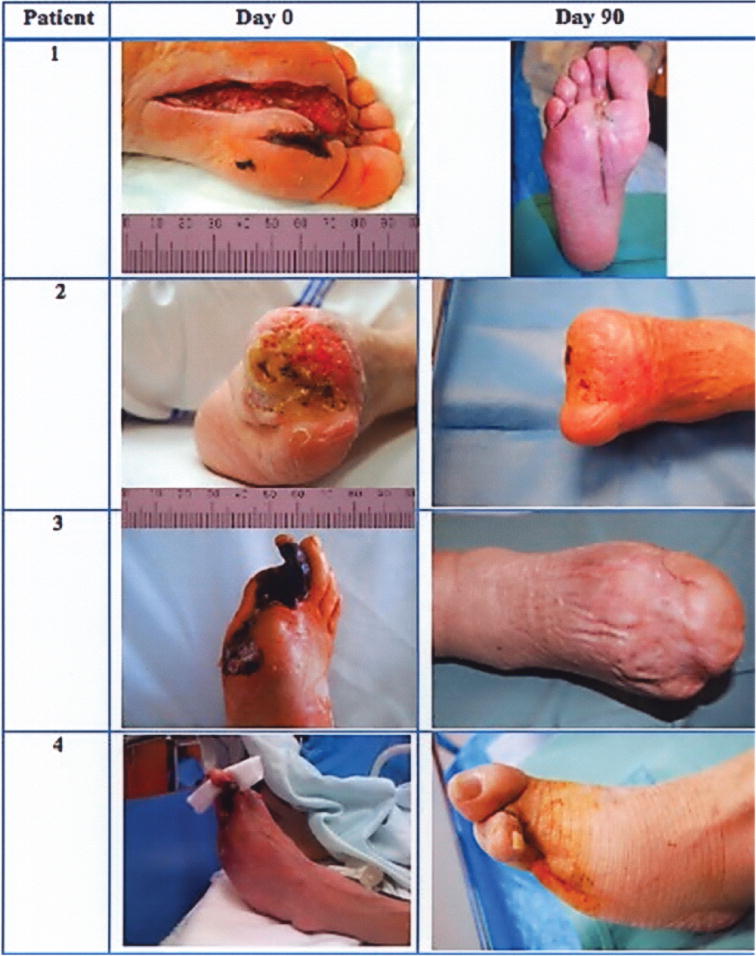
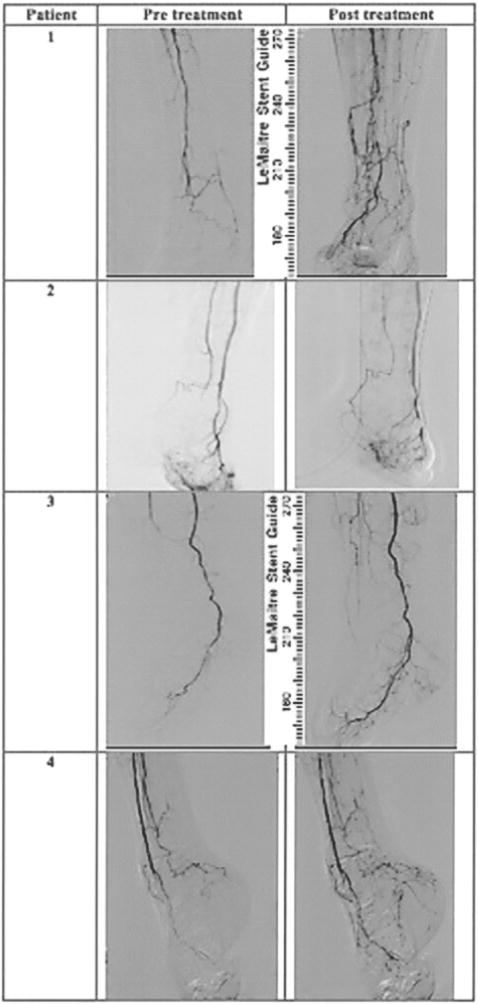
Fifty percent of diabetics (7% of general population) suffer from peripheral arterial occlusive disease, which may lead to amputation due to critical limb ischemia (CLI). The aim of our study was to prevent major limb amputation (MLA) in this group of patients using a local application of autologous bone marrow stem cells (ABMSC) concentrate. A total of 96 patients with CLI and foot ulcer (FU) were randomized into groups I and II. Patients in group I (n = 42, 36 males, 6 females, 66.2 ± 10.6 years) underwent local treatment with ABMSC while those in group II (n = 54, control, 42 males, 12 females, 64.1 ± 8.6 years) received standard medical care. The frequency of major limb amputation in groups I and II was 21% and 44% within the 120 days of follow up, respectively (p < 0.05). Only in salvaged limbs of group I both toe pressure and toe brachial index increased (from 22.66 ± 5.32 to 25.63 ± 4.75 mmHg and from 0.14 ± 0.03 to 0.17 ± 0.03, respectively, mean ± SEM). The CD34(+) cell counts in bone marrow concentrate (BMC) decreased (correlation, p = 0.024) with age, even though there was no correlation between age and healing. An unexpected finding was made of relative, bone marrow lymphopenia in the initial bone marrow concentrates in patients who failed ABMSC therapy (21% of MLA). This difference was statistically significant (p < 0.040). We conclude ABMSC therapy results in 79% limb salvage in patients suffering from CLI and FU. In the remaining 21% lymphopenia and thrombocytopenia were identified as potential causative factors, suggesting that at least a partial correction with platelet supplementation may be beneficial.
Figures
References
-
- Amann B, Luedemann C, Ratei R, Schmidt-Lucke JA. Autologous bone marrow cell transplantation increases leg perfusion and reduces amputations in patients with advanced critical limb ischemia due to peripheral artery disease. Cell Transplant. 2009;18(3):371–380. - PubMed
-
- Asahara T, Kawamoto A. Endothelial progenitor cells for postnatal vasculogenesis. Am J Physiol Cell Physiol. 2004;287(3):C572–579. - PubMed
-
- Asahara T, Masuda H, Takahashi T, Kalka C, Past-ore C, Silver M, Kearne M, Magner M, Isner JM. Bone marrow origin of endothelial progenitor cells responsible for postnatal vasculogenesis in physiological and pathological neovascularization. Circ Res. 1999;85(3):221–228. - PubMed
-
- Bhattacharya V, McSweeney PA, Shi Q, Bruno B, Ishida A, Nash R, Storb RF, Sauvage LR, Hammond WP, Wu MH. Enhanced endothelialization and microvessel formation in polyester grafts seeded with CD34(+) bone marrow cells. Blood. 2000;95(2):581–585. - PubMed
-
- Buschmann I, Schaper W. Arteriogenesis versus angiogenesis: Two mechanisms of vessel growth. News Physiol Sci. 1999;14:121–125. - PubMed
Publication types
MeSH terms
Substances
Grants and funding
LinkOut - more resources
Full Text Sources
Other Literature Sources
Medical
Research Materials
Miscellaneous
