


Identification of depression in diabetes: the efficacy of PHQ-9 and HADS-D
- PMID: 20529487
- PMCID: PMC2880765
- DOI: 10.3399/bjgp10X502128
Identification of depression in diabetes: the efficacy of PHQ-9 and HADS-D
Abstract
Background: Clinical guidelines advise screening for depression in patients with diabetes. The Patient Health Questionnaire (PHQ-9) and the depression subscale of the Hospital Anxiety and Depression Scale (HADS-D) are commonly used in primary care.
Aim: To compare the efficacy of HADS-D and PHQ-9 in identifying moderate to severe depression among primary care patients with type 2 diabetes.
Design of study: Self-report postal survey, clinical records assessed by GPs.
Setting: Seven metropolitan and rural general practices in Victoria, Australia.
Method: Postal questionnaires were sent to all patients with diabetes on the registers of seven practices in Victoria. A total of 561 completed postal questionnaires were returned, giving a response rate 47%. Surveys included demographic information, and history of diabetes and depression. Participants completed both the PHQ-9 and HADS-D. Clinical data from patient records included glycosylated hemoglobin (HbA1c) levels and medications.
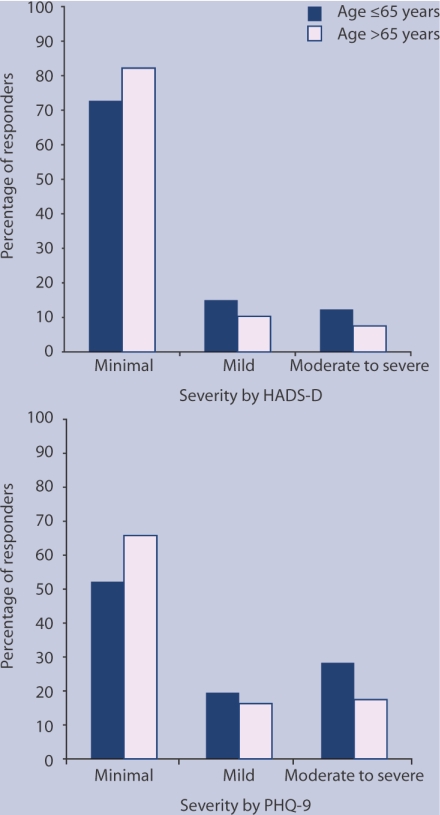
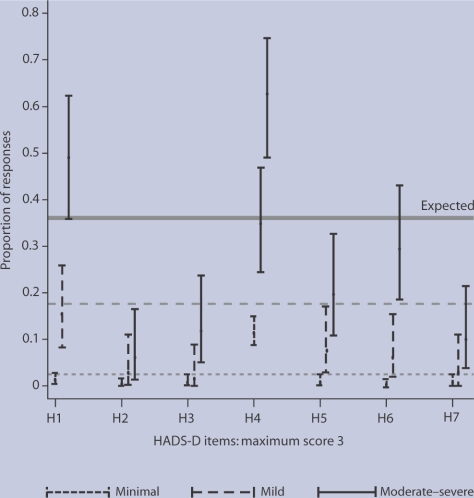
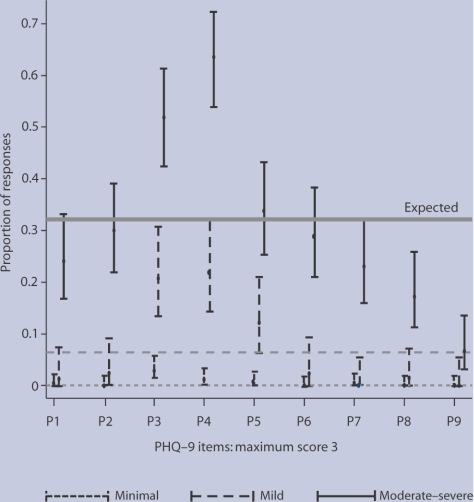
Results: The proportion of the total sample completing HADS-D was 96.8% compared with 82.4% for PHQ-9. Level of education was unrelated to responses on the HADS-D but was related to completion of the PHQ-9. Using complete data (n = 456) from both measures, 40 responders showed HADS-D scores in the moderate to severe range, compared with 103 cases identified by PHQ-9. Only 35 cases were classified in the moderate to severe category by both the PHQ-9 and HADS-D. Items with the highest proportions of positive responses on the PHQ-9 were related to tiredness and sleeping problems and, on the HADS-D, feeling slowed down.
Conclusion: It may be that the items contributing to the higher prevalence of moderate to severe depression using the PHQ-9 are due to diabetes-related symptoms or sleep disorders.
Figures
References
-
- Anderson RJ, Freedland KE, Clous RE, Lustman PJ. The prevalence of comorbid depression in adults with diabetes: a meta-analysis. Diabetes Care. 2001;24:1069–1078. - PubMed
-
- Ali S, Stone MA, Peters JL, et al. The prevalence of co-morbid depression in adults with type 2 diabetes: a systematic review and meta-analysis. Diabet Med. 2006;23:1165–1173. - PubMed
-
- Egede LE, Zheng D, Simpson K. Comorbid depression is associated with increased health care use and expenditures in individuals with diabetes. Diabetes Care. 2002;25:464–470. - PubMed
-
- NHS Employers, the General Practitioners' Committee. Quality and outcomes framework guidance for GMS contract 2009/10: delivering investment in general practice. 2009. March http://www.bma.org.uk/images/qof0309_tcm41-184025.pdf (accessed 6 May 2010)
Publication types
MeSH terms
LinkOut - more resources
Full Text Sources
Medical
Research Materials
