Longitudinal predictors of maternal stress and coping after very low-birth-weight birth
- PMID: 20530301
- PMCID: PMC10222517
- DOI: 10.1001/archpediatrics.2010.81
Longitudinal predictors of maternal stress and coping after very low-birth-weight birth
Abstract
Objective: To determine longitudinal outcomes and contributors to parental stress and coping in mothers of very low-birth-weight (VLBW) children.
Design: Prospective cohort follow-up of high-risk VLBW children (n = 113), low-risk VLBW children (n = 80), and term children (n = 122) and their mothers from birth to 14 years.
Setting: Recruitment from level III neonatal intensive care and term nurseries in a large Midwestern region with follow-up at an academic medical center.
Participants: A total of 315 mother-infant dyads enrolled from November 8, 1989, to February 22, 1992.
Main exposures: High-risk VLBW infants had bronchopulmonary dysplasia. Comparison groups were demographically similar low-risk VLBW children (without bronchopulmonary dysplasia) and term children.
Main outcome measures: Child IQ and self-report measures of parenting stress, family impact, maternal coping, education, and social support.
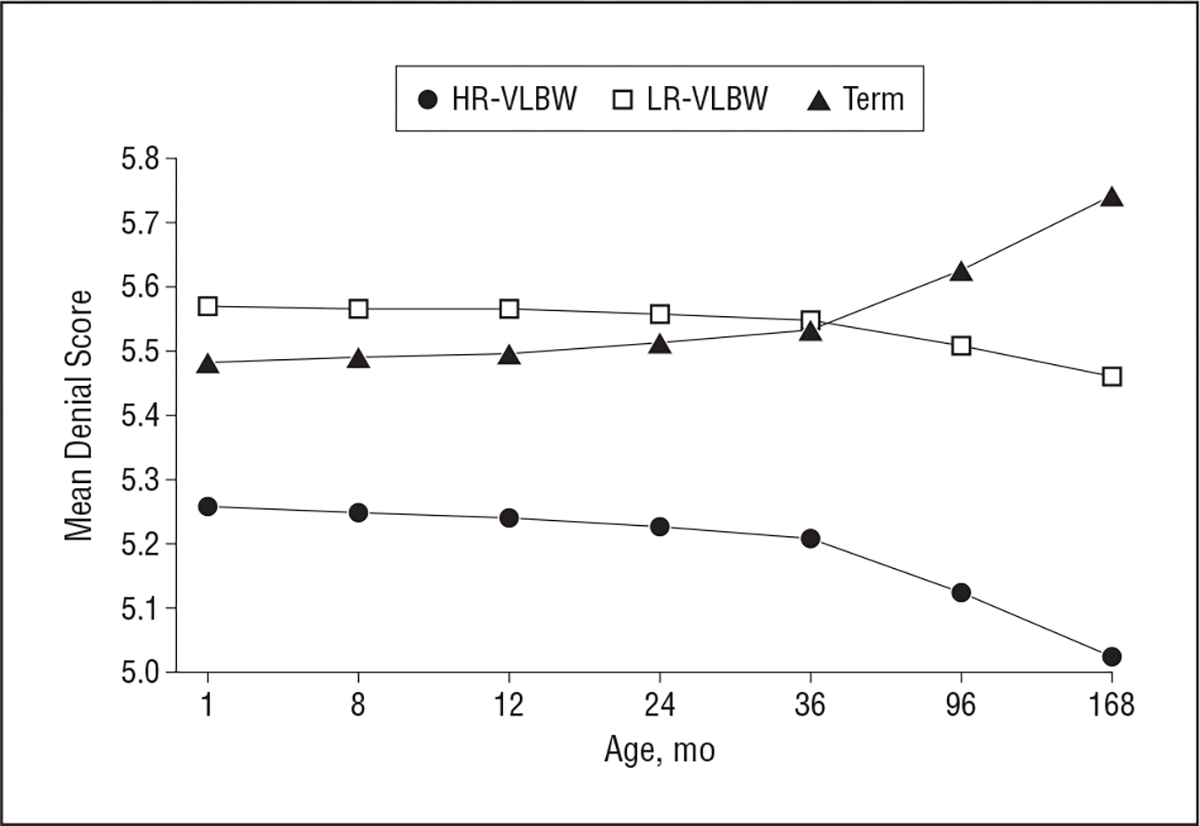
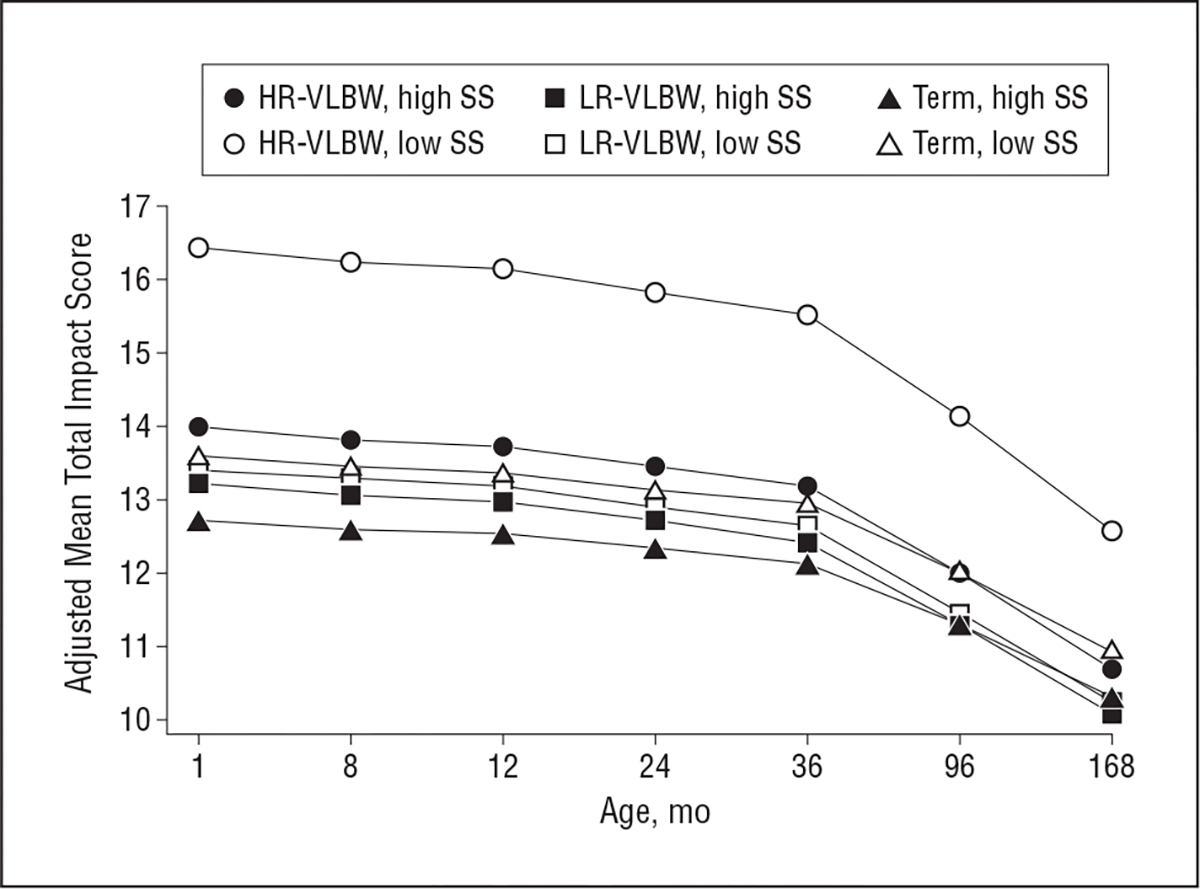
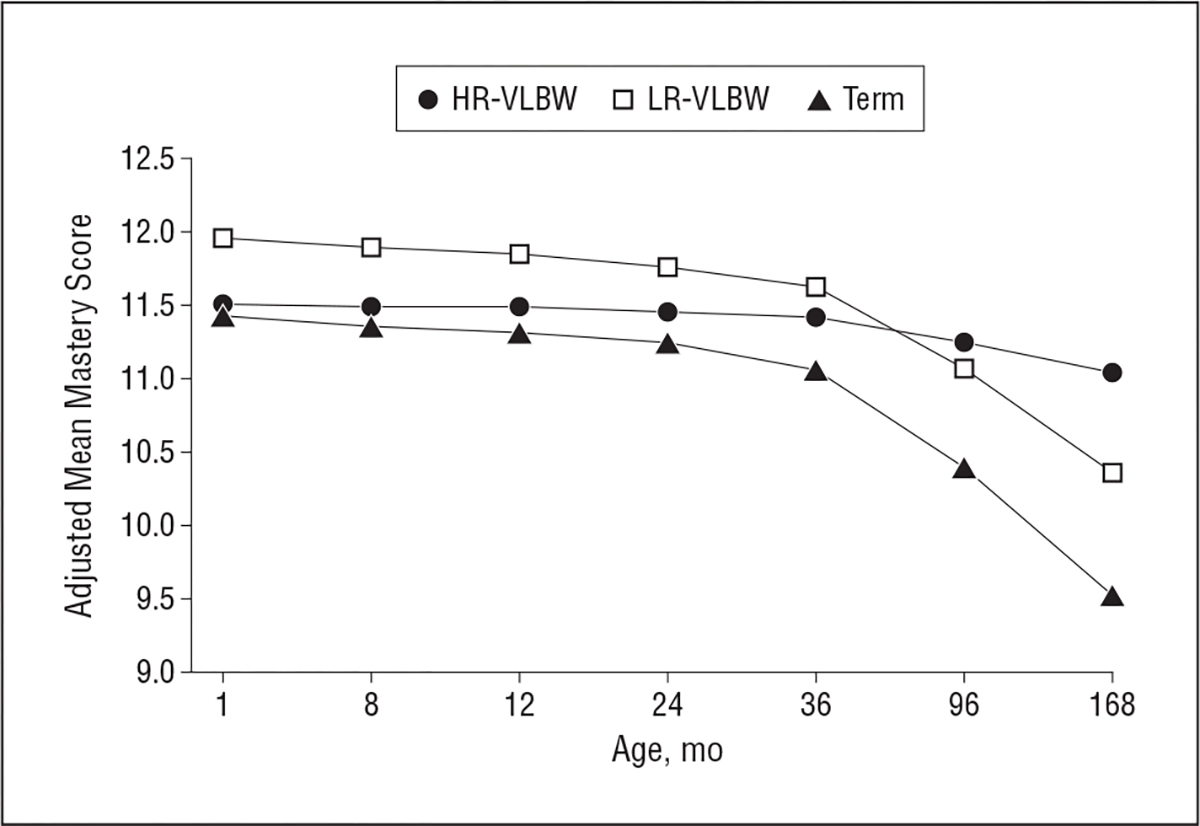
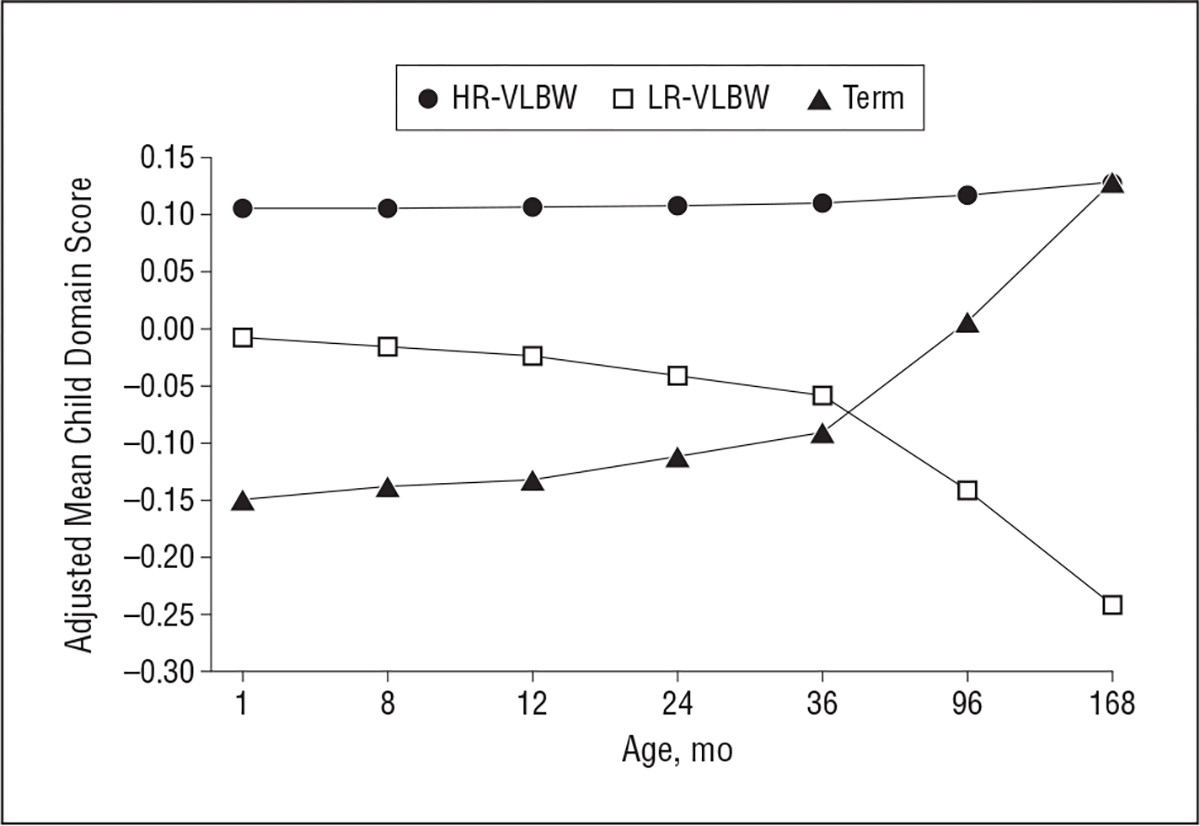
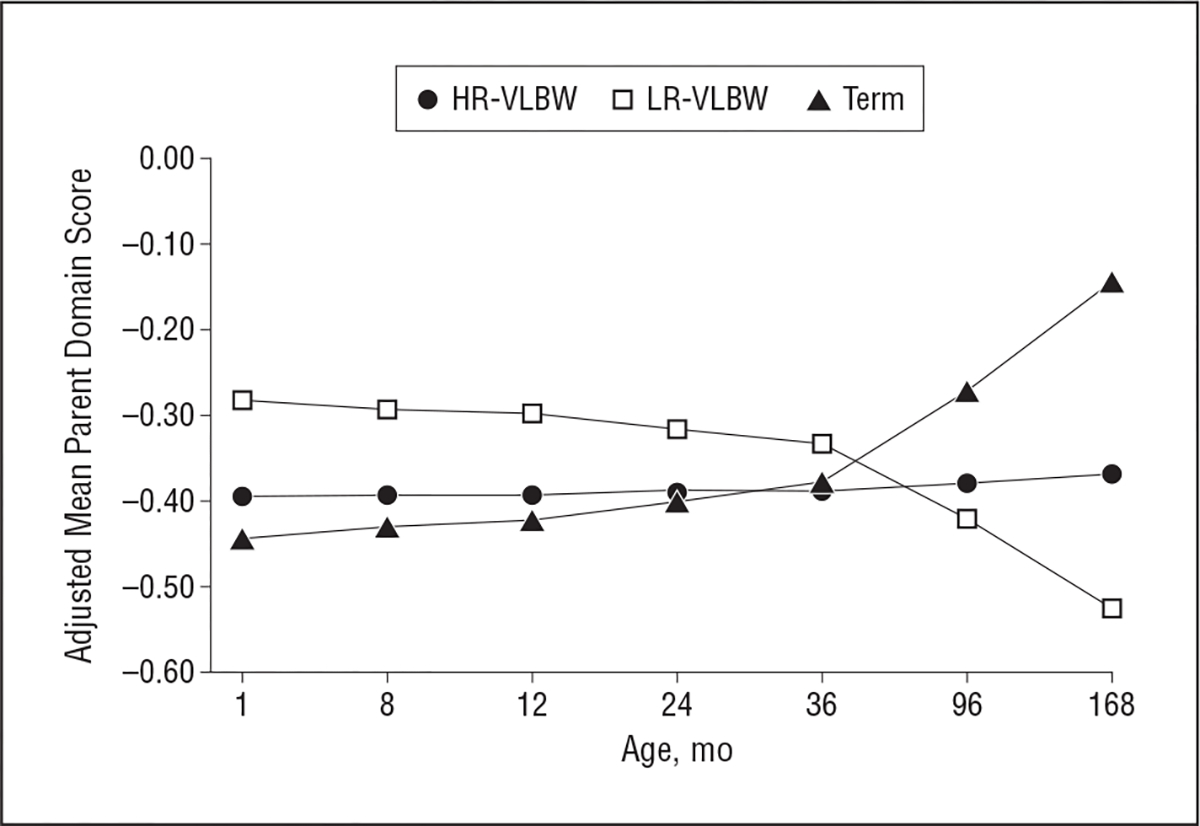
Results: After VLBW birth, mothers attained fewer additional years of education than term mothers (P = .04). Mothers of high-risk VLBW children felt more personal stress (P = .006) and family stress (P = .009) under conditions of low social support and had greater child-related stress than term mothers; however, they also expressed the highest levels of parenting satisfaction at 14 years. They became less likely to use denial (P = .02) and mental disengagement (P = .03) as coping mechanisms over time. Except for education attainment, mothers of low-risk VLBW infants did not differ from mothers of term children and at 14 years reported the lowest stress.
Conclusions: Parenting a VLBW child had both positive and negative outcomes, dependent on child medical risk, child IQ, social support, and maternal coping mechanisms, suggesting that mothers experience posttraumatic growth and resilience after significant distress post partum.
Figures
References
-
- Martin JA, Kung H-C, Mathews TJ, et al. Annual summary of vital statistics: 2006. Pediatrics. 2008;121(4):788–801. - PubMed
-
- Majnemer A, Shevell M, Rosenbaum P, Law M, Poulin C. Determinants of life quality in school-age children with cerebral palsy. J Pediatr. 2007;151(5):470–475. - PubMed
-
- Saigal S, Burrows E, Stoskopf B, Rosenbaum P, Streiner D. Impact of extreme prematurity on families of adolescent children. J Pediatr. 2000;137(5):701–706. - PubMed
-
- Marlow N Parenting stress and childhood impairment. J Pediatr. 2007;151(5):448–449. - PubMed