Meat processing and colon carcinogenesis: cooked, nitrite-treated, and oxidized high-heme cured meat promotes mucin-depleted foci in rats
- PMID: 20530708
- PMCID: PMC2931773
- DOI: 10.1158/1940-6207.CAPR-09-0160
Meat processing and colon carcinogenesis: cooked, nitrite-treated, and oxidized high-heme cured meat promotes mucin-depleted foci in rats
Abstract
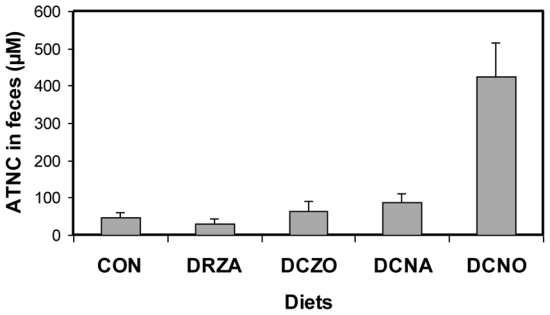
Processed meat intake is associated with colorectal cancer risk, but no experimental study supports the epidemiologic evidence. To study the effect of meat processing on carcinogenesis promotion, we first did a 14-day study with 16 models of cured meat. Studied factors, in a 2 x 2 x 2 x 2 design, were muscle color (a proxy for heme level), processing temperature, added nitrite, and packaging. Fischer 344 rats were fed these 16 diets, and we evaluated fecal and urinary fat oxidation and cytotoxicity, three biomarkers of heme-induced carcinogenesis promotion. A principal component analysis allowed for selection of four cured meats for inclusion into a promotion study. These selected diets were given for 100 days to rats pretreated with 1,2-dimethylhydrazine. Colons were scored for preneoplastic lesions: aberrant crypt foci (ACF) and mucin-depleted foci (MDF). Cured meat diets significantly increased the number of ACF/colon compared with a no-meat control diet (P = 0.002). Only the cooked nitrite-treated and oxidized high-heme meat significantly increased the fecal level of apparent total N-nitroso compounds (ATNC) and the number of MDF per colon compared with the no-meat control diet (P < 0.05). This nitrite-treated and oxidized cured meat specifically increased the MDF number compared with similar nonnitrite-treated meat (P = 0.03) and with similar nonoxidized meat (P = 0.004). Thus, a model cured meat, similar to ham stored aerobically, increased the number of preneoplastic lesions, which suggests colon carcinogenesis promotion. Nitrite treatment and oxidation increased this promoting effect, which was linked with increased fecal ATNC level. This study could lead to process modifications to make nonpromoting processed meat.
2010 AACR.
Conflict of interest statement
R.L. Santarelli and J.L. Vendeuvre are paid by the French Pig Institute.
The other authors disclosed no potential conflicts of interest
Figures

References
-
- WCRF. Food, nutrition, physical activity, and the prevention of cancer: a global perspective. WCRF and American Institute for Cancer Research; Washington DC: 2007. pp. 1–537.
-
- Demeyer D, Honikel K, De Smet S. The World Cancer Research Fund report 2007: A challenge for the meat processing industry. Meat Sci. 2008;80(4):953–9. - PubMed
-
- Larsson SC, Wolk A. Meat consumption and risk of colorectal cancer: a meta-analysis of prospective studies. Int J Cancer. 2006;119(11):2657–64. - PubMed
-
- Norat T, Lukanova A, Ferrari P, Riboli E. Meat consumption and colorectal cancer risk: dose-response meta-analysis of epidemiological studies. Int J Cancer. 2002;98(2):241–56. - PubMed