


Identification of novel pathogenicity loci in Clostridium perfringens strains that cause avian necrotic enteritis
- PMID: 20532244
- PMCID: PMC2879425
- DOI: 10.1371/journal.pone.0010795
Identification of novel pathogenicity loci in Clostridium perfringens strains that cause avian necrotic enteritis
Erratum in
- PLoS One. 2010;5(6). doi: 10.1371/annotation/501e5656-71ac-420f-a194-80141f6381e5 doi: 10.1371/annotation/501e5656-71ac-420f-a194-80141f6381e5
Abstract
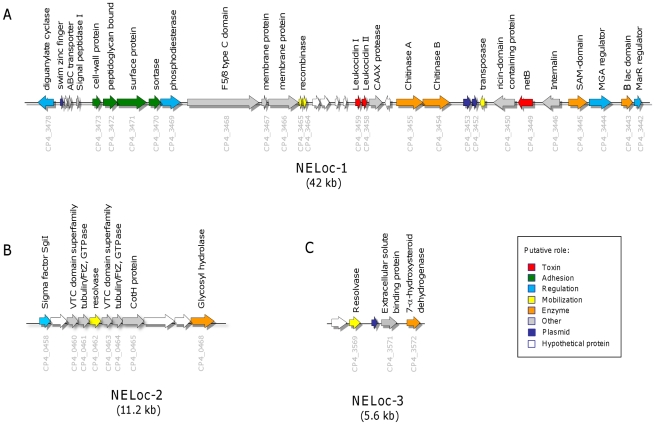
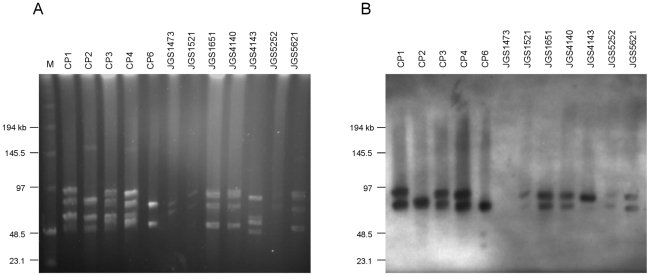
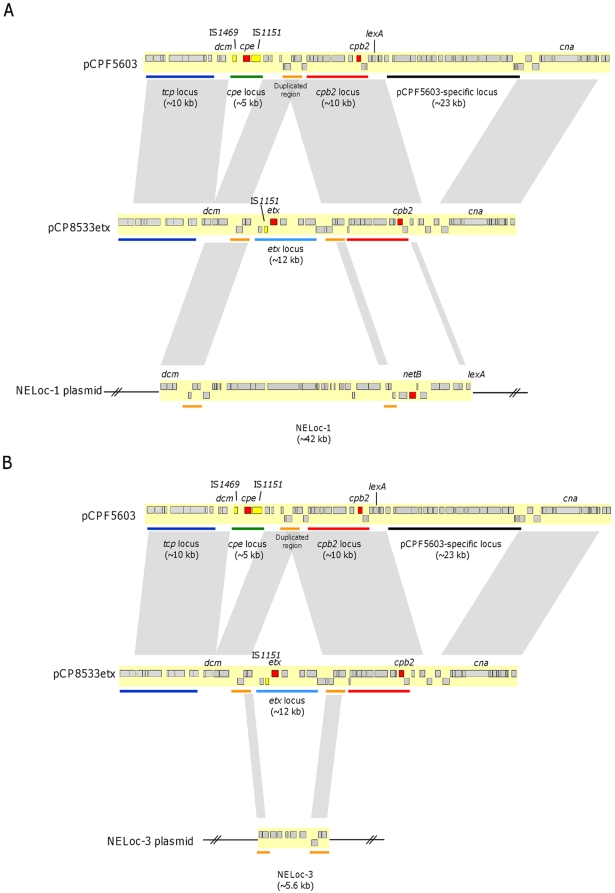
Type A Clostridium perfringens causes poultry necrotic enteritis (NE), an enteric disease of considerable economic importance, yet can also exist as a member of the normal intestinal microbiota. A recently discovered pore-forming toxin, NetB, is associated with pathogenesis in most, but not all, NE isolates. This finding suggested that NE-causing strains may possess other virulence gene(s) not present in commensal type A isolates. We used high-throughput sequencing (HTS) technologies to generate draft genome sequences of seven unrelated C. perfringens poultry NE isolates and one isolate from a healthy bird, and identified additional novel NE-associated genes by comparison with nine publicly available reference genomes. Thirty-one open reading frames (ORFs) were unique to all NE strains and formed the basis for three highly conserved NE-associated loci that we designated NELoc-1 (42 kb), NELoc-2 (11.2 kb) and NELoc-3 (5.6 kb). The largest locus, NELoc-1, consisted of netB and 36 additional genes, including those predicted to encode two leukocidins, an internalin-like protein and a ricin-domain protein. Pulsed-field gel electrophoresis (PFGE) and Southern blotting revealed that the NE strains each carried 2 to 5 large plasmids, and that NELoc-1 and -3 were localized on distinct plasmids of sizes approximately 85 and approximately 70 kb, respectively. Sequencing of the regions flanking these loci revealed similarity to previously characterized conjugative plasmids of C. perfringens. These results provide significant insight into the pathogenetic basis of poultry NE and are the first to demonstrate that netB resides in a large, plasmid-encoded locus. Our findings strongly suggest that poultry NE is caused by several novel virulence factors, whose genes are clustered on discrete pathogenicity loci, some of which are plasmid-borne.
Conflict of interest statement
Figures
References
-
- Van Immerseel F, Rood JI, Moore RJ, Titball RW. Rethinking our understanding of the pathogenesis of necrotic enteritis in chickens. Trends in Microbiology. 2009;17:32–36. - PubMed
-
- Cooper KK, Songer JG. Necrotic enteritis in chickens: A paradigm of enteric infection by Clostridium perfringens type A. Anaerobe. 2009;15:55–60. - PubMed
-
- Cooper KK, Trinh HT, Songer JG. Immunization with recombinant alpha toxin partially protects broiler chicks against experimental challenge with Clostridium perfringens. Vet Microbiol. 2009;133:92–97. - PubMed
Publication types
MeSH terms
LinkOut - more resources
Full Text Sources
Other Literature Sources
Molecular Biology Databases
