


Outcomes associated with opioid use in the treatment of chronic noncancer pain in older adults: a systematic review and meta-analysis
- PMID: 20533971
- PMCID: PMC3114446
- DOI: 10.1111/j.1532-5415.2010.02920.x
Outcomes associated with opioid use in the treatment of chronic noncancer pain in older adults: a systematic review and meta-analysis
Abstract
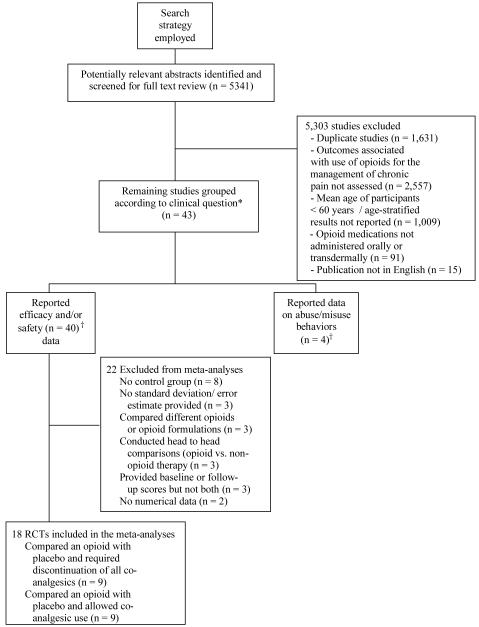
This systematic review summarizes existing evidence regarding the efficacy, safety, and abuse and misuse potential of opioids as treatment for chronic noncancer pain in older adults. Multiple databases were searched to identify relevant studies published in English (1/1/80-7/1/09) with a mean study population age of 60 and older. Forty-three articles were identified and retained for review (40 reported safety and efficacy data, the remaining 3 reported misuse or abuse outcome data). The weighted mean subject age was 64.1 (mean age range 60-73). Studies enrolled patients with osteoarthritis (70%), neuropathic pain (13%), and other pain-producing disorders (17%). The mean duration of treatment studies was 4 weeks (range 1.5-156 weeks), and only five (12%) lasted longer than 12 weeks. In meta-analyses, effect sizes were -0.557 (P<.001) for pain reduction, -0.432 (P<.001) for physical disability reduction, and 0.859 (P=.31) for improved sleep. The effect size for the Medical Outcomes Study 36-item Health Survey was 0.191 (P=.17) for the physical component score and -0.220 (P=.04) for the mental component score. Adults aged 65 and older were as likely as those younger than 65 to benefit from treatment. Common adverse events included constipation (median frequency of occurrence 30%), nausea (28%), and dizziness (22%) and prompted opioid discontinuation in 25% of cases. Abuse and misuse behaviors were negatively associated with older age. In older adults with chronic pain and no significant comorbidity, short-term use of opioids is associated with reduction in pain intensity and better physical functioning but poorer mental health functioning. The long-term safety, efficacy, and abuse potential of this treatment practice in diverse populations of older persons remain to be determined.
Figures
Comment in
-
In older adults with chronic non-cancer pain, short-term use of opioids reduces pain and physical disability but does not benefit mental health, and 25% discontinue due to adverse effects.Evid Based Nurs. 2011 Oct;14(4):111-2. doi: 10.1136/ebn1173. Epub 2011 Jun 18. Evid Based Nurs. 2011. PMID: 21685502 No abstract available.
References
-
- Kalso E, Edwards JE, Moore A, et al. Opioids in chronic non-cancer pain: systematic review of efficacy and safety. Pain. 2004;112:372–380. - PubMed
-
- Avouac J, Gossec L, Dougados M. Efficacy and safety of opioids for osteoarthritis: A meta-analysis of randomized controlled trials. Osteoarthritis Cartilage. 2007;15:957–965. - PubMed
-
- Eisenberg E, McNichol ED, Carr DM. Efficacy and safety of opioid agonists in the treatment of neuropathic pain of nonmalignant origin. JAMA. 2005;293:3043–3052. - PubMed
-
- Martell BA, O’Connor PG, Kerns RD, et al. Systematic review: Opioid treatment for chronic back pain: Prevalence, efficacy, and association with addiction. Ann Intern Med. 2007;146:116–127. - PubMed
Publication types
MeSH terms
Substances
Grants and funding
LinkOut - more resources
Full Text Sources
Medical
