


The HDAC inhibitor LBH589 (panobinostat) is an inhibitory modulator of aromatase gene expression
- PMID: 20534486
- PMCID: PMC2890707
- DOI: 10.1073/pnas.1000917107
The HDAC inhibitor LBH589 (panobinostat) is an inhibitory modulator of aromatase gene expression
Abstract
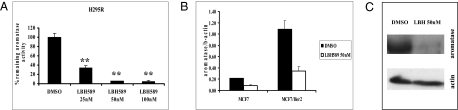
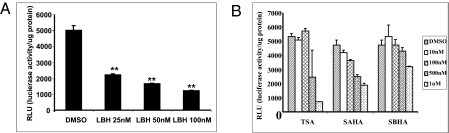
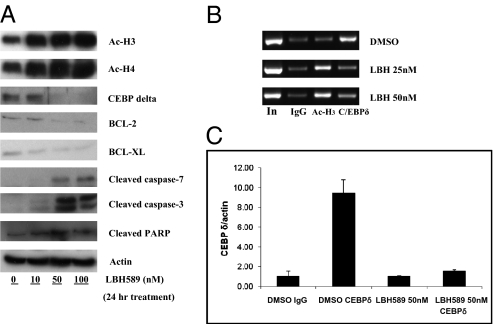
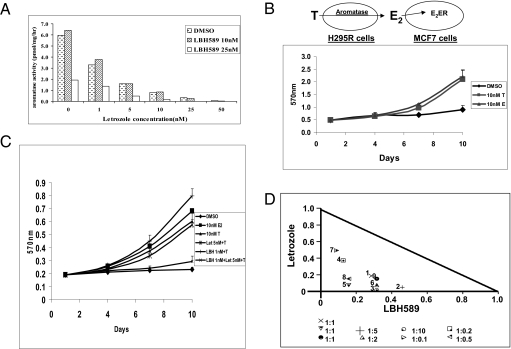
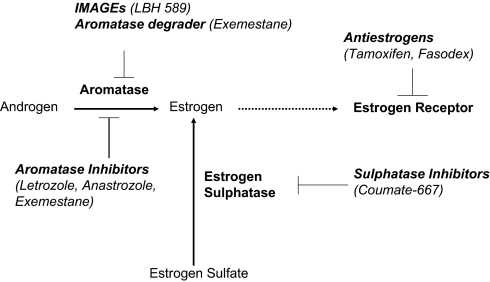
Aromatase converts androgens to estrogens. Although third-generation aromatase inhibitors (AIs) are important drugs in hormonal therapy for breast cancer in postmenopausal women, there are concerns about the side effects associated with the estrogen deprivation achieved with AIs. Expression of aromatase in breast cancer tissue is driven by different promoters than those in noncancer tissues; thus, suppression of aromatase expression in cancer tissues through the down-regulation of breast tumor-specific promoters would reduce the side effects associated with whole-body suppression of estrogen biosynthesis by AIs. We report that histone deacetylase inhibitor LBH589 (panobinostat) is a potent inhibitor of aromatase expression (with an IC(50) value < 25 nM). LBH589 selectively suppresses human aromatase gene promoters I.3/II, which are preferentially used in breast cancer tissue. Furthermore, using the H295R cell culture model, we found that achieving the same degree of inhibition of aromatase activity required only one-fifth as much letrozole (an AI) in the presence of 25 nM LBH589 as in the absence of LBH589. We also used an H295R/MCF7 coculture model to demonstrate the synergistic interaction of LBH589 + letrozole in suppressing the proliferation of hormone-responsive breast cancer cells. Finally, our results also indicate that LBH589 down-regulates the activity of promoters I.3/II in an epigenetic fashion. LBH589 reduces the levels of C/EBPdelta, decreases the binding of C/EBPdelta, and increases the levels and binding of acetyl-histones to the promoters I.3/II. These findings provide an important basis for future clinical evaluations of LBH589 in hormone-dependent breast cancer.
Conflict of interest statement
The authors declare no conflict of interest.
Figures
References
-
- Harada N. Aberrant expression of aromatase in breast cancer tissues. J Steroid Biochem Mol Biol. 1997;61:175–184. - PubMed
-
- Utsumi T, Harada N, Maruta M, Takagi Y. Presence of alternatively spliced transcripts of aromatase gene in human breast cancer. J Clin Endocrinol Metab. 1996;81:2344–2349. - PubMed
-
- Bulun SE, Price TM, Aitken J, Mahendroo MS, Simpson ER. A link between breast cancer and local estrogen biosynthesis suggested by quantification of breast adipose tissue aromatase cytochrome P450 transcripts using competitive polymerase chain reaction after reverse transcription. J Clin Endocrinol Metab. 1993;77:1622–1628. - PubMed
-
- James VH, et al. Aromatase activity in normal breast and breast tumor tissues: In vivo and in vitro studies. Steroids. 1987;50:269–279. - PubMed
-
- Coombes RC, et al. for the Intergroup Exemestane Study A randomized trial of exemestane after two to three years of tamoxifen therapy in postmenopausal women with primary breast cancer. N Engl J Med. 2004;350:1081–1092. and erratum (2004) 355: 1746. - PubMed
Publication types
MeSH terms
Substances
Grants and funding
LinkOut - more resources
Full Text Sources
Medical
