Small incision basilic vein transposition technique: a good alternative to standard method
- PMID: 20535307
- PMCID: PMC2878432
- DOI: 10.4103/0970-1591.60466
Small incision basilic vein transposition technique: a good alternative to standard method
Abstract
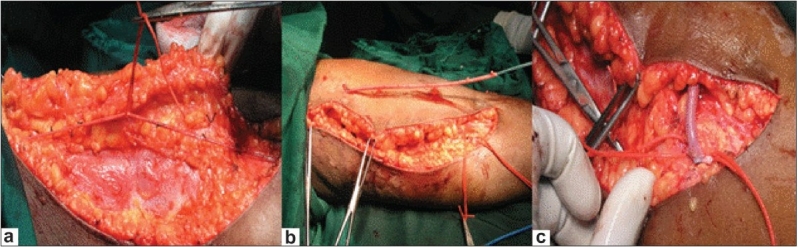
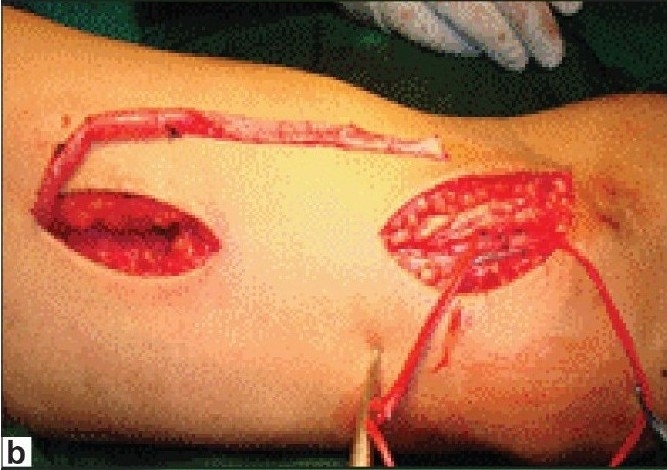
End-stage renal disease is a significant health problem. The primary use of the autogenous arteriovenous access is recommended by NKF-DOQI (National Kidney Foundation-Dialysis Outcomes Quality Initiative) guidelines. Though basilic vein transposition is well established in multiple failed fistulae's and obese patients, it requires large incision and morbidities like edema and infection. To avoid such compilations we, at our institution, adopted a small incision technique using two small 3-4 cm incisions. This method is inspired by videoendoscopic minimally invasive method used to dissect the basilic vein, thus avoiding extensive dissection and related morbidities.
Keywords: Basilic vein; transposition; vascular access.
Conflict of interest statement
Figures



References
-
- Owen WF. Patterns of care in patients with chronic kidney disease in United States: Dying for improvement. J Am Soc Nephrol. 2003;14:S76–80. - PubMed
-
- Brescia MJ, Cimino JE, Appel K. Chronic haemodialysis using venipuncture and a surgically created arteriovenous fistula. N Engl J Med. 1966;275:1089–92. - PubMed
-
- Sidawy AN, Gray R, Besarab A, Henry M, Ascher E, Silva M, Jr, et al. Recommended standards for reports dealing with arteriovenous hemodialysis accesses. J Vasc Surg. 2002;35:603–10. - PubMed
-
- Dagher FJ. The upper arm AV hemoaccess: Long term follow-up. J Cardiovasc Surg. 1986;27:447–9. - PubMed
-
- Oliver MJ, McCann RL. Indridason OS. Comparison of transposed brachiobasilic fistulas to upper arm grafts and brachiocephalic fistulas. Kidney Int. 2001;60:1532–9. - PubMed