


Prevalence and predictors of transitions to and away from syringe exchange use over time in 3 US cities with varied syringe dispensing policies
- PMID: 20537814
- PMCID: PMC3087197
- DOI: 10.1016/j.drugalcdep.2010.03.022
Prevalence and predictors of transitions to and away from syringe exchange use over time in 3 US cities with varied syringe dispensing policies
Abstract
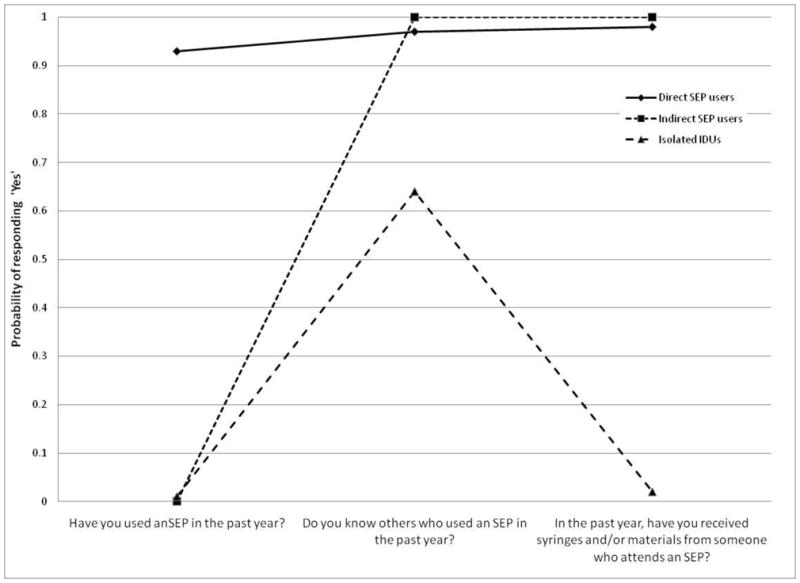
Syringe exchange programs (SEPs) can reduce HIV risk among injecting drug users (IDUs) but their use may depend heavily on contextual factors such as local syringe policies. The frequency and predictors of transitioning over time to and from direct, indirect, and non-use of SEPs are unknown. We sought, over one year, to: (1) quantify and characterize transition probabilities of SEP attendance typologies; (2) identify factors associated with (a) change in typology, and (b) becoming and maintaining Direct SEP use; and (3) quantify and characterize transition probabilities of SEP attendance before and after changes in policy designed to increase access. Using data collected from 583 IDUs participating in a three-city cohort study of SEPs, we conducted a latent transition analysis and multinomial regressions. Three typologies were detected: Direct SEP users, Indirect SEP users and Isolated IDUs. Transitions to Direct SEP use were most prevalent. Factors associated with becoming or maintaining Direct SEP use were female sex, Latino ethnicity, fewer injections per syringe, homelessness, recruitment city, injecting speedballs (cocaine and heroin), and police contact involving drug paraphernalia possession. Similar factors influenced transitions in the syringe policy change analysis. Policy change cities experienced an increase in Indirect SEP users (43-51%) with little increased direct use (29-31%). We found that, over time, IDUs tended to become Direct SEP users. Policies improving syringe availability influenced SEP use by increasing secondary syringe exchange. Interactions with police around drug paraphernalia may encourage SEP use for some IDUs and may provide opportunities for other health interventions.
Copyright 2010 Elsevier Ireland Ltd. All rights reserved.
Figures
References
-
- Bastos FI, Strathdee SA. Evaluating effectiveness of syringe exchange programmes: current issues and future prospects. Social science & medicine (1982) 2000;51:1771–1782. - PubMed
-
- Beletsky L, Heimer R, Grau LE. AIDS Science Day. Yale Center for Interdisciplinary Research on AIDS; New Haven, CT: 2009. Police-Public Health Collaboration in HIV Prevention: A Needs-Assessment Survey.
-
- Beletsky L, Macalino GE, Burris S. Attitudes of Police Officers towards Syringe Access, Occupational Needle-Sticks, and Drug Use: A Qualitative Study of One City Police Department in the United States. International Journal of Drug Policy. 2005;16:267–274.
-
- Beyer L, Crofts N, Reid G. Drug offending and criminal justice responses: practitioners’ perspectives. The International journal on drug policy. 2002;13:199–207.
Publication types
MeSH terms
Grants and funding
LinkOut - more resources
Full Text Sources
