


Qualities of fatigue and associated chronic conditions among older adults
- PMID: 20538185
- PMCID: PMC2884149
- DOI: 10.1016/j.jpainsymman.2009.09.026
Qualities of fatigue and associated chronic conditions among older adults
Abstract
Context: Although fatigue is a common and distressing symptom, a well-specified definition of fatigue is lacking. One of the least well-defined aspects of fatigue is its quality, which might reflect the underlying pathophysiology.
Objective: To identify the qualities of fatigue and assess whether they are associated with distinct chronic conditions.
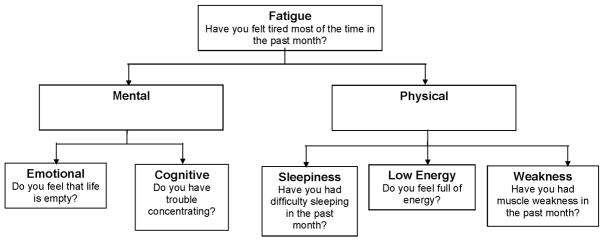
Methods: We identified five fatigue qualities in the literature, two mental and three physical, and selected representative items from those available in our data from a prospective cohort of 495 community-dwelling primary care patients aged 65 years or older. We then examined the prevalence of each quality, the correlations among qualities, and the association of fatigue qualities with health and functional status, including chronic conditions.
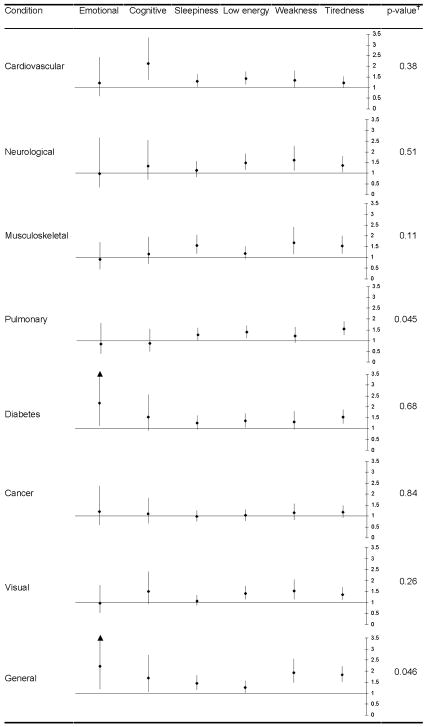
Results: Fatigue was very common among older primary care patients, with 70% reporting one or more fatigue qualities and 43% reporting feeling tired most of the time, and was associated with worse health and functional status. Physical fatigue qualities were more common than mental qualities. Correlations among fatigue qualities were 0.09-0.27 and did not support the mental vs. physical classification. Different fatigue qualities were not well explained by older adults' underlying chronic conditions. Rather, the cumulative number of fatigue qualities was associated with worse health and function.
Conclusion: These first steps in exploring fatigue qualities suggest that different fatigue qualities could represent disparate manifestations of a common underlying etiology, while not ruling out distinct underlying pathophysiologies.
Copyright 2010 U.S. Cancer Pain Relief Committee. Published by Elsevier Inc. All rights reserved.
Figures
References
-
- Liao S, Ferrell BA. Fatigue in an older population. J Am Geriatr Soc. 2000;48:426–430. - PubMed
-
- Avlund K, Damsgaard MT, Sakari-Rantala R, Laukkanen P, Schroll M. Tiredness in daily activities among nondisabled old people as determinant of onset of disability. J Clin Epidemiol. 2002;55:965–973. - PubMed
Publication types
MeSH terms
Grants and funding
LinkOut - more resources
Full Text Sources
Medical
