


PTHrP 1-141 and 1-86 increase in vitro bone formation
- PMID: 20538301
- PMCID: PMC2921615
- DOI: 10.1016/j.jss.2010.02.023
PTHrP 1-141 and 1-86 increase in vitro bone formation
Abstract
Background: Parathyroid hormone-related protein (PTHrP) has anabolic effects in bone, which has led to the clinical use of N-terminal fragments of PTHrP and PTH. Since 10% to 20% of fractures demonstrate healing complications and osteoporosis continues to be a debilitating disease, the development of bone-forming agents is of utmost importance. Due to evidence that regions of PTHrP other than the N-terminus may have bone-forming effects, this study was designed to compare the effects of full-length PTHrP 1-141 to N-terminal PTHrP 1-86 on in vitro bone formation.
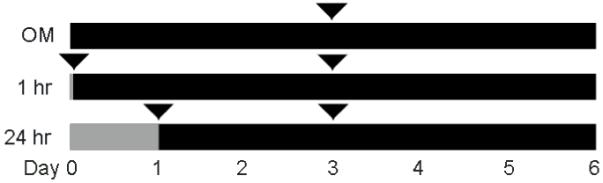
Materials and methods: MC3T3-E1 pre-osteoblasts were treated once every 6 d for 36 d with 5, 25, and 50 pM of PTHrP 1-141 or 1-86 for 1 or 24 h. Cells were also treated after blocking the N-terminus, the nuclear localization sequence (NLS), and the C-terminus of PTHrP, individually and in combination. Area of mineralization, alkaline phosphatase (ALP), and osteocalcin (OCN) were measured.
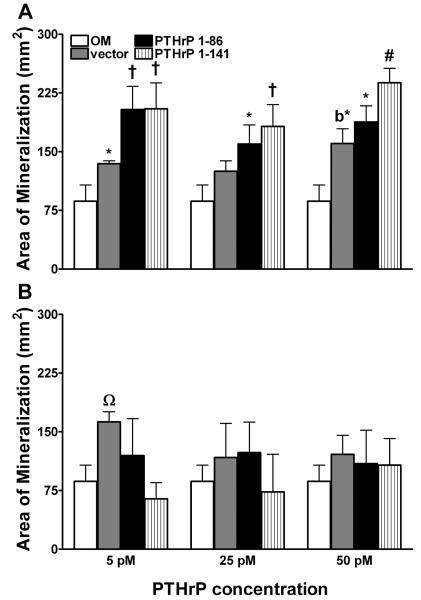
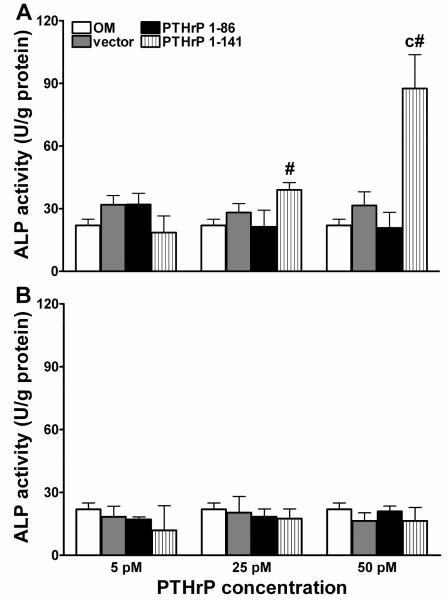
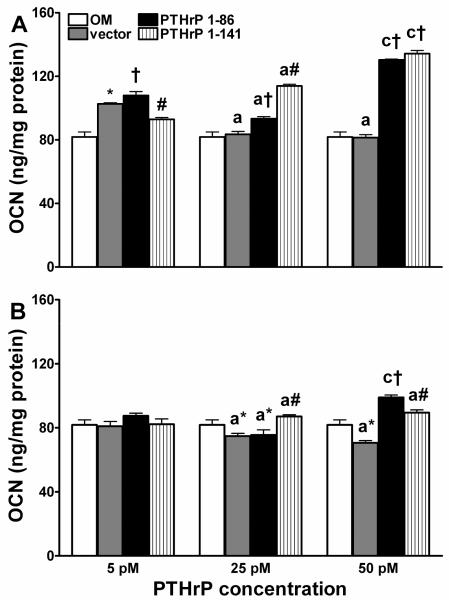
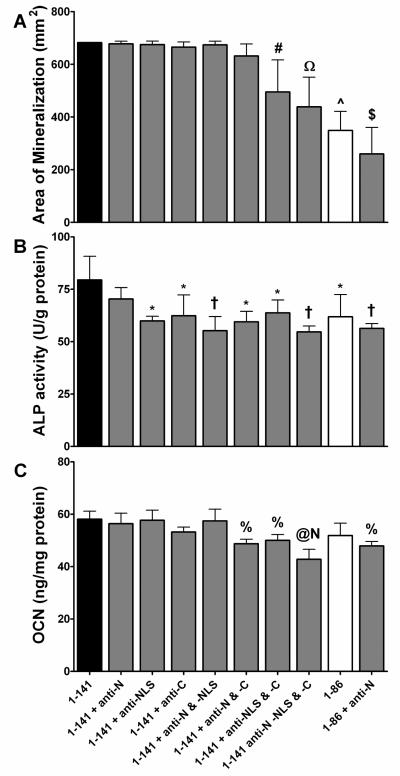
Results: PTHrP 1-141 and 1-86 increased mineralization after 24-h treatments, but not 1-h. PTHrP 1-141 was more potent than 1-86. Treatment with PTHrP 1-141 for 24-h, but not 1-86, resulted in a concentration-dependent increase in ALP, with no effect after 1-h. Exposure to both peptides for 1- or 24-h induced a concentration-dependent increase in OCN, with 24-h exceeding 1-h. Antibody blocking revealed that the NLS and C-terminus are anabolic.
Conclusions: Both PTHrP 1-141 and 1-86 increased in vitro bone formation; however, PTHrP 1-141 was more effective. The NLS and C-terminus have anabolic effects distinct from the N-terminus. This demonstrates the advantage of PTHrP 1-141 as a skeletal anabolic agent.
Copyright 2010 Elsevier Inc. All rights reserved.
Figures
References
-
- Burtis WJ, Wu T, Bunch C, et al. Identification of a novel 17,000-dalton parathyroid hormone-like adenylate cyclase-stimulating protein from a tumor associated with humoral hypercalcemia of malignancy. J Biol Chem. 1987;262:7151. - PubMed
-
- Dunbar ME, Wysolmerski JJ. Parathyroid hormone-related protein: a developmental regulatory molecule necessary for mammary gland development. J Mammary Gland Biol Neoplasia. 1999;4:21. - PubMed
-
- Kaiser SM, Sebag M, Rhim JS, et al. Antisense-mediated inhibition of parathyroid hormone-related peptide (PTHrP) production in a keratinocyte cell line impedes differentiation. Mol Endocrinol. 1994;8:139. - PubMed
-
- Civitelli R, Martin TJ, Fausto A, et al. Parathyroid hormone-related peptide transiently increases cytosolic calcium in osteoblast-like cells: comparison with parathyroid hormone. Endocrinology. 1989;125:1204. - PubMed
-
- Wysolmerski JJ, Stewart AF. The physiology of parathyroid hormone-related protein: An emerging role as a developmental factor. Annu Rev Physiol. 1998;60:431. - PubMed
Publication types
MeSH terms
Substances
Grants and funding
LinkOut - more resources
Full Text Sources
Research Materials
