


Assessment of the effectiveness of sustained release Bupropion and intensive physician advice in smoking cessation
- PMID: 20539765
- PMCID: PMC2878706
- DOI: 10.4103/0970-2113.59262
Assessment of the effectiveness of sustained release Bupropion and intensive physician advice in smoking cessation
Abstract
Background: Tobacco use is the cause of immense burden on our nation in terms of mortality and morbidity, being the single leading cause of preventable illnesses and death. Smoking cessation interventions in our country will be the most cost effective of all interventions considering that the cost incurred on the three main tobacco related illnesses (COPD, CAD, and Cancer) being around Rs 27,761 crore in the year 1999. MATRIALS AND METHODS: A double blind placebo controlled trial was conducted to see the efficacy of Bupropion in smoking cessation. Smokers with current depression were excluded. The subjects (n = 30) were randomly assigned to receive Bupropion SR 300 mg/day or placebo for seven weeks. Target quit date was preferentially 8(th) day of starting the treatment. Intensive counseling was provided by the physician at the baseline and brief counseling at every visit weekly during the treatment phase and at weeks 12 and 16. Self reported abstinence was confirmed by a carbon monoxide concentration in expired air of less than 10 ppm.
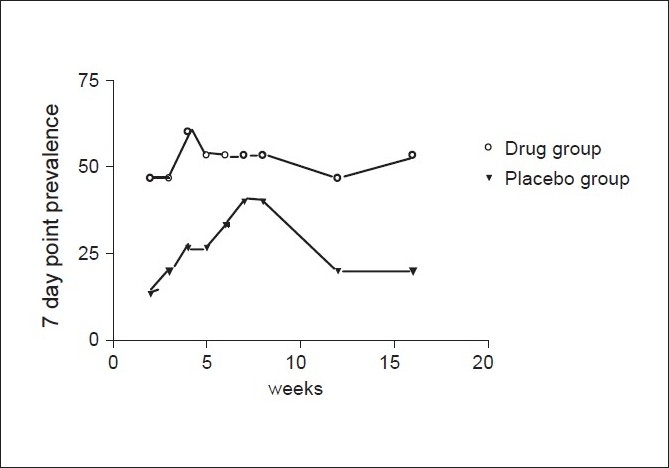
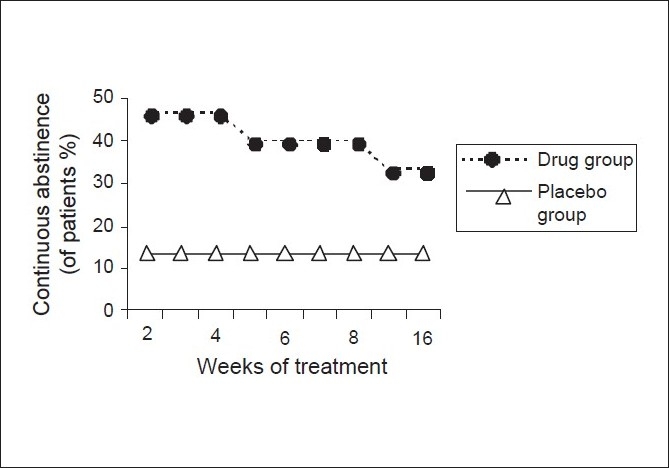
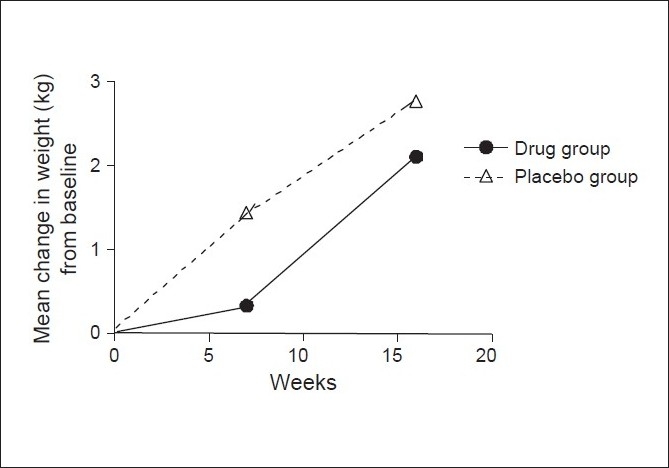
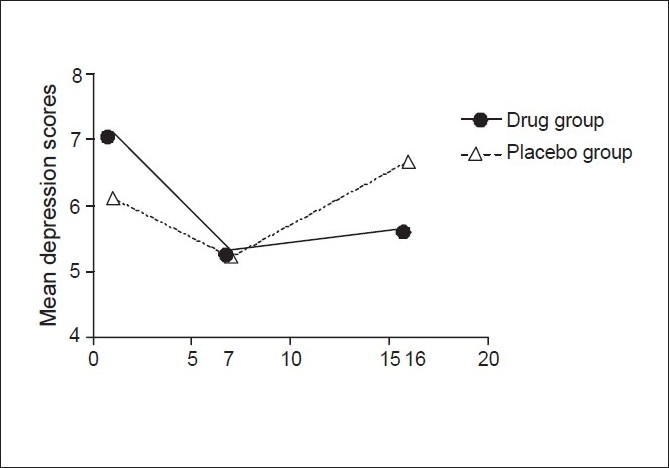
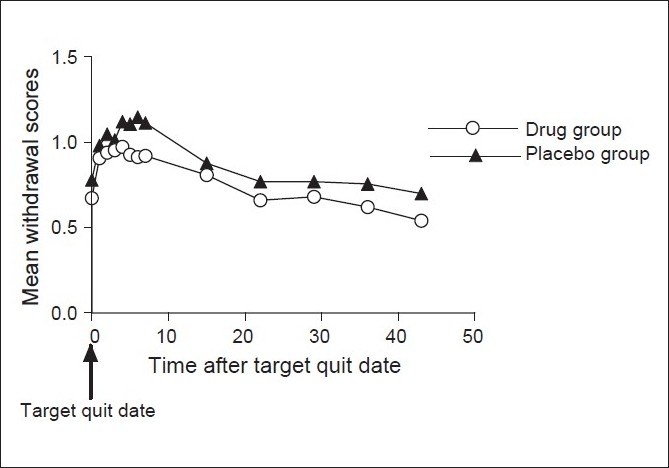
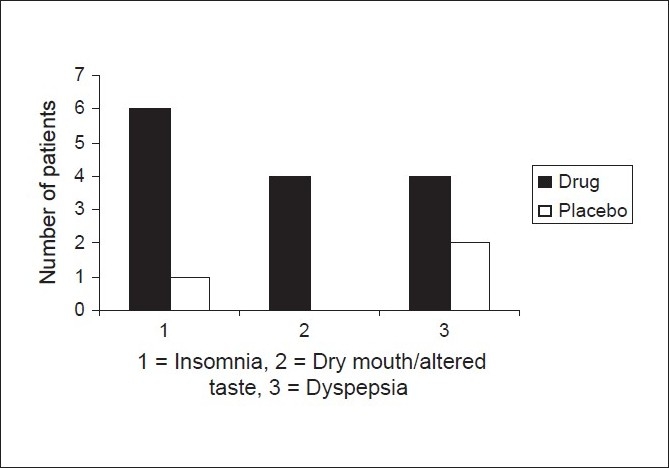
Results: The seven-day point prevalence abstinence rate at the end of week 2 and week 16 in the drug group was 46.67% and 53.33 % respectively and in the placebo group was 13.33% and 20% respectively with the 'P' value of 0.04 and 0.05 respectively. Rates of continuous abstinence at weeks 4, 7 and 16 were 46.67%, 40% and 33.33% in the drug group and 13.33%, 13.33% and 13.33% in the placebo group respectively. The rates were significantly higher in the drug group till week 4 starting from week 2 of the treatment phase. The mean weight gain in drug group was found to be significant less as compared to the placebo at week 16 (P = 0.025) The mean change of depression scores from the baseline was not significantly different between the two groups at any point of time. The withdrawal symptom score increase from the baseline was not significantly higher at any point of time in the drug group but in the placebo group the increase was significantly higher for seven days after target quit date and at weeks 3 and 4 (P < 0.05). The most common adverse events in the drug group were insomnia, which was seen in 6 (40%) patients and dry mouth and/or altered taste in 4 (26.67%) patients, which was significantly higher as compared to placebo. PREDICTORS OF OUTCOME: The univariate predictors of a successful outcome were the point prevalence abstinence at week 16 were older age (>40 years), (P = 0.044) and quitter status at week 2 (P = 0.001). Multivariate predictors in order of importance were Quit status at 2nd week (P = 0.002) and Age >40 years (P = 0.031). The combined predictive value of these two variables was found to be 86.3%.
Conclusions: Bupropion helps in smoking cessation. This has been proved by three large multicenter randomized controlled trials. This study has also reflected the same result in the form of significantly high seven-day point prevalence abstinence at week 16 in the Bupropion group as compared to placebo. Bupropion has a beneficial effect on weight gain and withdrawal symptoms and the benign adverse effects of insomnia and dry mouth or altered taste make it a very effective and cheap treatment for nicotine addiction in smokers.
Keywords: Bupropion quit rate; Smoking cessation; nicotine addiction.
Conflict of interest statement
Figures
References
-
- Tobacco or health: A global status report. Geneva: World Health Organization; 1997. World Health organization.
-
- Fagerström K. Smoking cessation treatment with sustained releaseBupropion Optimising approach to management. Drugs. 2002;62:1S–70S.
-
- Fiore MC, Jorenby DE. Smoking status as a new vital sign: effects on assessment and intervention in patient who smoke. Mayo Clin Proc. 1995;70:209–13. - PubMed
LinkOut - more resources
Full Text Sources
Research Materials
Miscellaneous
