


Pulse-pressure variation and hemodynamic response in patients with elevated pulmonary artery pressure: a clinical study
- PMID: 20540730
- PMCID: PMC2911757
- DOI: 10.1186/cc9060
Pulse-pressure variation and hemodynamic response in patients with elevated pulmonary artery pressure: a clinical study
Abstract
Introduction: Pulse-pressure variation (PPV) due to increased right ventricular afterload and dysfunction may misleadingly suggest volume responsiveness. We aimed to assess prediction of volume responsiveness with PPV in patients with increased pulmonary artery pressure.
Methods: Fifteen cardiac surgery patients with a history of increased pulmonary artery pressure (mean pressure, 27 +/- 5 mm Hg (mean +/- SD) before fluid challenges) and seven septic shock patients (mean pulmonary artery pressure, 33 +/- 10 mm Hg) were challenged with 200 ml hydroxyethyl starch boli ordered on clinical indication. PPV, right ventricular ejection fraction (EF) and end-diastolic volume (EDV), stroke volume (SV), and intravascular pressures were measured before and after volume challenges.
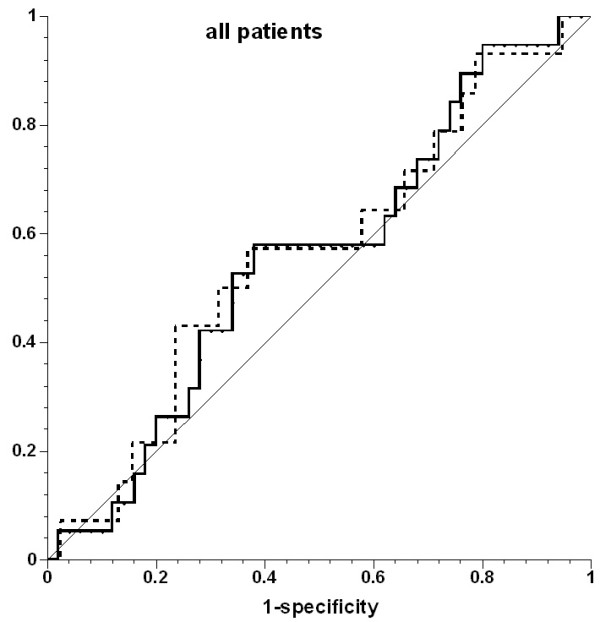
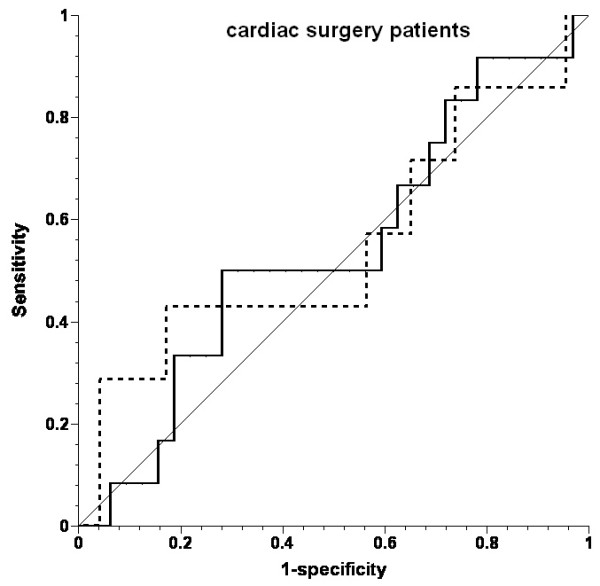
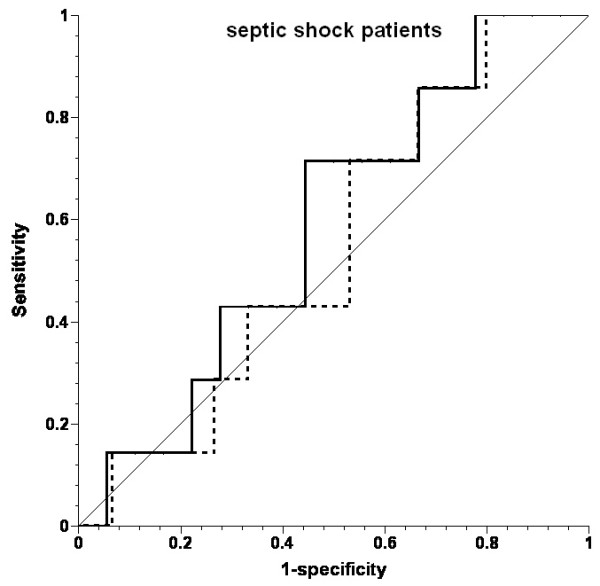
Results: Of 69 fluid challenges, 19 (28%) increased SV > 10%. PPV did not predict volume responsiveness (area under the receiver operating characteristic curve, 0.555; P = 0.485). PPV was >or=13% before 46 (67%) fluid challenges, and SV increased in 13 (28%). Right ventricular EF decreased in none of the fluid challenges, resulting in increased SV, and in 44% of those in which SV did not increase (P = 0.0003). EDV increased in 28% of fluid challenges, resulting in increased SV, and in 44% of those in which SV did not increase (P = 0.272).
Conclusions: Both early after cardiac surgery and in septic shock, patients with increased pulmonary artery pressure respond poorly to fluid administration. Under these conditions, PPV cannot be used to predict fluid responsiveness. The frequent reduction in right ventricular EF when SV did not increase suggests that right ventricular dysfunction contributed to the poor response to fluids.
Figures
Comment in
-
Further cautions for the use of ventilatory-induced changes in arterial pressures to predict volume responsiveness.Crit Care. 2010;14(5):197. doi: 10.1186/cc9223. Epub 2010 Sep 20. Crit Care. 2010. PMID: 20920155 Free PMC article. Review.
-
Using pulse pressure variation or stroke volume variation to diagnose right ventricular failure?Crit Care. 2010;14(6):451; author reply 451. doi: 10.1186/cc9303. Epub 2010 Nov 24. Crit Care. 2010. PMID: 21172070 Free PMC article. No abstract available.
