


Redefining hormone resistance in prostate cancer
- PMID: 20543967
- PMCID: PMC2883184
- DOI: 10.1177/1758834009356433
Redefining hormone resistance in prostate cancer
Abstract
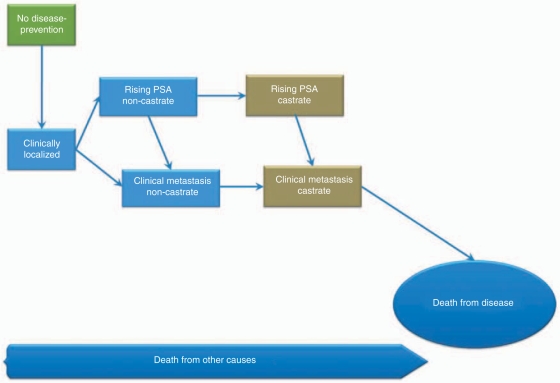
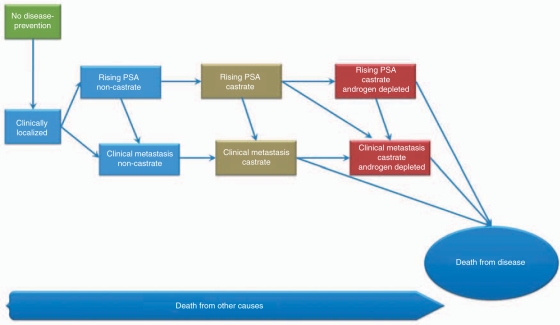
Prostate cancer relies on signaling through the androgen receptor (AR) for maintenance and progression; and androgen-deprivation therapy remains a cornerstone of treatment for advanced prostate cancer. An effective clinical classification of prostate cancer should account for the extent of the disease as well as the mechanisms that are driving the growth of the tumor. The previous terms hormone-sensitive and hormone-refractory described response to treatment. It has become clear that these terms do not reflect the mechanism of disease relapse; however over the last decade there has been a better understanding of androgen-receptor mediated signaling effects and incomplete suppression of androgens in prostate cancer. The Prostate Cancer Clinical Trials Working Group 2 (PCWG2) now recommends addressing the spectrum of clinical states based on castration status as this ligand-centered terminology can more accurately describe the patients' disease, and ultimately provides a useful framework for patient management and drug development. Optimized use of androgen-deprivation therapy, low molecular weight inhibitors of adrenal androgen biosynthesis, and new AR antagonists are promising new therapeutics that can further define the meaning of castrate state. As hormone resistance is redefined to include patients that are refractory to treatments that ablate adrenal and in situ tumoral androgens, a meaningful new clinical state in patients will be forged. We propose a model for incorporating these patients into the current PCWG2 conceptualization of the disease.
Figures
References
-
- Ahmann F.R., Crawford E.D., Kreis W., Levasseur Y. (1987) Adrenal steroid levels in castrated men with prostatic carcinoma treated with aminoglutethimide plus hydrocortisone. Cancer Res 47: 4736–4739 - PubMed
-
- Assikis V.J., Do K.-A., Wen S., Wang X., Cho-Vega J.H., Brisbay S., et al. (2004) Clinical and biomarker correlates of androgen-independent, locally aggressive prostate cancer with limited metastatic potential. Clin Cancer Res 10: 6770–6778 - PubMed
-
- Attard G., Reid A.H.M., Yap T.A., Raynaud F., Dowsett M., Settatree S., et al. (2008a) Phase I clinical trial of a selective inhibitor of Cyp17, abiraterone acetate, confirms that castration-resistant prostate cancer commonly remains hormone driven. J Clin Oncol 26: 2564–4571 - PubMed
Grants and funding
LinkOut - more resources
Full Text Sources
Other Literature Sources
Research Materials
