Contingency management and levodopa-carbidopa for cocaine treatment: a comparison of three behavioral targets
- PMID: 20545388
- PMCID: PMC3164487
- DOI: 10.1037/a0019195
Contingency management and levodopa-carbidopa for cocaine treatment: a comparison of three behavioral targets
Abstract
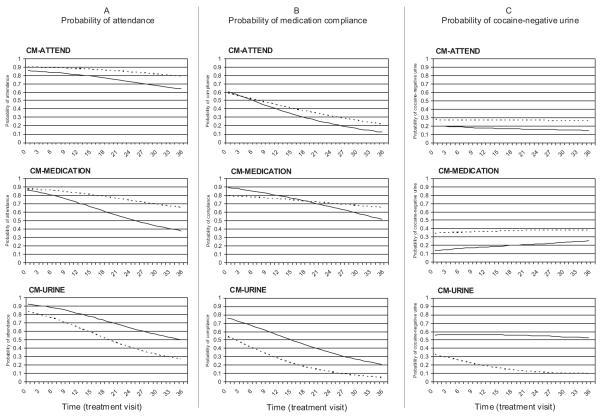
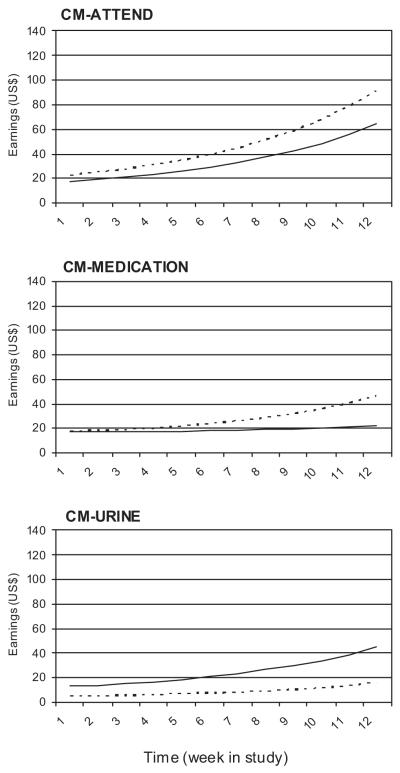
New data support use of levodopa pharmacotherapy with behavioral contingency management (CM) as one efficacious combination in cocaine dependence disorder treatment. A potential mechanism of the combined treatment effects may be related to dopamine-induced enhancement of the saliency of contingently delivered reinforcers. Evidence to support this mechanism was sought by evaluating levodopa-enhancing effects across distinct CM conditions that varied in behavioral targets. A total of 136 treatment-seeking, cocaine dependent subjects participated in this 12-week, randomized, placebo-controlled trial of levodopa (vs. placebo) administered in combination with one of three behavioral CM conditions. In the CM-URINE condition, subjects received cash-valued vouchers contingent on cocaine-negative urine toxicology results. In the CM-ATTEND condition, the same voucher schedule was contingent on attending thrice weekly clinic visits. In the CM-MEDICATION condition, the same voucher schedule was contingent on Medication Event Monitoring Systems- and riboflavin-based evidence of pill-taking behavior. Primary outcomes associated with each CM target behavior were analyzed using generalized linear mixed models for repeated outcomes. CM responding in the CM-ATTEND and CM-MEDICATION conditions showed orderly effects, with each condition producing corresponding changes in targeted behaviors, regardless of medication condition. In contrast, CM responding in the CM-URINE condition was moderated by medication, with levodopa-treated subjects more likely to submit cocaine-negative urines. These findings specify the optimal target behavior for CM when used in combination with levodopa pharmacotherapy.
Figures
References
-
- American Psychiatric Association . Diagnostic and statistical manual of mental disorders. 4th ed Author; Washington, DC: 1994.
-
- Budney AJ, Higgins ST. A community reinforcement plus vouchers approach: Treating cocaine addiction. Therapy Manuals for Drug Addiction. USDHHS NIH; 1998.
-
- Chutuape MA, Katz EC, Stitzer ML. Methods for enhancing transition of substance dependent patients from inpatient to outpatient treatment. Drug and Alcohol Dependence. 2001;61:137–143. - PubMed