


Epidemiology of reported Yersinia enterocolitica infections in Germany, 2001-2008
- PMID: 20546575
- PMCID: PMC2905328
- DOI: 10.1186/1471-2458-10-337
Epidemiology of reported Yersinia enterocolitica infections in Germany, 2001-2008
Abstract
Background: Yersiniosis is the third most common zoonotic bacterial disease in Germany and the European Union. Sequelae of Yersinia enterocolitica infections, such as reactive arthritis, have been reported. Consumption of pork and its products, especially eaten raw or undercooked, is an important risk factor of yersiniosis. Infection with Y. enterocolitica is notifiable through the national surveillance system for infectious diseases in Germany and several thousands of cases are being reported each year. We present recent data on the epidemiology of reported yersiniosis in Germany.
Methods: Surveillance data on yersiniosis, accessed through the national level database (SurvNet), were analyzed with regard to time trends, demographical and geographical distribution, serotypes, and hospitalization, for the time period 2001-2008.
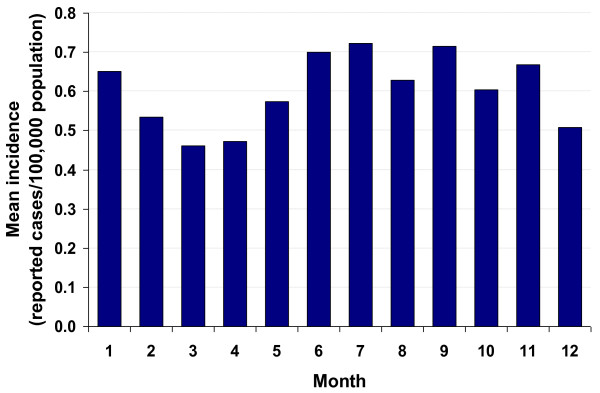
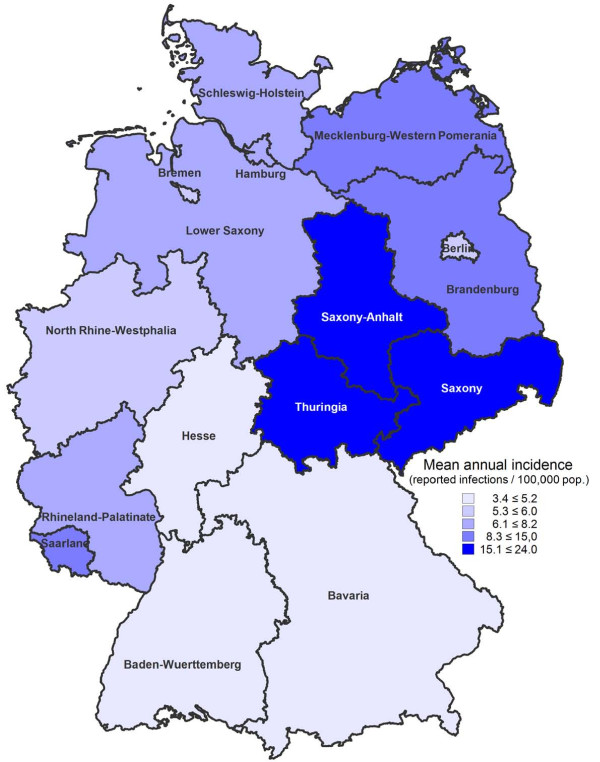
Results: A total of 47,627 cases of yersiniosis were reported. The mean annual incidence of yersiniosis was 7.2/100,000 population. A downward trend in the number of reportable cases has occurred since 2002. Almost all Y. enterocolitica infections were reported as single cases, i.e., with no apparent links to other cases. The number of reported infections showed substantially less seasonal variation than in other zoonotic enteric diseases. The incidence was highest in children under five years (58/100,000 population), in particular in one-year-old children (108/100,000 population). Almost 97% of infections were acquired domestically. High incidences occurred in the eastern German federal states Thuringia, Saxony, and Saxony-Anhalt. Differences in incidences across federal states were driven primarily by incidence differences in children under five years. Hospitalization was reported for 17% of cases, the proportion being highest among teenagers. Almost 90% of Y. enterocolitica strains were diagnosed as serotype O:3, which is the serotype most frequently isolated from pigs.
Conclusions: Yersiniosis is a zoonotic foodborne disease of relevance to public health in Germany because of its high incidence and risk for sequelae. The incidence of reported yersiniosis in Germany varies markedly from state to state, mainly due to incidence difference among young children. More research efforts should be directed towards the elucidation of risk factors of yersiniosis in this age group.
Figures

References
-
- Tauxe RV, Wauters G, Goossens V, Van Noyen R, Vandepitte J, Martin SM, De Mol P, Thiers G. Yersinia enterocolitica infections and pork: the missing link. Lancet. 1987. pp. i:1129–1132. - PubMed
Publication types
MeSH terms
LinkOut - more resources
Full Text Sources
