. 2010 Aug;91(2):238-45.
doi: 10.1016/j.exer.2010.05.013. Epub 2010 May 28.

Decorin transfection suppresses profibrogenic genes and myofibroblast formation in human corneal fibroblasts

Affiliations

Decorin transfection suppresses profibrogenic genes and myofibroblast formation in human corneal fibroblasts

Rajiv R Mohan et al. Exp Eye Res. 2010 Aug.

Abstract

Decorin, a small leucine-rich proteoglycan, is a natural inhibitor of transforming growth factor beta (TGFbeta). Myofibroblast and haze formation in the cornea have been attributed to TGFbeta hyperactivity released from corneal epithelium following injury to eye. This study tested the hypothesis that decorin-gene transfer inhibits TGFbeta-driven myofibroblast and haze formation in the cornea. Human corneal fibroblast (HSF) cultures generated from donor human corneas were used. Decorin cDNA was cloned into mammalian expression vector. Restriction enzyme analysis and DNA sequencing confirmed the nucleotide sequence of generated vector construct. The decorin gene cloned into mammalian expression vector was introduced into HSF with lipofectamine transfection kit. Expression of decorin in selected clones was characterized with RT-PCR, immunocytochemistry and western blotting. Phage contrast microscopy and trypan blue exclusion assay evaluated the effects of decorin-gene transfer on HSF phenotype and viability, respectively. Real-time PCR, western blot and immunocytochemistry were used to analyze inhibitory effects of decorin-gene transfer on TGFbeta-induced myofibroblast formation by measuring differential expression of alpha smooth muscle actin (SMA), a myofibroblast marker, mRNA and protein expression. Analysis of variance (ANOVA) and the Bonferroni-Dunn adjustment for repeated measures were used for statistical analysis. Our data indicate that decorin-gene transfer into HSF do not alter cellular phenotype or viability. Decorin over-expressing HSF clones grown in the presence of TGFbeta1 under serum-free conditions showed a statistically significant 80-83% decrease in SMA expression (p value < 0.01) compared to naked-vector transfected clones or un-transfected HSF controls. Decorin-transfected, naked-vector transfected and un-transfected HSF grown in the absence of TGFbeta1 showed no or extremely low expression of SMA. Furthermore, decorin over-expression did not affect HSF phenotype and decreased TGFbeta-induced RNA levels of profibrogenic genes such as fibronectin, collagen type I, III, and IV that play important role in stromal matrix modulation and corneal wound healing. The results of study suggest that decorin-gene transfer effectively prevents TGFbeta-driven transformation of keratocyte and corneal fibroblast to myofibroblasts. We postulate that decorin-gene therapy can be used to treat corneal haze in vivo.


Figures

Fig. 1
Fig. 1
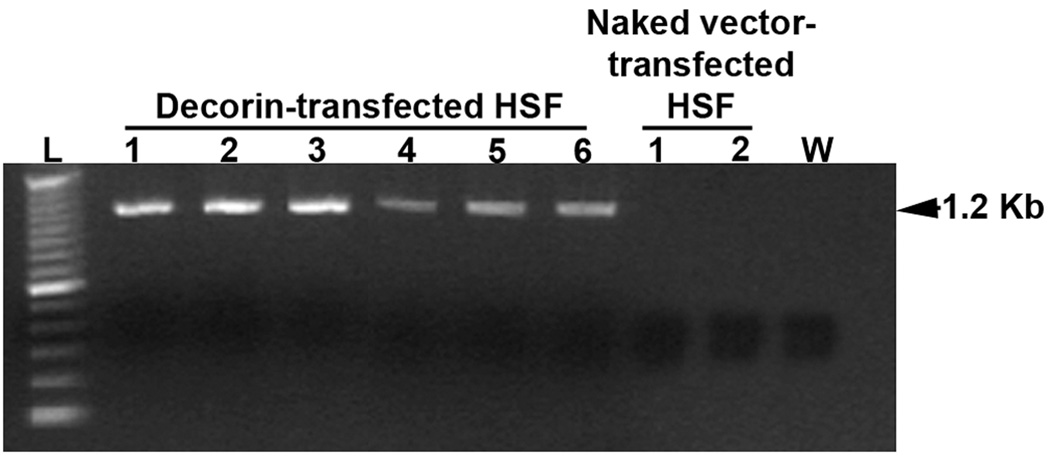
PCR analysis showing delivery of plasmid containing decorin gene into several identified HSF clones. After reverse transcribing total RNA from HSF cultures transfected with pcDNA3.1-decorin (6 clones) or naked vector (2 clones) were amplified using primers sets prepared from decorin and vector DNA sequences. An expected 1.2 Kb band for decorin was detected after 21 cycles of amplification. The “L” represents 100 bp DNA ladder and “W” is negative control reaction ran without cDNA.
Fig. 2
Fig. 2
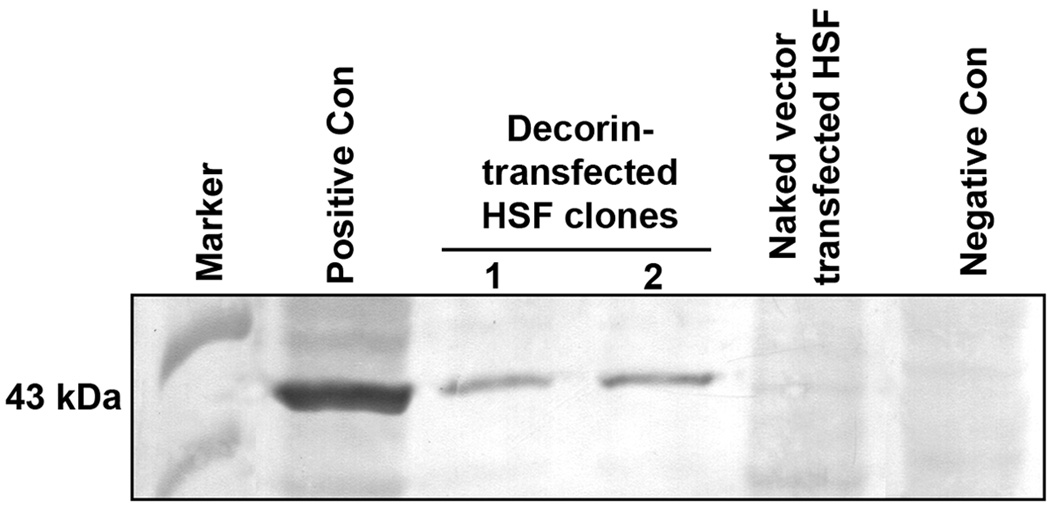
Immunoblotting analysis showing expression of decorin in two decorin-transfected HSF clones. Total protein extracts prepared from HSF transfected with pcDNA3.1-decorin or naked vector were analyzed. A protein band at 43 kDa, specific for decorin, was detected in decorin-transfected HSF clones. The naked vector transfected HSF clone did not show any band. Commercially available decorin-transfected and non-transfected 293T cell lysates were used as positive and negative controls, respectively.
Fig. 3
Fig. 3
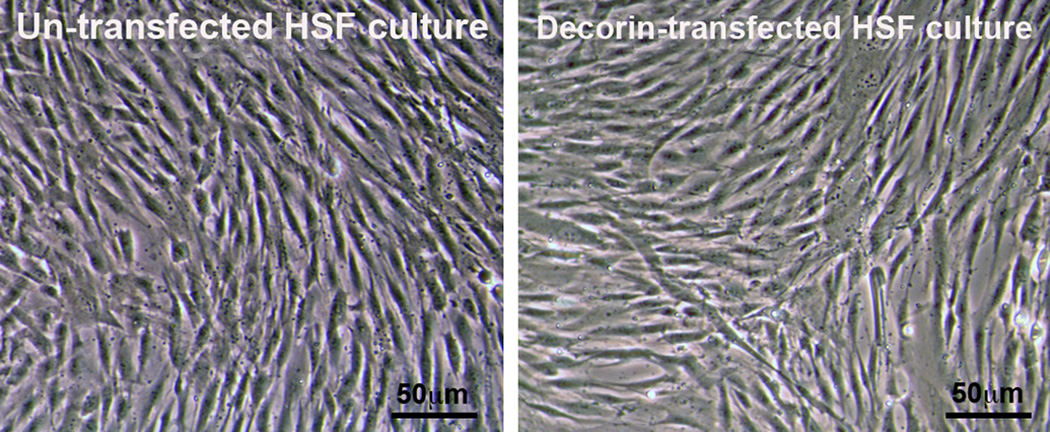
Representative phase-contrast light microscopy images showing un-transfected and decorin-transfected HSF clones phenotype. The 80–90% confluent decorin-transfected (left panel) HSF clone showed morphology similar to un-transfected HSF clones (right panel). This suggests that decorin gene transfer does not alter HSF phenotype. Scale bar denotes 50 µm.
Fig. 4
Fig. 4
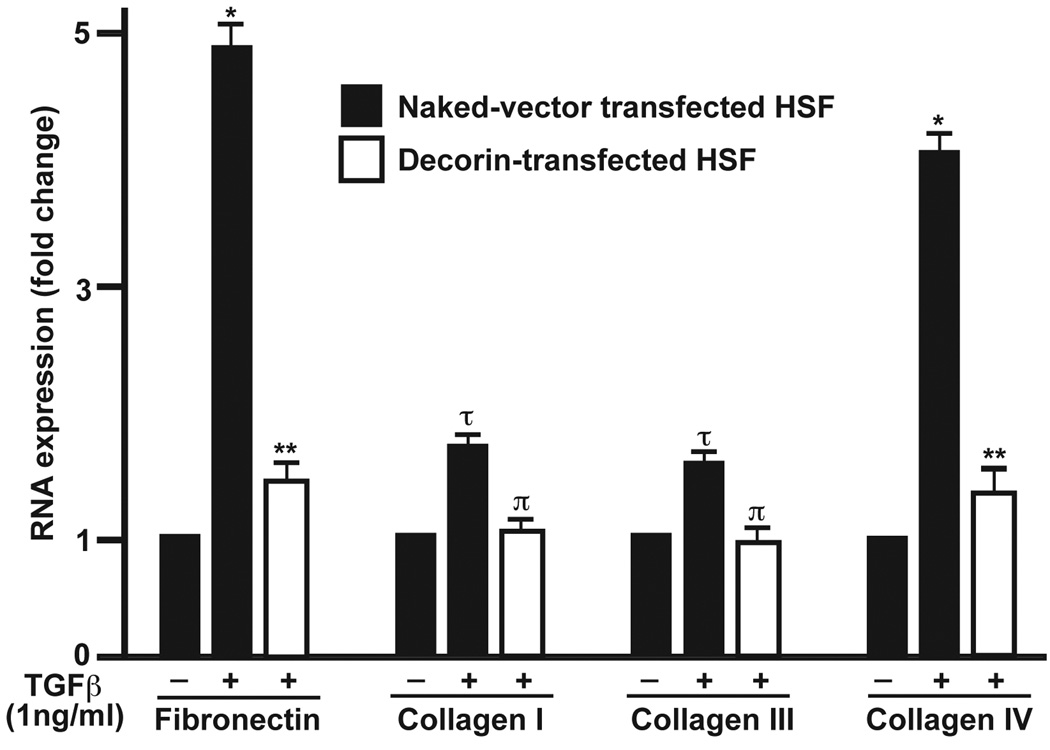
Real-time quantitative PCR showing analysis of pro-fibrogenic genes, fibronectin, alpha collagen type-I, -III, and -IV expression in un-transfected, naked vector-transfected, and decorin-transfected HSF cultures grown in presence or absence of TGFβ1 (1ng/ml) under serum-free conditions. The TGFβ1 caused 1.1–4.8-fold increase in tested genes in un-transfected or naked-vector transfected HSF cultures grown in presence of TGFβ1 compared to cultures grown in absence of TGFβ1. Decorin transfection showed statistically significant inhibition of TGFβ1-induced expression of fibronectin, collagen type-I, -III and -IV. *=p<0.01 and τ=p<0.05 (−TGFβ1 naked-vector transfected HSF vs +TGFβ1 naked-vector transfected HSF), **=p<0.001 and π=p<0.01 (−TGFβ1 naked vector-transfected vs +TGFβ1 decorin-transfected HSF). No significant differences in the RNA levels of fibronectin, collagen type I, III or IV were detected between the un-transfected normal and naked-vector transfected HSF. (Data not shown)
Fig. 5
Fig. 5
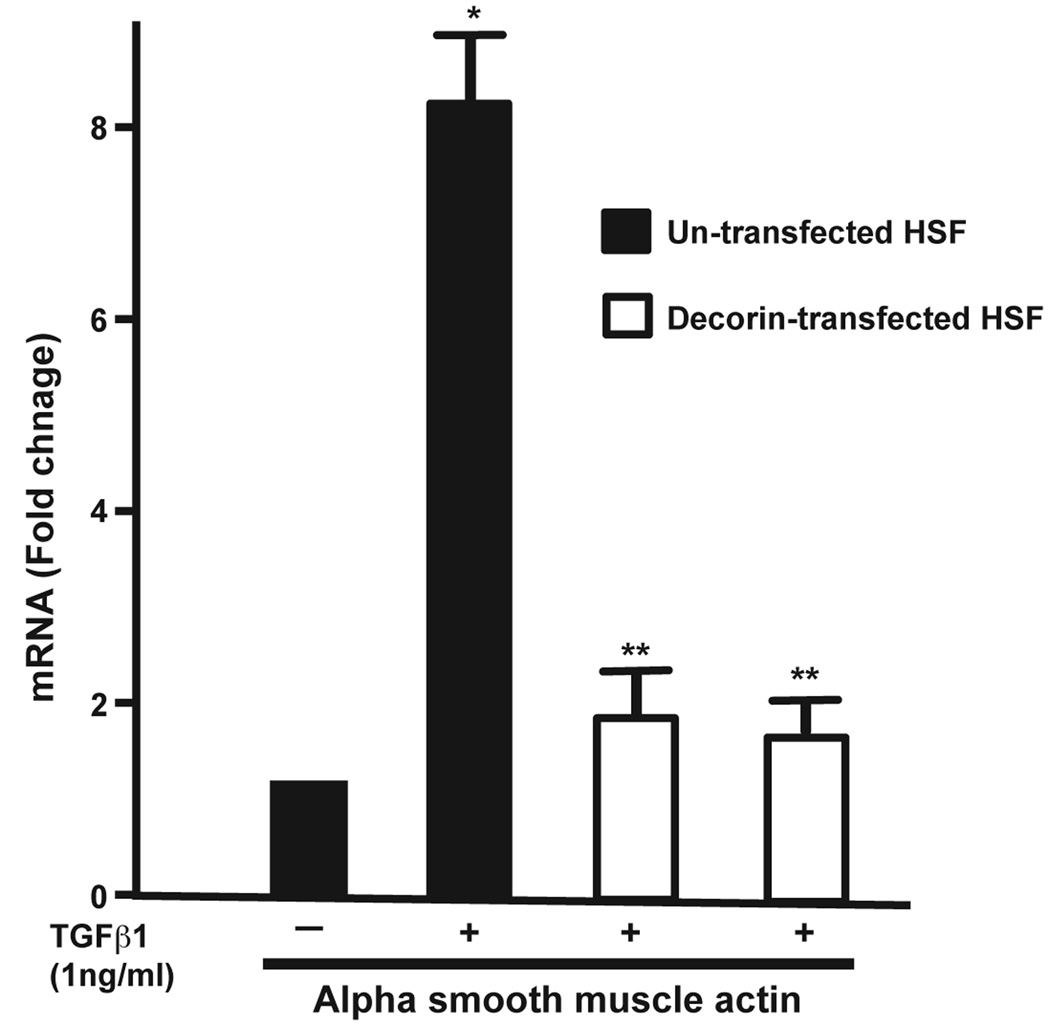
Real-time quantitative PCR showing analysis of SMA RNA levels in un-transfected and decorin-transfected HSF cultures grown in presence or absence of TGFβ1 (1ng/ml) under serum-free conditions. A statistically significant more than 8-fold (p<0.01) increase in the SMA gene was detected in un-transfected HSF cultures grown in the presence of TGFβ1 compared to cultures grown in the absence of TGFβ1. Decorin transfected HSF samples showed a statistically significant decrease (>6-fold; p<0.001) in SMA compared to un-transfected HSF cultures grown under similar conditions. The * indicates a p<0.01 compared to negative control (no TGFβ1) and the ** indicates a p<0.001 of un-transfected HSF versus decorin-transfected HSF grown in the presence of TGFβ1.
Fig. 6
Fig. 6
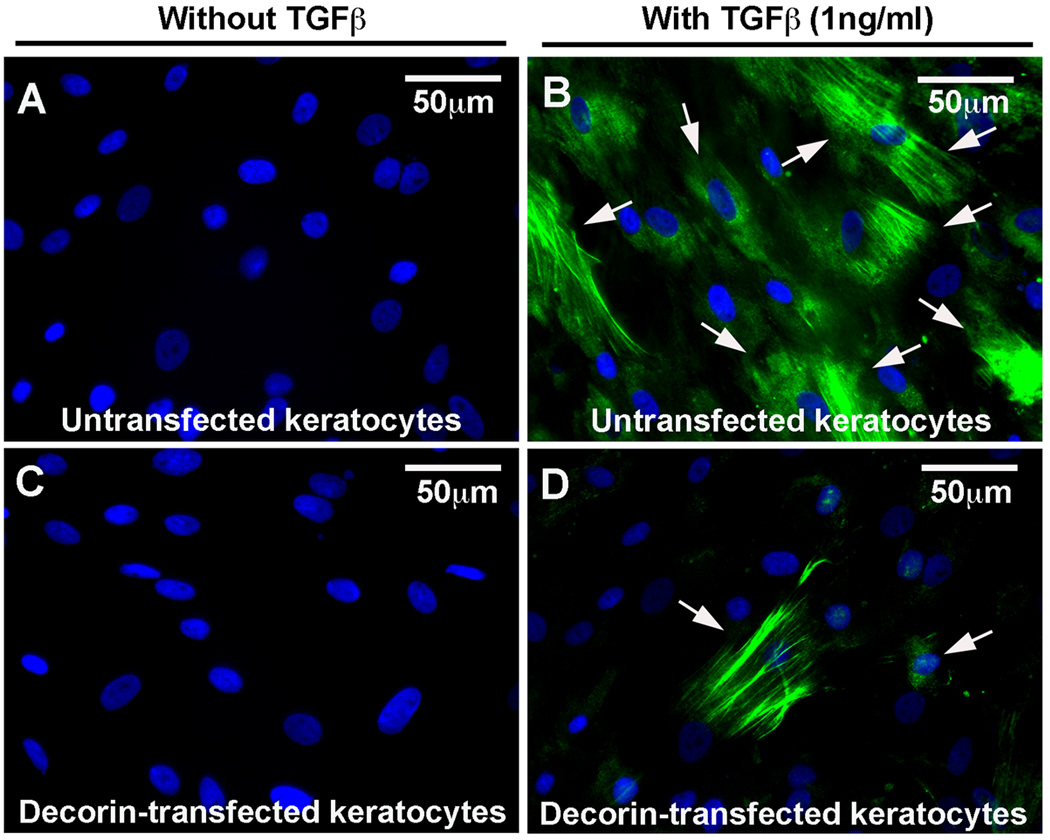
Representative images showing immunocytochemistry of SMA, a myofibroblast marker, done in un-transfected HSF and decorin-transfected HSF cultures grown in presence or absence of TGFβ1 (1ng/ml) under serum-free conditions. Decorin-transfected HSF (D) showed a significant decrease (79%, p<0.01) in SMA-positive cells compared to the un-transfected HSF (B) grown in the presence of TGFβ1. No SMA-positive cells were detected in un-transfected (A) or decorin-transfected cultures (C) grown in the absence of TGFβ1. Scale bar denotes 50 µm.
Fig. 7
Fig. 7
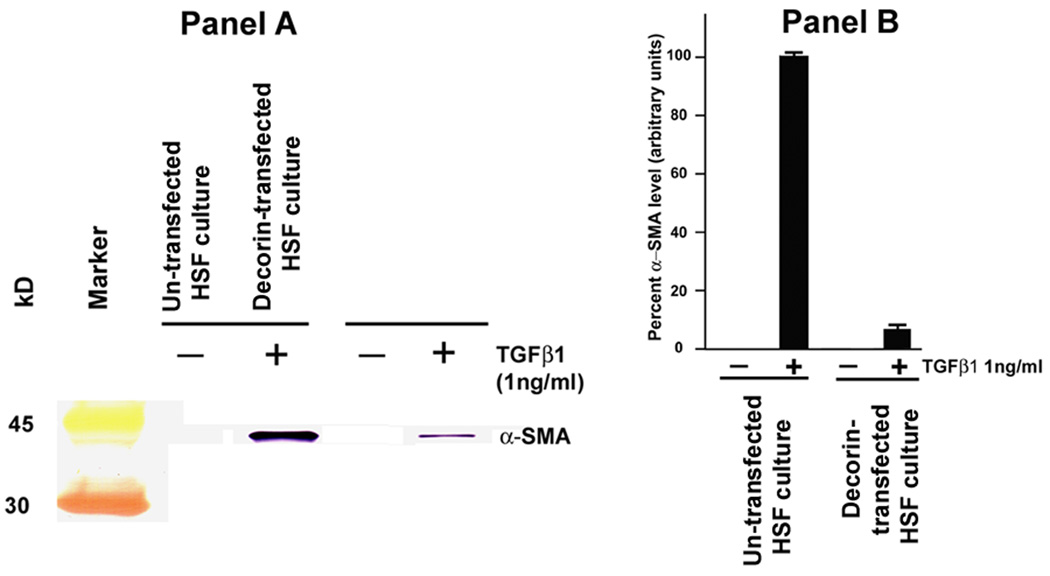
Western blot analysis (panel A) and digital quantification (panel B) of SMA expression detected in un-transfected HSF and decorin-transfected HSF grown in the presence or absence of TGFβ1 under serum-free conditions. Decorin-transfected HSF cultures showed a significant decrease in SMA-expression compared to un-transfected HSF grown in the presence of TGFβ1 (~83%, p<0.01). Neither un-transfected nor decorin-transfected HSF cultured in the absence of TGFβ1 expressed SMA.

References

    1. Axelsson I, Heinegard D. Fractionation of proteoglycans from bovine corneal stroma. Biochem J. 1975;145:491–500. - PMC - PubMed
    1. Azar DT. Corneal angiogenic and antiangiogenic factors in corneal avascularity, vasculogenesis, and wound healing. Trans Am Ophthalmol Soc. 2006;104:264–302. - PMC - PubMed
    1. Bainbridge JW, Smith AJ, Barker SS, Robbie S, Henderson R, Balaggan K, Viswanathan A, Holder GE, Stockman A, Tyler N, Petersen-Jones S, Bhattacharya SS, Thrasher AJ, Fitzke FW, Carter BJ, Rubin GS, Moore AT, Ali RR. Effect of gene therapy on visual function in Leber's congenital amaurosis. N. Engl. J. Med. 2008;358:2231–2239. - PubMed
    1. Behrens A, Gordon EM, Li L, Liu PX, Chen Z, Peng H, La Bree L, Anderson WF, Hall FL, McDonnell PJ. Retroviral gene therapy vectors for prevention of excimer laser-induced corneal haze. Invest Ophthalmol Vis Sci. 2002;43:968–977. - PubMed
    1. Border WA, Noble NA, Yamamoto T, Harper JR, Yamaguchi Y, Pierschbacher MD, Ruoslahti E. Natural inhibitor of transforming growth factor-beta protects against scarring in experimental kidney disease. Nature. 1992;360:361–364. - PubMed

Publication types

MeSH terms