


In vivo expression of G-protein beta1gamma2 dimer in adult mouse skeletal muscle alters L-type calcium current and excitation-contraction coupling
- PMID: 20547679
- PMCID: PMC2956909
- DOI: 10.1113/jphysiol.2010.191593
In vivo expression of G-protein beta1gamma2 dimer in adult mouse skeletal muscle alters L-type calcium current and excitation-contraction coupling
Abstract
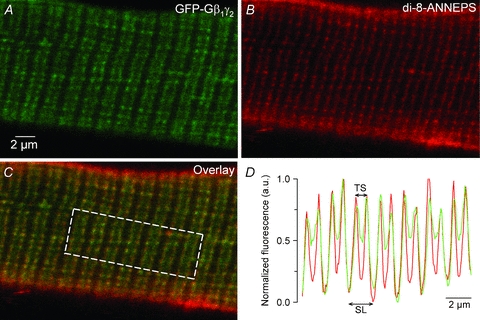
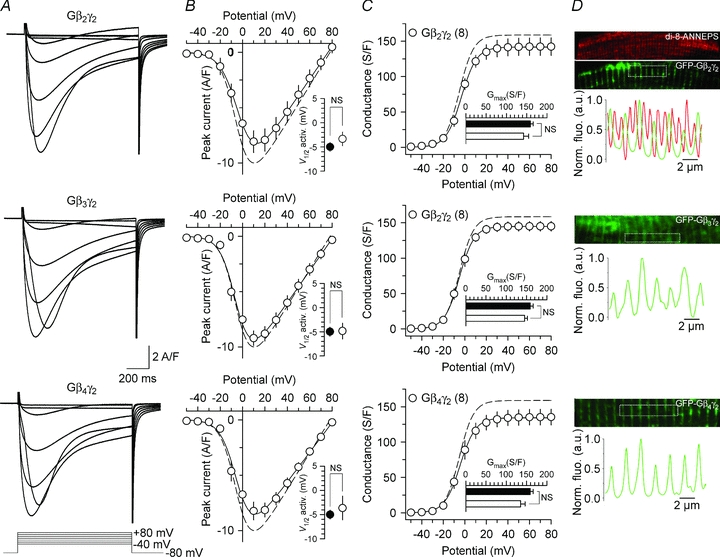
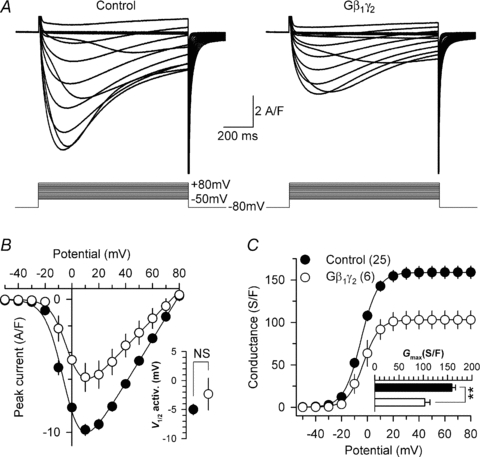
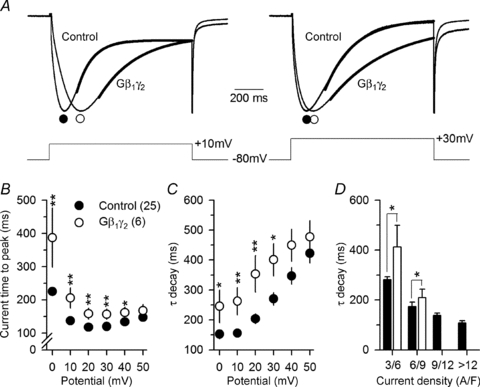
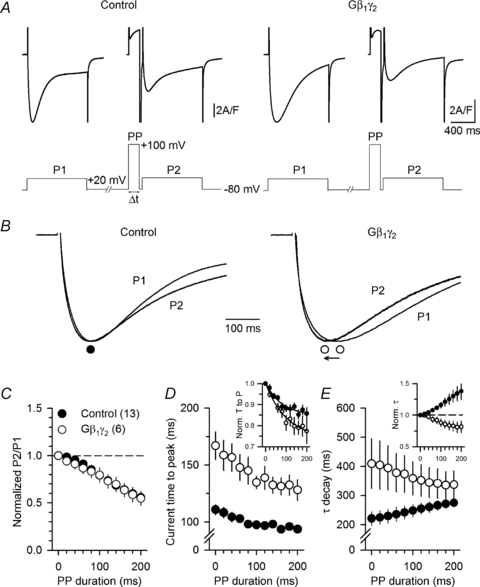
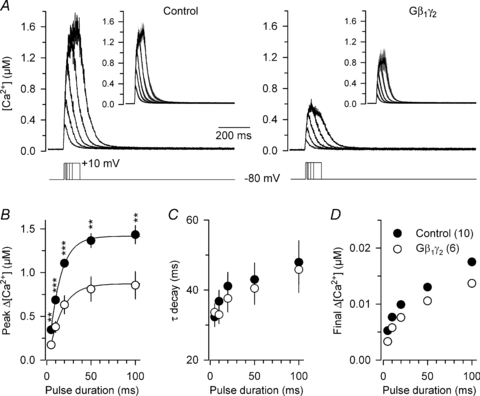
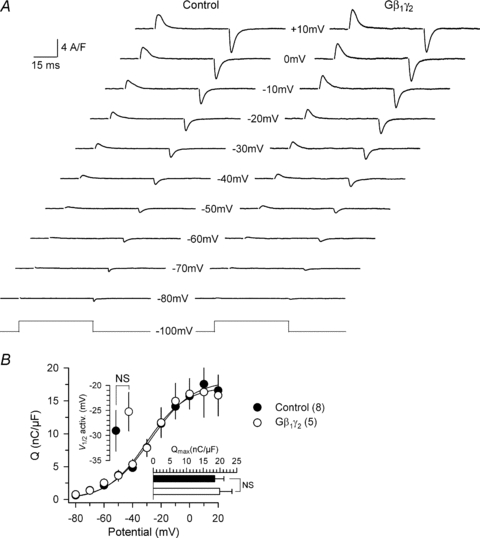
A number of G-protein-coupled receptors are expressed in skeletal muscle but their roles in muscle physiology and downstream effector systems remain poorly investigated. Here we explored the functional importance of the G-protein betagamma (Gbetagamma) signalling pathway on voltage-controlled Ca(2+) homeostasis in single isolated adult skeletal muscle fibres. A GFP-tagged Gbeta(1)gamma(2) dimer was expressed in vivo in mice muscle fibres. The GFP fluorescence pattern was consistent with a Gbeta(1)gamma(2) dimer localization in the transverse-tubule membrane. Membrane current and indo-1 fluorescence measurements performed under voltage-clamp conditions reveal a drastic reduction of both L-type Ca(2+) current density and of peak amplitude of the voltage-activated Ca(2+) transient in Gbeta(1)gamma(2)-expressing fibres. These effects were not observed upon expression of Gbeta(2)gamma(2), Gbeta(3)gamma(2) or Gbeta(4)gamma(2). Our data suggest that the G-protein beta(1)gamma(2) dimer may play an important regulatory role in skeletal muscle excitation-contraction coupling.
Figures
References
-
- Agler HL, Evans J, Tay LH, Anderson MJ, Colecraft HM, Yue DT. G protein-gated inhibitory module of N-type Cav2.2 Ca2+ channels. Neuron. 2005;46:891–904. - PubMed
-
- Bannister RA. Bridging the myoplasmic gap: recent developments in skeletal muscle excitation-contraction coupling. J Muscle Res Cell Motil. 2007;28:275–283. - PubMed
Publication types
MeSH terms
Substances
Grants and funding
LinkOut - more resources
Full Text Sources
Molecular Biology Databases
Research Materials
Miscellaneous
