White rice, brown rice, and risk of type 2 diabetes in US men and women
- PMID: 20548009
- PMCID: PMC3024208
- DOI: 10.1001/archinternmed.2010.109
White rice, brown rice, and risk of type 2 diabetes in US men and women
Erratum in
- Arch Intern Med. 2010 Sep 13;170(16):1479
Abstract
Background: Because of differences in processing and nutrients, brown rice and white rice may have different effects on risk of type 2 diabetes mellitus. We examined white and brown rice consumption in relation to type 2 diabetes risk prospectively in the Health Professionals Follow-up Study and the Nurses' Health Study I and II.
Methods: We prospectively ascertained and updated diet, lifestyle practices, and disease status among 39,765 men and 157,463 women in these cohorts.
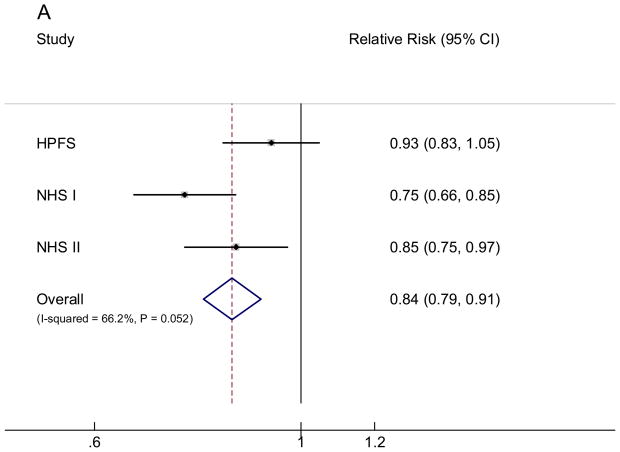
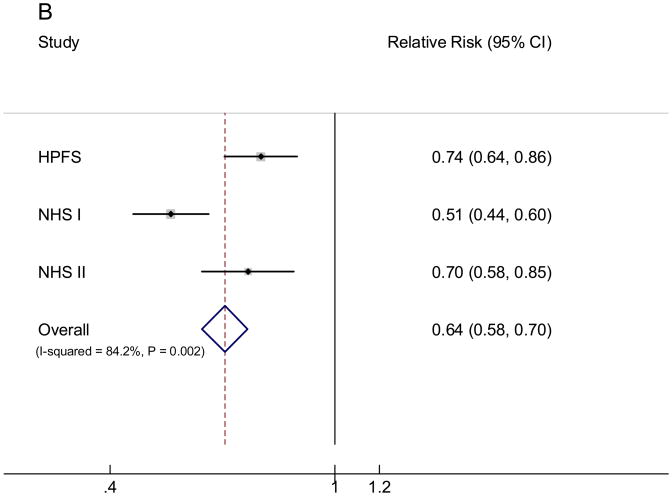
Results: After multivariate adjustment for age and other lifestyle and dietary risk factors, higher intake of white rice (> or =5 servings per week vs <1 per month) was associated with a higher risk of type 2 diabetes: pooled relative risk (95% confidence interval [CI]), 1.17 (1.02-1.36). In contrast, high brown rice intake (> or =2 servings per week vs <1 per month) was associated with a lower risk of type 2 diabetes: pooled relative risk, 0.89 (95% CI, 0.81-0.97). We estimated that replacing 50 g/d (cooked,equivalent to one-third serving per day) intake of white rice with the same amount of brown rice was associated with a 16% (95% CI, 9%-21%) lower risk of type 2 diabetes,whereas the same replacement with whole grains as a group was associated with a 36% (30%-42%) lower diabetes risk [corrected].
Conclusions: Substitution of whole grains, including brown rice, for white rice may lower risk of type 2 diabetes. These data support the recommendation that most carbohydrate intake should come from whole grains rather than refined grains to help prevent type 2 diabetes.
Conflict of interest statement
None of the authors had any financial or personal conflict of interest to disclose.
Figures
References
-
- Miller G, Prakash A, Decker E. Whole-grain foods in health and disease. St. Paul, MN: American Association of Cereal Chemists; 2002.
-
- Foster-Powell K, Holt SH, Brand-Miller JC. International table of glycemic index and glycemic load values: 2002. Am J Clin Nutr. 2002 Jul;76(1):5–56. - PubMed
-
- Schulze MB, Liu S, Rimm EB, Manson JE, Willett WC, Hu FB. Glycemic index, glycemic load, and dietary fiber intake and incidence of type 2 diabetes in younger and middle-aged women. Am J Clin Nutr. 2004 Aug;80(2):348–356. - PubMed
-
- Salmeron J, Ascherio A, Rimm EB, Colditz GA, Spiegelman D, Jenkins DJ, Stampfer MJ, Wing AL, Willett WC. Dietary fiber, glycemic load, and risk of NIDDM in men. Diabetes Care. 1997 Apr;20(4):545–550. - PubMed
-
- Salmeron J, Manson JE, Stampfer MJ, Colditz GA, Wing AL, Willett WC. Dietary fiber, glycemic load, and risk of non-insulin-dependent diabetes mellitus in women. Jama. 1997 Feb 12;277(6):472–477. - PubMed
Publication types
MeSH terms
Substances
Grants and funding
LinkOut - more resources
Full Text Sources
Medical