


Quercetin targets cysteine string protein (CSPalpha) and impairs synaptic transmission
- PMID: 20548785
- PMCID: PMC2883571
- DOI: 10.1371/journal.pone.0011045
Quercetin targets cysteine string protein (CSPalpha) and impairs synaptic transmission
Abstract
Background: Cysteine string protein (CSPalpha) is a synaptic vesicle protein that displays unique anti-neurodegenerative properties. CSPalpha is a member of the conserved J protein family, also called the Hsp40 (heat shock protein of 40 kDa) protein family, whose importance in protein folding has been recognized for many years. Deletion of the CSPalpha in mice results in knockout mice that are normal for the first 2-3 weeks of life followed by an unexplained presynaptic neurodegeneration and premature death. How CSPalpha prevents neurodegeneration is currently not known. As a neuroprotective synaptic vesicle protein, CSPalpha represents a promising therapeutic target for the prevention of neurodegenerative disorders.
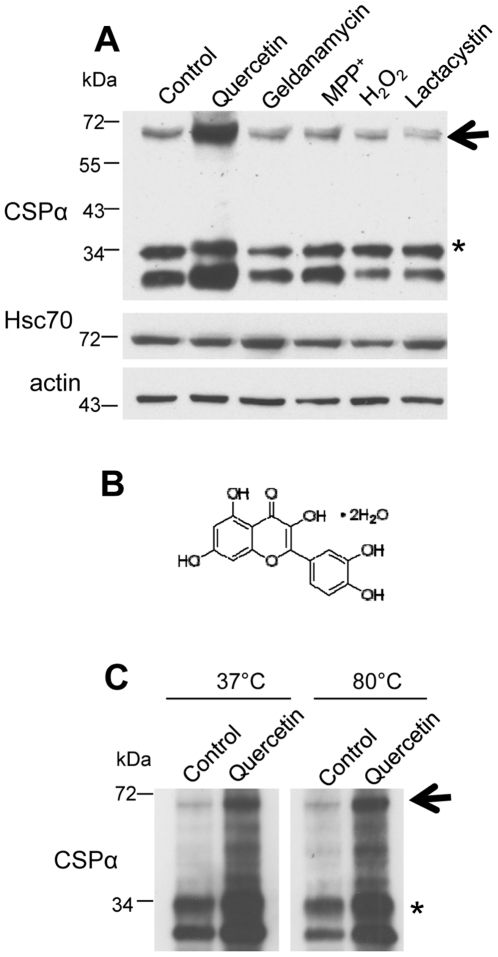
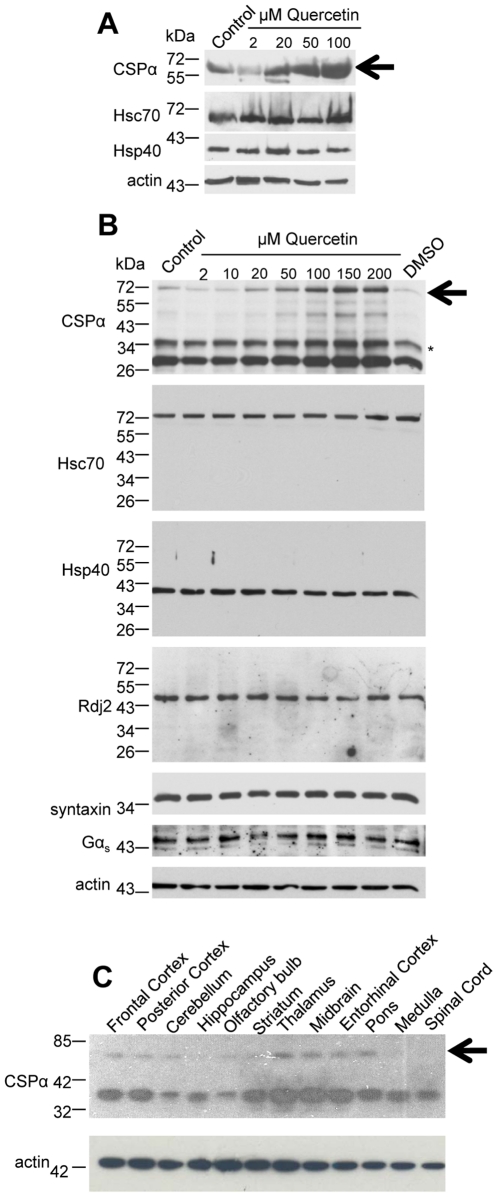
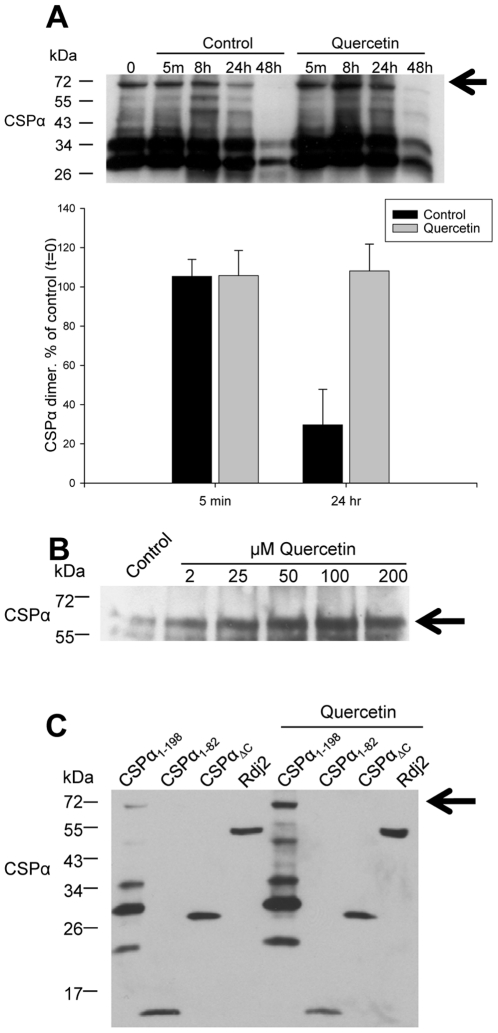
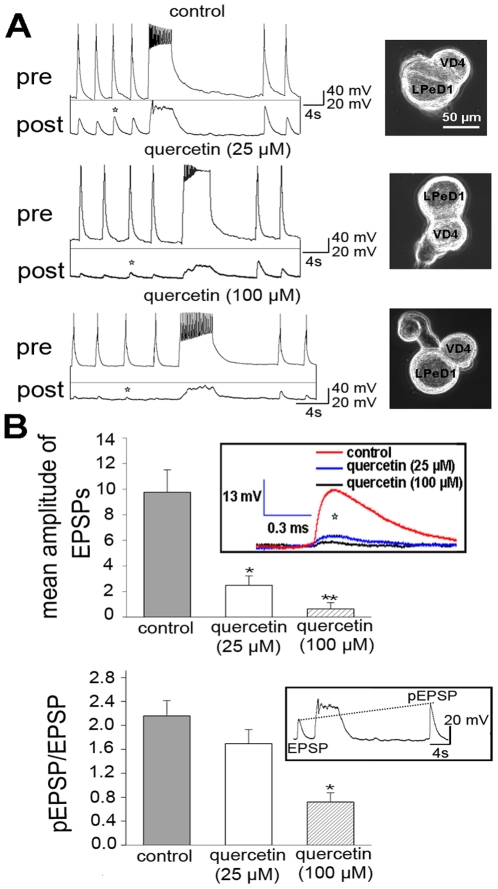
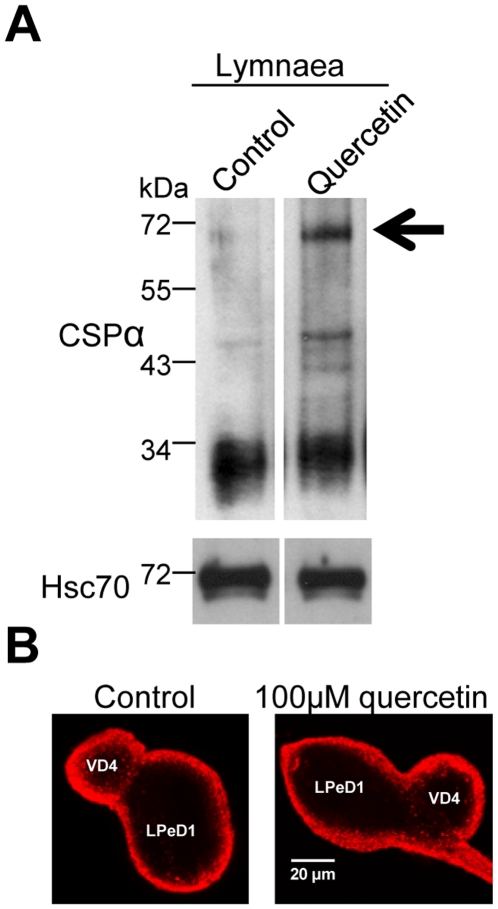
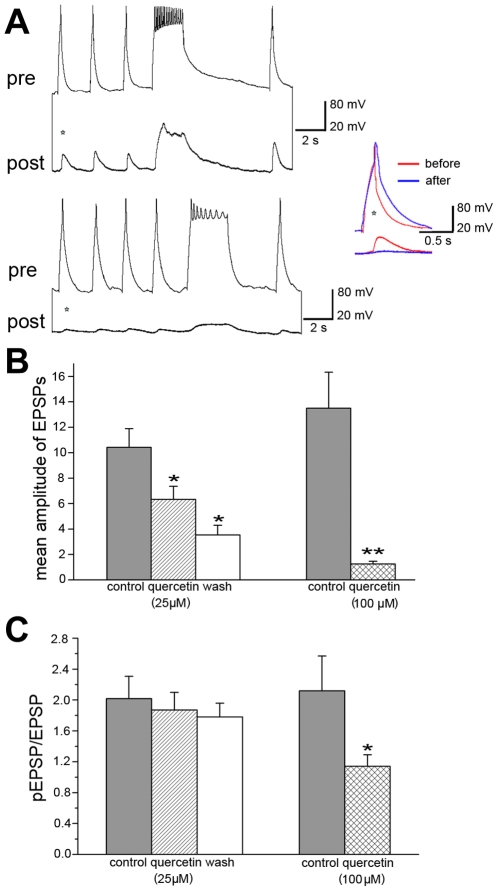
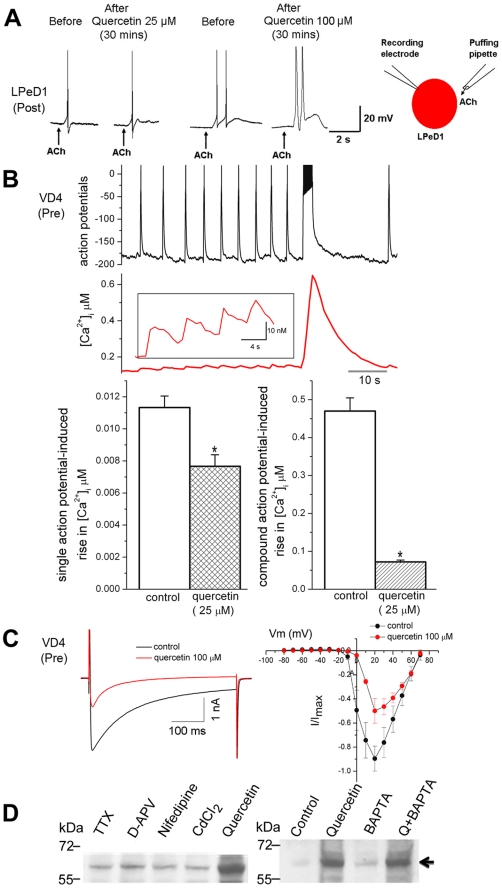
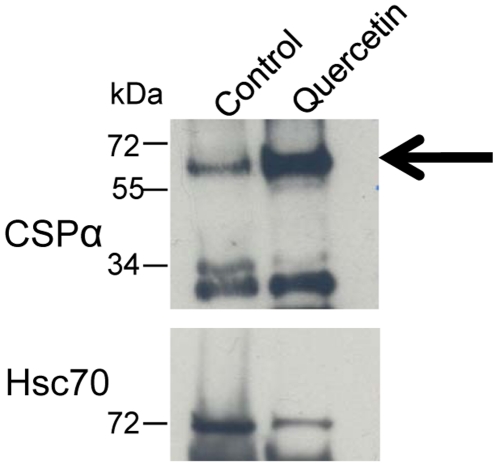
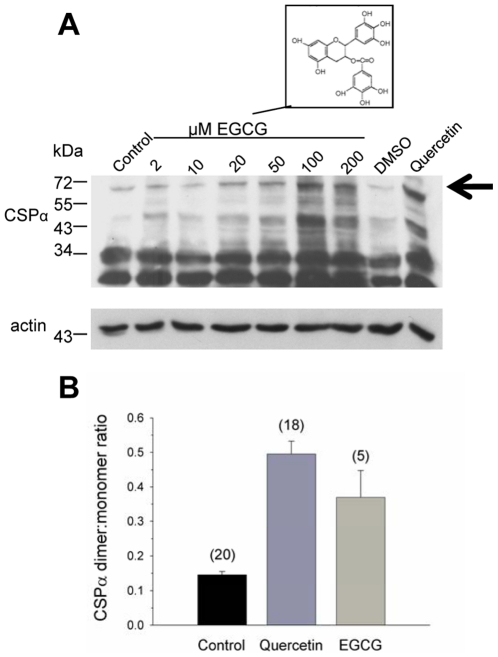
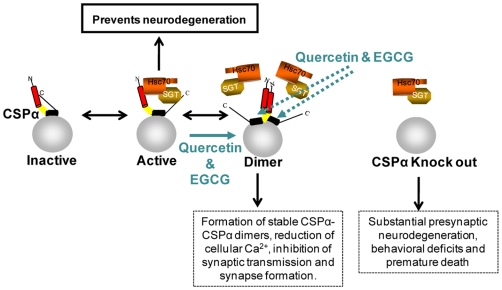
Methodology/principal findings: Here, we demonstrate that the flavonoid quercetin promotes formation of stable CSPalpha-CSPalpha dimers and that quercetin-induced dimerization is dependent on the unique cysteine string region. Furthermore, in primary cultures of Lymnaea neurons, quercetin induction of CSPalpha dimers correlates with an inhibition of synapse formation and synaptic transmission suggesting that quercetin interfers with CSPalpha function. Quercetin's action on CSPalpha is concentration dependent and does not promote dimerization of other synaptic proteins or other J protein family members and reduces the assembly of CSPalpha:Hsc70 units (70kDa heat shock cognate protein).
Conclusions/significance: Quercetin is a plant derived flavonoid and popular nutritional supplement proposed to prevent memory loss and altitude sickness among other ailments, although its precise mechanism(s) of action has been unclear. In view of the therapeutic promise of upregulation of CSPalpha and the undesired consequences of CSPalpha dysfunction, our data establish an essential proof of principle that pharmaceutical agents can selectively target the neuroprotective J protein CSPalpha.
Conflict of interest statement
Figures
References
-
- Mastrogiacomo A, Parsons SM, Zampighi GA, Jenden DJ, Umbach JA, et al. Cysteine string proteins: a potential link between synaptic vesicles and presynaptic Ca2+ channels. Science. 1994;263:981–982. - PubMed
-
- Zinsmaier KE, Eberle KK, Buchner E, Walter N, Benzer S. Paralysis and early death in cysteine string protein mutants of Drosophila. Science. 1994;263:977–980. - PubMed
-
- Fernandez-Chacon R, Wolfel M, Nishimune H, Tabares L, Schmitz F, et al. The synaptic vesicle protein CSP alpha prevents presynaptic degeneration. Neuron. 2004;42:237–251. - PubMed
Publication types
MeSH terms
Substances
Grants and funding
LinkOut - more resources
Full Text Sources
Research Materials
Miscellaneous
