. 2010 Jun 10;6(6):e1000986.
doi: 10.1371/journal.pgen.1000986.

siRNA-mediated methylation of Arabidopsis telomeres

Affiliations

siRNA-mediated methylation of Arabidopsis telomeres

Jan Vrbsky et al. PLoS Genet. .

Abstract

Chromosome termini form a specialized type of heterochromatin that is important for chromosome stability. The recent discovery of telomeric RNA transcripts in yeast and vertebrates raised the question of whether RNA-based mechanisms are involved in the formation of telomeric heterochromatin. In this study, we performed detailed analysis of chromatin structure and RNA transcription at chromosome termini in Arabidopsis. Arabidopsis telomeres display features of intermediate heterochromatin that does not extensively spread to subtelomeric regions which encode transcriptionally active genes. We also found telomeric repeat-containing transcripts arising from telomeres and centromeric loci, a portion of which are processed into small interfering RNAs. These telomeric siRNAs contribute to the maintenance of telomeric chromatin through promoting methylation of asymmetric cytosines in telomeric (CCCTAAA)(n) repeats. The formation of telomeric siRNAs and methylation of telomeres relies on the RNA-dependent DNA methylation pathway. The loss of telomeric DNA methylation in rdr2 mutants is accompanied by only a modest effect on histone heterochromatic marks, indicating that maintenance of telomeric heterochromatin in Arabidopsis is reinforced by several independent mechanisms. In conclusion, this study provides evidence for an siRNA-directed mechanism of chromatin maintenance at telomeres in Arabidopsis.


Conflict of interest statement

The authors have declared that no competing interests exist.

Figures

Figure 1
Figure 1. Expression of Arabidopsis chromosome-terminal genes.
(A) A diagram of gene arrangement at the ends of five Arabidopsis chromosomes. Arrows illustrate the relative size and direction of transcripts of annotated terminal genes. The distance of the predicted ATG codon from the telomere is indicated. (B) Expression of the terminal genes in different tissues of wild-type plants assayed by RT-PCR. The size of the PCR products is indicated in parenthesis.
Figure 2
Figure 2. Chromatin structure of Arabidopsis chromosome termini.
(A) Schematic diagram of the 1L and 2R chromosome ends. Black boxes represent telomeric DNA. The red and blue bars span regions analyzed by bisulfite sequencing and ChIP PCR, respectively. The green bar indicates the region analyzed by ChIP qPCR. (B) ChIP PCR data showing the distribution of methylated histones at unique regions immediately adjacent to telomeres at the indicated chromosome arms. A euchromatic fragment of the MEE51 gene and a heterochromatic gypsy-like retrotransposon (At4g03770) were amplified from the ChIP fractions as a control. (C) Immunoprecipitated DNA analyzed by sequential dot-blot hybridization with a telomeric probe and the centromeric CEN180 probe.
Figure 3
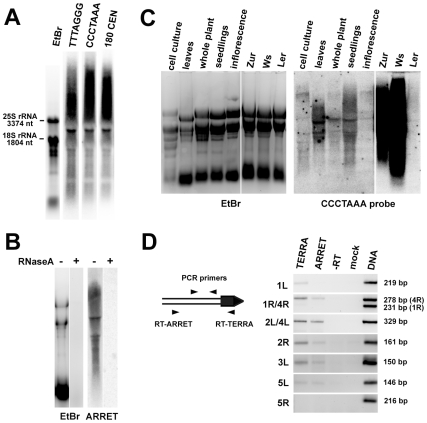
Figure 3. Identification of TERRA and ARRET transcripts in Arabidopsis.
(A) Northern blot analysis of wild-type RNA that was hybridized with a strand-specific TTTAGGG probe, stripped after exposure further sequentially rehybridized with CCCTAAA and the centromeric CEN180 probe. The gel stained with ethidium bromide (EtBr) is shown as a loading control. (B) Sensitivity of ARRET transcripts to RNaseA. (C) Northern blot detection of TERRA in different tissues of wild-type Col plants and in seedlings of the Ws, Zur and Ler ecotypes. The left and right parts of the membrane were exposed for 1 day and 2 h, respectively. (D) Detection of telomere-derived TERRA and ARRET transcripts by RT-PCR. The diagram outlines the strategy used for strand-specific RT-PCR at a hypothetical chromosome end (the telomere is indicated as a black box). The size of the expected PCR product for each telomere is indicated. As chromosome ends 1R and 4R contain a stretch of sequence homology, one set of primers was used to assay for the expression at both telomeres in one reaction. The resulting chromosome-end-specific products can be distinguished by their size. It is currently unknown whether the subtelomere sequence at the NOR-bearing chromosome end represents the 2L or 4L telomere. ARRET transcripts at this arm were not analyzed because they correspond to the nascent 45S rRNA.
Figure 4
Figure 4. Detection of telomeric siRNAs.
(A) Northern analysis of small RNAs from wild-type and the indicated RdDM mutants. The membrane was hybridized with a CCCTAAA probe, stripped and rehybridized with the TTTAGGG probe. Electronically merged autoradiograms show faster migration of the C-siRNA that is due to a sequence bias towards pyrimidines. The loading control represents a large RNA that hybridizes to the TTTAGGG probe. (B) Distribution of siRNAs containing at least 12 nt of telomeric sequence in different Argonaute complexes. (C) Distribution of AGO4-associated C- and G-siRNAs according to the extent of homology to telomeric sequence. The total number of siRNAs is indicated on the y-axis.
Figure 5
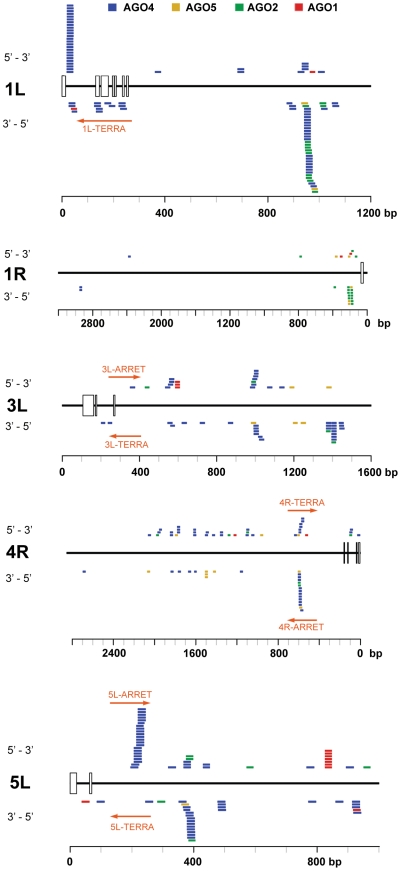
Figure 5. Distribution of Argonaute-associated siRNAs in telomere-adjacent regions.
The diagrams represent subtelomeric regions at the indicated chromosome arms. The rulers indicate the distance from a continuous array of telomeric repeats, open boxes mark positions of telomeric repeats intermingled within subtelomeric sequences. Only chromosome arms containing siRNAs detected within 5 kb from telomeres are shown. The position and orientation of AGO-associated siRNAs is indicated by colored bars. Only siRNAs that aligned to unique locations are included (Table S2). The TERRA and ARRET transcripts detected by strand-specific RT-PCR are depicted by a red arrow.
Figure 6
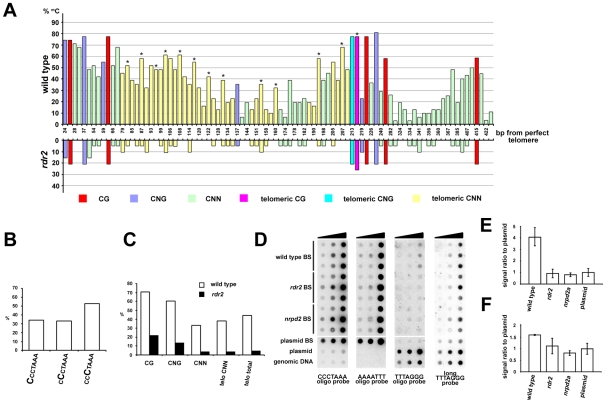
Figure 6. Methylation of telomeric DNA in wild-type and RdDM-deficient plants.
(A) The chart shows the frequency and distribution of cytosine methylation in the 1L-0' region. In total, 30 clones from five independently treated wild-type samples and 19 clones from three independent rdr2 samples were analyzed. Asterisks indicate the third cytosine in the CCCTAAA sequence. (B) The proportion of methylated cytosines in the 1L-0' region of wild-type plants depending on the position within the telomeric repeat as determined by bisulfite sequencing. (C) Frequency of cytosine methylation in the whole 1L-0' region according to sequence context in wild-type and rdr2 plants. (D) Cytosine methylation in bulk telomeric DNA assayed by dot-blot hybridization. Bisulfite-treated (BS) genomic DNA was spotted onto a membrane (∼7, 33 and 200 ng from each sample) and sequentially hybridized with AAAATTT, TTTAGGG and CCCTAAA probes. Untreated wild-type genomic DNA, and untreated and bisulfite-treated (BS) plasmids carrying ∼750 nt of Arabidopsis telomeric DNA were used as controls. (E,F) Quantification of signals obtained with oligo (E) and long (F) TTTAGGG probes. The signal intensity of non-converted DNA (obtained with the TTTAGGG probe) was normalized to the amount of telomeric DNA determined from hybridization with the CCCTAAA probe. The signal from BS-treated plasmid served to determine background hybridization of the probes to fully converted non-methylated telomeric DNA. Error bars represent standard deviation (N = 3).
Figure 7
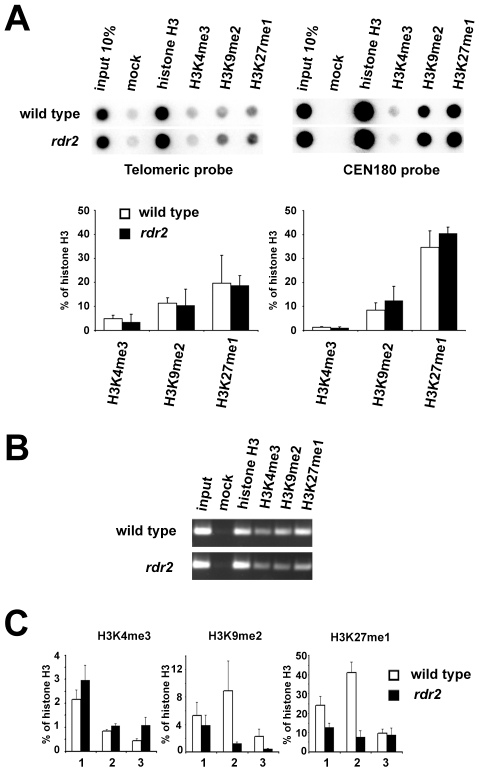
Figure 7. Telomeric heterochromatin in RdDM mutants.
(A) Representative ChIP data of wild-type and rdr2 plants. Chromatin was immunoprecipitated with antibodies against histone H3, H3K4me3, H3K9me2 and H3K27me1, blotted onto a membrane and hybridized with the TTTAGGG probe. The same membrane was stripped after exposure and rehybridized with the centromeric CEN180 probe. Data from three independent ChIP experiments were used for quantification. Signals were normalized to mock. (B) Analysis of ChIP fractions from wild-type and rdr2 plants by PCR with primers spanning the 1L-0 locus. (C) qPCR analysis of H3K4me3, H3K9me2 and H3K27me1 at the 1L-0 locus in wild-type and rdr2 plants. Each value represents an average of three qPCR measurements normalized to histone H3 occupancy for each ChIP fraction. The results of three independent pairwise ChIP experiments (1, 2 and 3) are presented.

References

    1. Blasco MA. The epigenetic regulation of mammalian telomeres. Nat Rev Genet. 2007;8:299–309. - PubMed
    1. Ottaviani A, Gilson E, Magdinier F. Telomeric position effect: from the yeast paradigm to human pathologies? Biochimie. 2008;90:93–107. - PubMed
    1. Michishita E, McCord RA, Berber E, Kioi M, Padilla-Nash H, et al. SIRT6 is a histone H3 lysine 9 deacetylase that modulates telomeric chromatin. Nature. 2008;452:492–496. - PMC - PubMed
    1. Garcia-Cao M, O'Sullivan R, Peters AH, Jenuwein T, Blasco MA. Epigenetic regulation of telomere length in mammalian cells by the Suv39h1 and Suv39h2 histone methyltransferases. Nat Genet. 2004;36:94–99. - PubMed
    1. Gonzalo S, Garcia-Cao M, Fraga MF, Schotta G, Peters AH, et al. Role of the RB1 family in stabilizing histone methylation at constitutive heterochromatin. Nat Cell Biol. 2005;7:420–428. - PubMed

Publication types