


Adenovirus-mediated expression of truncated E2F-1 suppresses tumor growth in vitro and in vivo
- PMID: 20549818
- PMCID: PMC4425364
- DOI: 10.1002/cncr.25322
Adenovirus-mediated expression of truncated E2F-1 suppresses tumor growth in vitro and in vivo
Expression of concern in
-
Expression of concern.Cancer. 2024 Sep 1;130(17):3047. doi: 10.1002/cncr.35435. Epub 2024 Jun 26. Cancer. 2024. PMID: 38922873 No abstract available.
Abstract
Background: Adenovirus (Ad)-mediated E2F-1 gene transfer induces apoptosis in cancer cells in vitro and in vivo, but clinical application of E2F-1 in cancer gene therapy remains controversial because of the oncogenic potential of E2F-1. This barrier can be circumvented by using the truncated form of the E2F-1 gene (E2Ftr) (amino acids 1 through 375), which lacks the E2F-1 transactivation domain and cell cycle-promoting effects.
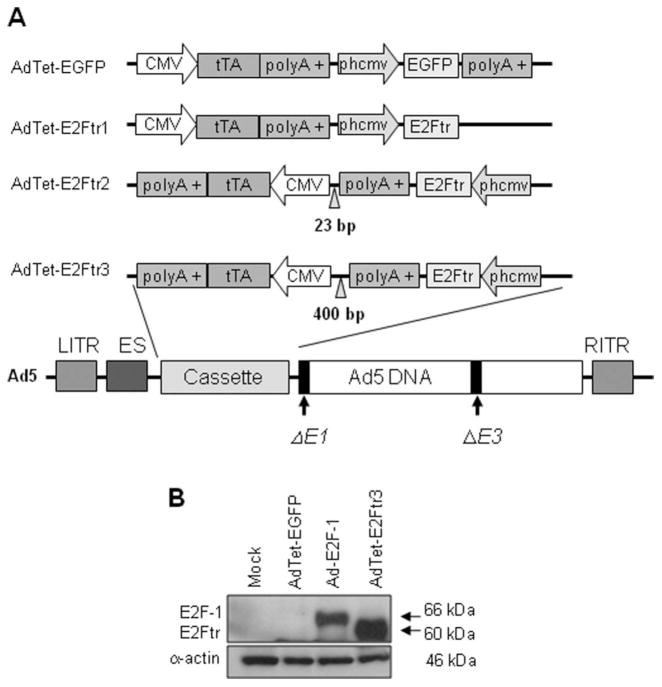
Methods: The authors constructed 3 adenoviral vectors that expressed E2Ftr under regulation of the tetracycline (Tet)-off system (AdTet-E2Ftr1, AdTet-E2Ftr2, and AdTet-E2Ftr3). These vectors were compared for E2Ftr expression and apoptosis induction in cancer cells and normal cells. E2Ftr antitumor activity in vivo also was assessed in a melanoma xenograft model.
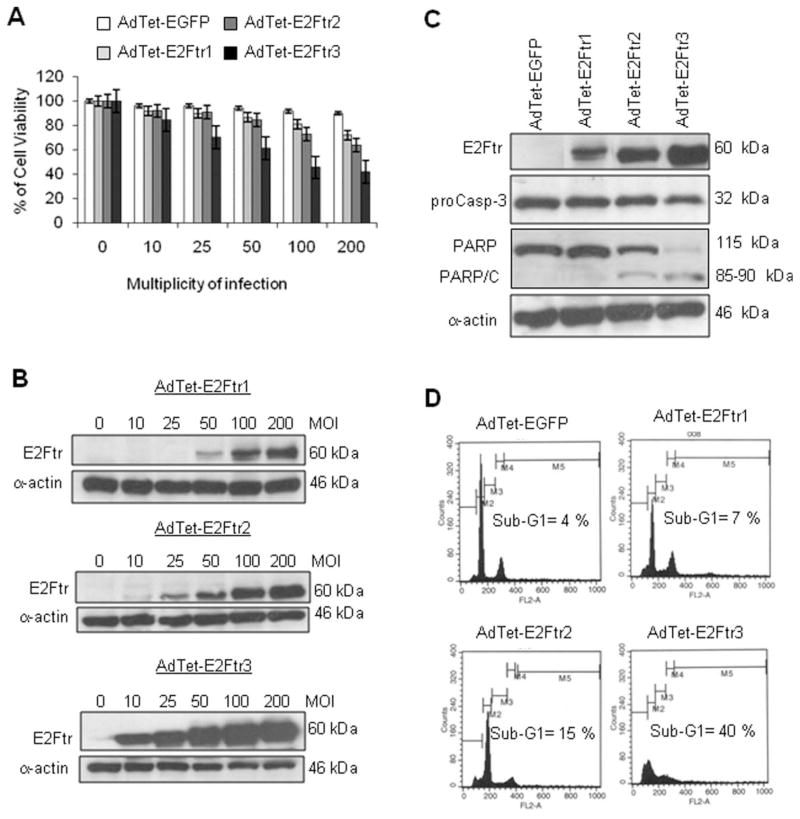
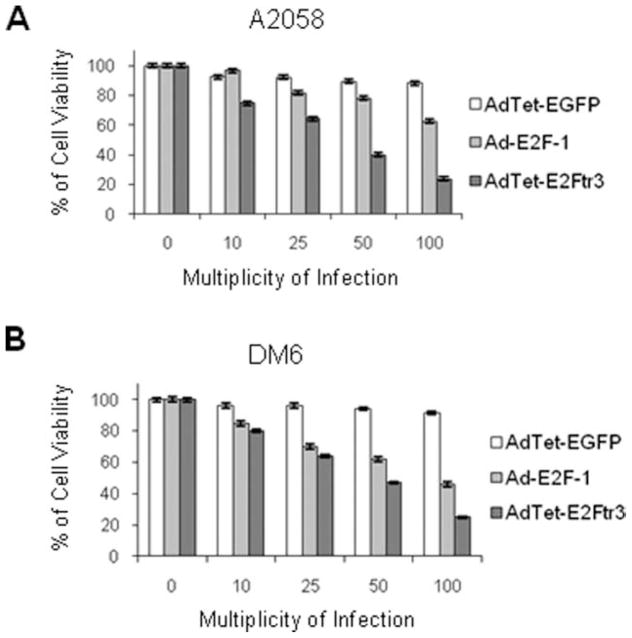
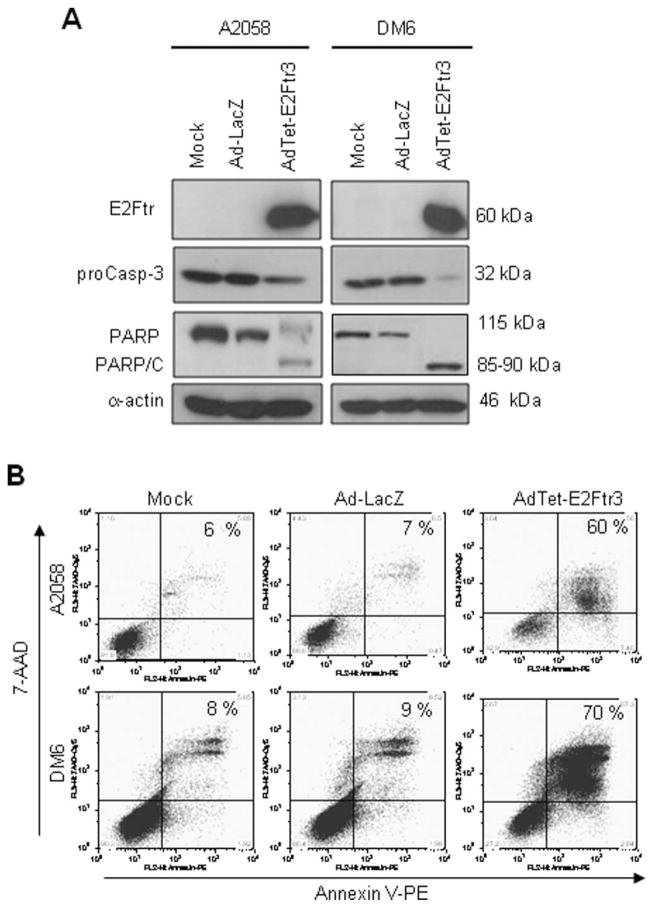
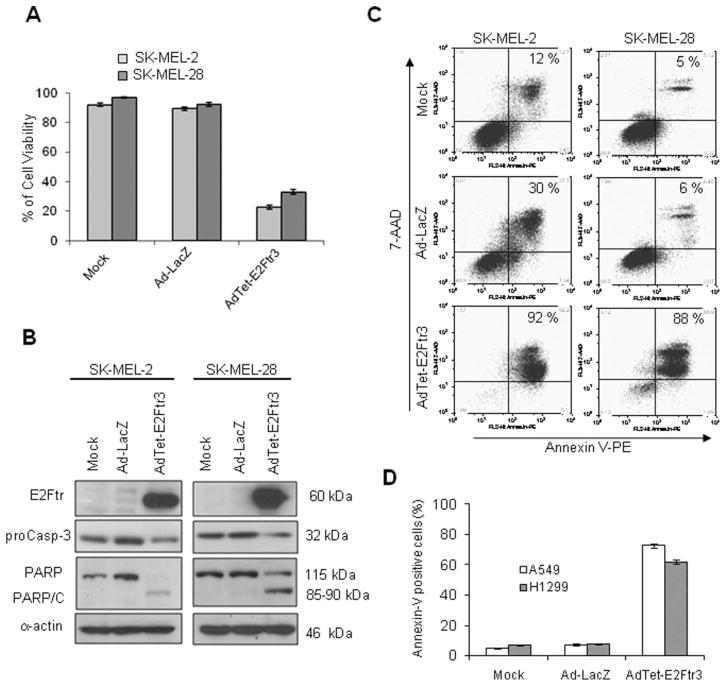
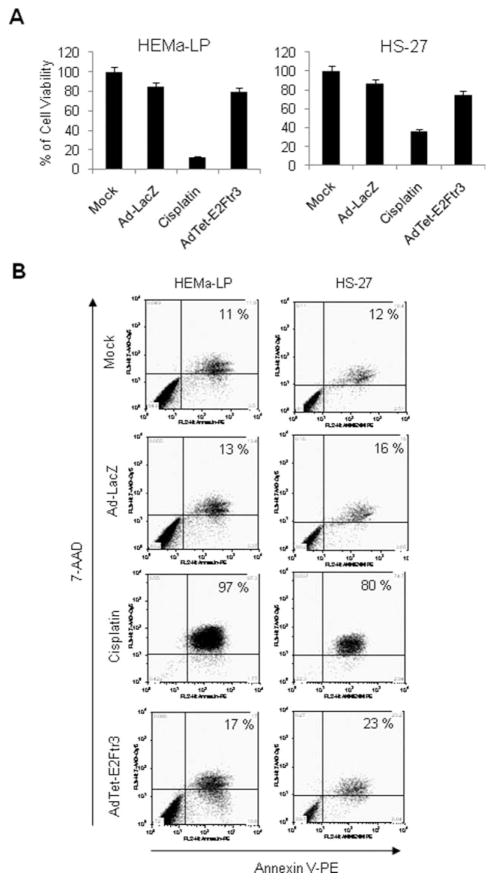
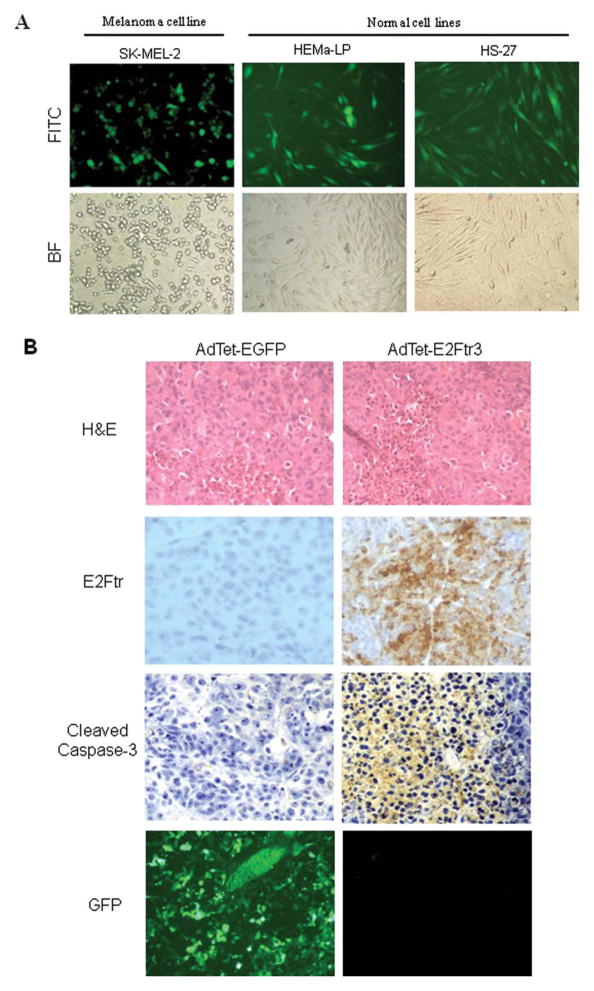
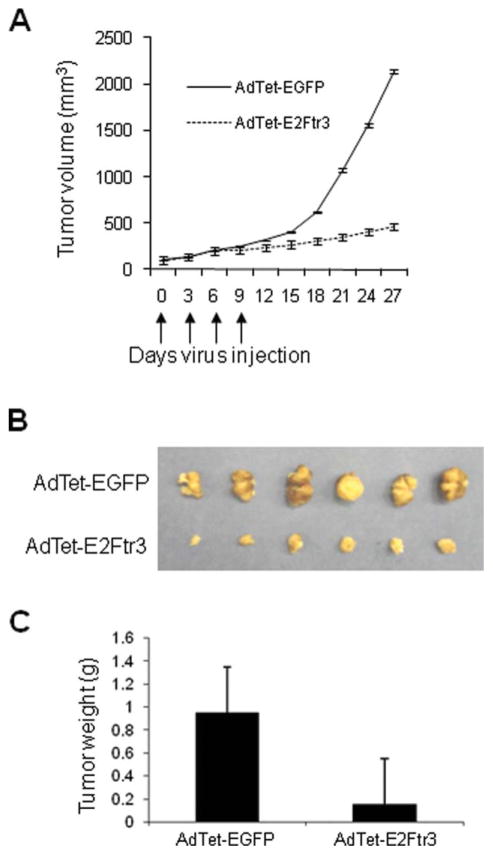
Results: One of the 3 vectors, AdTet-E2Ftr3, had the highest E2Ftr protein expression levels, which were correlated with the greatest induction of apoptosis and inhibition of cancer cell growth. E2Ftr induced apoptosis in a variety of cancer cell lines independent of p53 status with little cytotoxicity in normal cell lines. In a mouse melanoma xenograft model, AdTet-E2Ftr3 exhibited an approximately 80% decrease in tumor size compared with controls in vivo.
Conclusions: The current results indicated that AdTet-E2Ftr3 is a novel anticancer agent that has significant therapeutic activity in vitro and in vivo.
© 2010 American Cancer Society.
Figures
References
-
- Dong YB, Yang HL, Elliott MJ, et al. Adenovirus-mediated E2F-1 gene transfer efficiently induces apoptosis in melanoma cells. Cancer. 1999;86:2021–2033. - PubMed
-
- Dong YB, Yang HL, Elliott MJ, McMasters KM. Adenovirus-mediated E2F-1 gene transfer sensitizes melanoma cells to apoptosis induced by topoisomerase II inhibitors. Cancer Res. 2002;62:1776–1783. - PubMed
-
- Elliott MJ, Dong YB, Yang H, McMasters KM. E2F-1 up-regulates c-Myc and p14(ARF) and induces apoptosis in colon cancer cells. Clin Cancer Res. 2001;7:3590–3597. - PubMed
-
- Vorburger SA, Hetrakul N, Xia W, et al. Gene therapy with E2F-1 up-regulates the protein kinase PKR and inhibits growth of leiomyosarcoma in vivo. Mol Cancer Ther. 2005;4:1710–1716. - PubMed
-
- Itoshima T, Fujiwara T, Waku T, et al. Induction of apoptosis in human esophageal cancer cells by sequential transfer of the wild-type p53 and E2F-1 genes: involvement of p53 accumulation via ARF-mediated MDM2 down-regulation. Clin Cancer Res. 2000;6:2851–2859. - PubMed
Publication types
MeSH terms
Substances
Grants and funding
LinkOut - more resources
Full Text Sources
Medical
Research Materials
Miscellaneous
