


Pharmacokinetics and safety of subcutaneous immune globulin (human), 10% caprylate/chromatography purified in patients with primary immunodeficiency disease
- PMID: 20550549
- PMCID: PMC2962970
- DOI: 10.1111/j.1365-2249.2010.04195.x
Pharmacokinetics and safety of subcutaneous immune globulin (human), 10% caprylate/chromatography purified in patients with primary immunodeficiency disease
Abstract
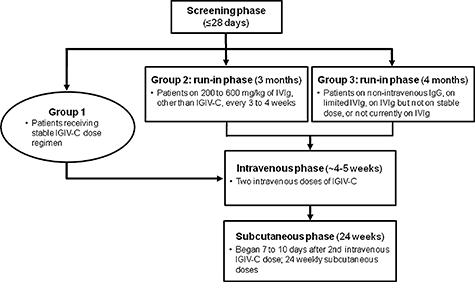
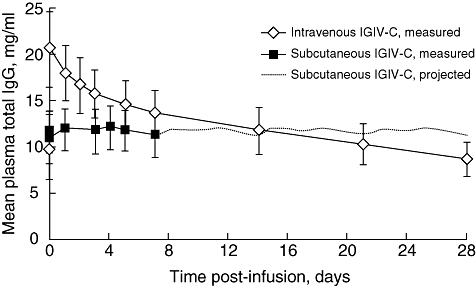
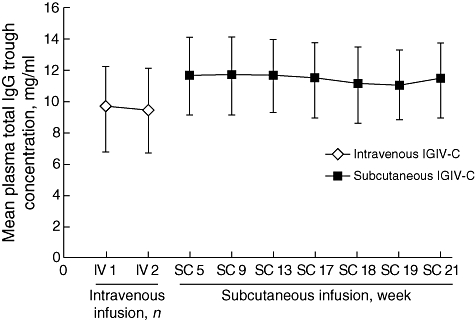
Subcutaneous administration of intravenous immunoglobulin G (IgG) preparations provides an additional level of patient convenience and more options for patients with poor venous access or a history of intravenous IgG reactions. An open-label, pharmacokinetic trial (n = 32) determined the non-inferiority of the subcutaneous versus intravenous route of 10% caprylate/chromatography purified human immune globulin intravenous (IGIV-C; Gamunex®) administration by comparing the steady-state area under the concentration-versus-time curve (AUC) of total plasma IgG in patients with primary immunodeficiency disease. Patients on stable IGIV-C received two intravenous infusions (administered 3 or 4 weeks apart). Seven to 10 days after the second intravenous infusion, all patients switched to a weekly infusion of subcutaneous IGIV-C, with the dose equal to 137% of the previous weekly equivalent intravenous dose, for up to 24 weeks. Samples for pharmacokinetic analysis were collected during steady state for intravenous and subcutaneous IGIV-C treatments. The AUC(0-) τ geometric least-squares mean ratio was 0·89 (90% confidence interval, 0·86-0·92) and met the criteria for non-inferiority. The overall mean steady-state trough concentration of plasma total IgG with subcutaneous IGIV-C was 11·4 mg/ml, 18·8% higher than intravenous IGIV-C (9·6 mg/ml). Subcutaneous IGIV-C was safe and well tolerated. Subcutaneous IGIV-C infusion-site reactions were generally mild/moderate and the incidence decreased over time. No serious bacterial infections were reported. Weekly subcutaneous IGIV-C infusion using 137% of the weekly equivalent intravenous immunoglobulin dose provides an AUC comparable to intravenous administration, thus allowing patients to maintain the same IgG preparation/formulation if switching between intravenous and subcutaneous infusions.
© 2010 British Society for Immunology.
Figures
References
-
- Orange JS, Hossny EM, Weiler CR, et al. Use of intravenous immunoglobulin in human disease: a review of evidence by members of the Primary Immunodeficiency Committee of the American Academy of Allergy, Asthma and Immunology. J Allergy Clin Immunol. 2006;117(Suppl.):S525–53. - PubMed
-
- Bonilla FA. Pharmacokinetics of immunoglobulin administered via intravenous or subcutaneous routes. Immunol Allergy Clin North Am. 2008;28:803–19. ix. - PubMed
-
- Ochs HD, Gupta S, Kiessling P, Nicolay U, Berger M, the Subcutaneous IgG Study Group Safety and efficacy of self-administered subcutaneous immunoglobulin in patients with primary immunodeficiency diseases. J Clin Immunol. 2006;26:265–73. - PubMed
-
- Gardulf A, Nicolay U, Asensio O, et al. Rapid subcutaneous IgG replacement therapy is effective and safe in children and adults with primary immunodeficiencies – a prospective, multi-national study. J Clin Immunol. 2006;26:177–85. - PubMed
Publication types
MeSH terms
Substances
LinkOut - more resources
Full Text Sources
Other Literature Sources
Miscellaneous
