


Using mind mapping techniques for rapid qualitative data analysis in public participation processes
- PMID: 20550595
- PMCID: PMC5060552
- DOI: 10.1111/j.1369-7625.2010.00594.x
Using mind mapping techniques for rapid qualitative data analysis in public participation processes
Abstract
Context: In a health service environment where timescales for patient participation in service design are short and resources scarce, a balance needs to be achieved between research rigour and the timeliness and utility of the findings of patient participation processes.
Objective: To develop a pragmatic mind mapping approach to managing the qualitative data from patient participation processes.
Design: While this article draws on experience of using mind maps in a variety of participation processes, a single example is used to illustrate the approach. In this example mind maps were created during the course of patient participation focus groups. Two group discussions were also transcribed verbatim to allow comparison of the rapid mind mapping approach with traditional thematic analysis of qualitative data.
Setting and participants: The illustrative example formed part of a local alcohol service review which included consultation with local alcohol service users, their families and staff groups.
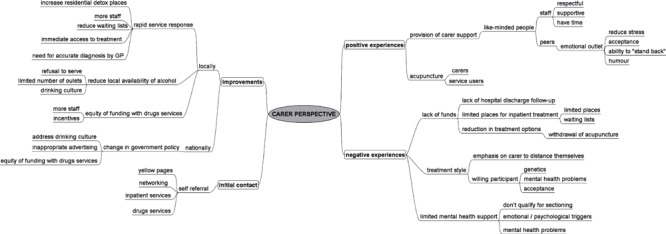
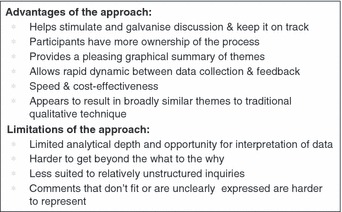
Findings: The mind mapping approach provided a pleasing graphical format for representing the key themes raised during the focus groups. It helped stimulate and galvanize discussion and keep it on track, enhanced transparency and group ownership of the data analysis process, allowed a rapid dynamic between data collection and feedback, and was considerably faster than traditional methods for the analysis of focus groups, while resulting in similar broad themes.
Conclusion: This study suggests that the use of a mind mapping approach to managing qualitative data can provide a pragmatic resolution of the tension between limited resources and quality in patient participation processes.
© 2010 The Authors. Health Expectations © 2010 Blackwell Publishing Ltd.
Figures
References
-
- Department of Health . Creating a Patient‐Led NHS. London: DH, 2005.
-
- Department of Health . Our Health, Our Care, Our Say: A New Direction for Community Services. White Paper. London: DH, 2006.
-
- Department of Health . Understanding What Matters. London: DH, 2009.
-
- Andersson E, Tritter J, Wilson R. eds. Overview: Does Patient and Public Involvement Matter? Healthy Democracy: The Future of Involvement in Health and Social Care. Warwick: National Centre for Involvement, 2006: 7–16.
-
- Cornwall A, Jewkes R. What is participatory research? Social Science & Medicine, 1995; 41: 1667–1676. - PubMed
MeSH terms
LinkOut - more resources
Full Text Sources
