. 2010 Jun 11;5(6):e11072.
doi: 10.1371/journal.pone.0011072.

A vaccine encoding conserved promiscuous HIV CD4 epitopes induces broad T cell responses in mice transgenic to multiple common HLA class II molecules

Affiliations

A vaccine encoding conserved promiscuous HIV CD4 epitopes induces broad T cell responses in mice transgenic to multiple common HLA class II molecules

Susan Pereira Ribeiro et al. PLoS One. .

Abstract

Current HIV vaccine approaches are focused on immunogens encoding whole HIV antigenic proteins that mainly elicit cytotoxic CD8+ responses. Mounting evidence points toward a critical role for CD4+ T cells in the control of immunodeficiency virus replication, probably due to cognate help. Vaccine-induced CD4+ T cell responses might, therefore, have a protective effect in HIV replication. In addition, successful vaccines may have to elicit responses to multiple epitopes in a high proportion of vaccinees, to match the highly variable circulating strains of HIV. Using rational vaccine design, we developed a DNA vaccine encoding 18 algorithm-selected conserved, "promiscuous" (multiple HLA-DR-binding) B-subtype HIV CD4 epitopes - previously found to be frequently recognized by HIV-infected patients. We assessed the ability of the vaccine to induce broad T cell responses in the context of multiple HLA class II molecules using different strains of HLA class II- transgenic mice (-DR2, -DR4, -DQ6 and -DQ8). Mice displayed CD4+ and CD8+ T cell responses of significant breadth and magnitude, and 16 out of the 18 encoded epitopes were recognized. By virtue of inducing broad responses against conserved CD4+ T cell epitopes that can be recognized in the context of widely diverse, common HLA class II alleles, this vaccine concept may cope both with HIV genetic variability and increased population coverage. The vaccine may thus be a source of cognate help for HIV-specific CD8+ T cells elicited by conventional immunogens, in a wide proportion of vaccinees.


Conflict of interest statement

Competing Interests: The authors have declared that no competing interests exist. The International Centre of Genetic Engineering and Biotechnology (ICGEB) is a non-profit organization related to the UNESCO which funds basic research in developing and middle-income countries. There are no links (employment, consultancy, patents, products in development or marketed products) between the authors and the ICGEB that may alter the authors' adherence to all the PLoS ONE policies on sharing data and materials. The use of the peptide combination for vaccination purposes, among others, has been patented (international application number PCT/BR2006/000175).

Figures

Figure 1
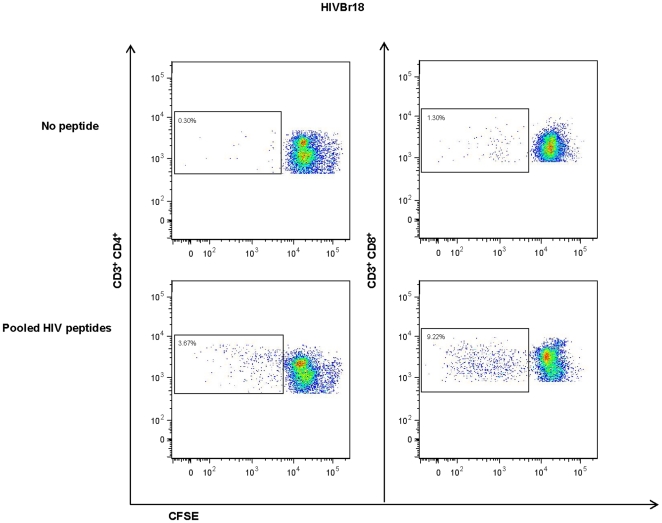
Figure 1. Immunization with HIVBr18 induces significant CD4+ and CD8+ T cell proliferation against pooled HIV peptides.
Two weeks after the last last immunization with HIVBr18, spleen cells from a HLA-DR4 mouse were labeled with CFSE (1.25 µM) and cultured for 5 days in the presence of 5 µM of 18 pooled HIV-1 peptides. Cells were analyzed by flow cytometry and CFSElow cells on gated CD3+CD4+or CD3+CD8+ was used as a readout for antigen-specific proliferation. Representative dot plots of CD4+ (left) and CD8+ (right) T cell proliferation (%CFSElow cells) of splenocytes stimulated with medium or pooled peptides from HIVBr18 immunized mice.
Figure 2
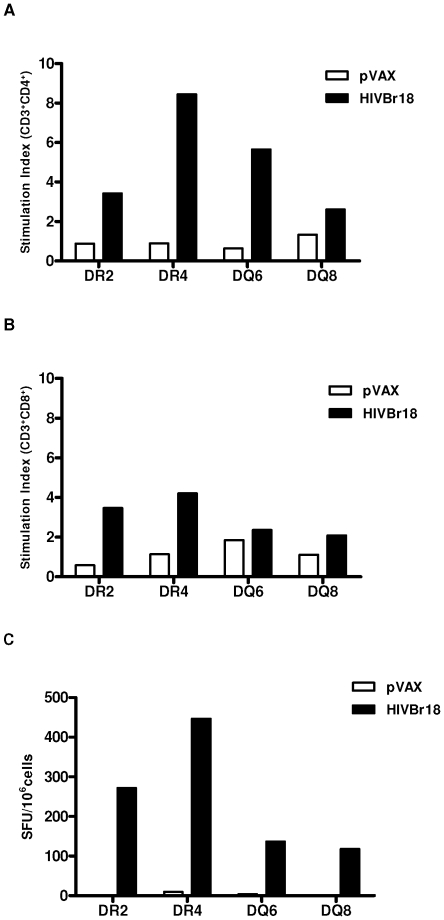
Figure 2. Immunization with HIVBr18 induces responses in human HLA- class II transgenic mice.
Splenocytes derived from -DR2, -DR4, -DQ6 and -DQ8 transgenic mice immunized with HIVBr18 or the pVAX1 vector alone were cultured with pooled HIV-1 peptides. Proliferation of CFSE- labeled CD3+CD4+ (A) and CD3+ CD8+ (B) T cells from transgenic mice. The stimulation index was calculated by the fold increase between stimulated versus unstimulated cell cultures. (C) IFN-γ production by T cells from HIVBr18- (black bars) or pVAX1- (white bars) immunized mice. HLA class II-transgenic mouse strains are indicated in X axis.
Figure 3
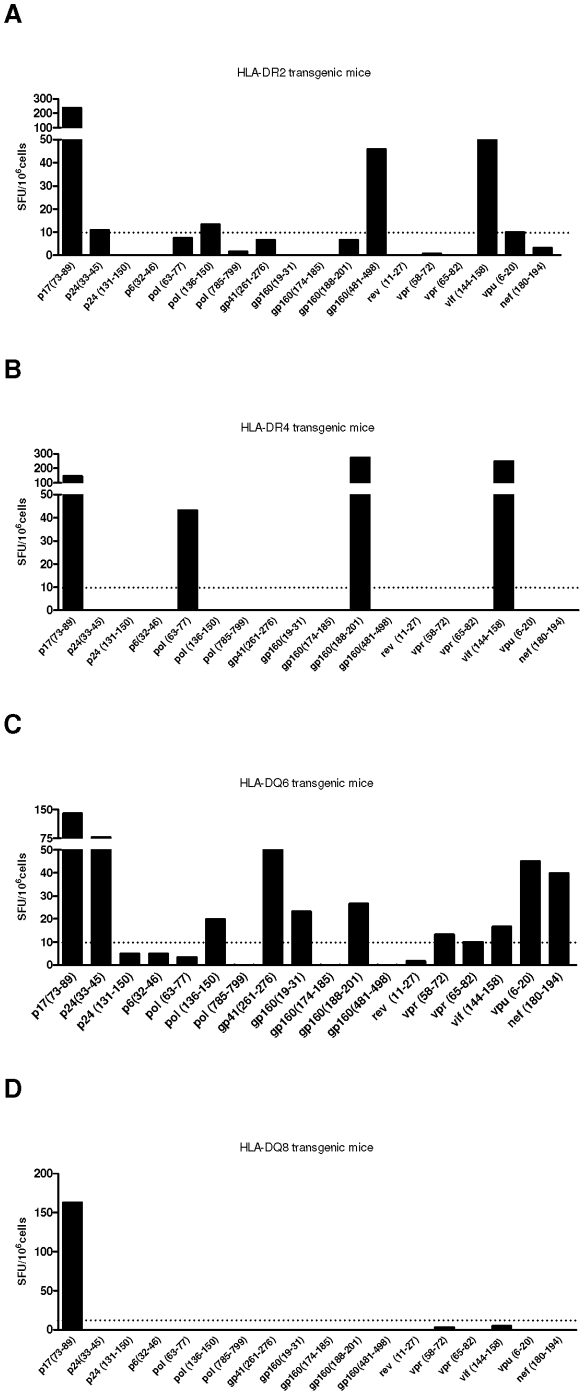
Figure 3. Immunization with HIVBr18 induces IFN-γ secretion against multiple epitopes in human HLA class II transgenic mice.
Two weeks after the last immunization with HIVBr18 or the empty pVAX1 vector, splenocytes derived from individual HLA-DR2 (A), -DR4 (B), -DQ6 (C) and -DQ8 (D) transgenic mice (6 per group) were cultured with individual HIV-1 peptides overnight. IFN-γ production was measured by ELISPOT assay. HIV peptide-specific cellular immune responses from human HLA class II- transgenic mice that responded to the immunization are displayed. SFU, spot-forming units. Cutoff = 10 SFU/106 cells and is represented by the dotted line. (SFU from pVAX1-immunized group were always below 5 SFU/106 cells).
Figure 4
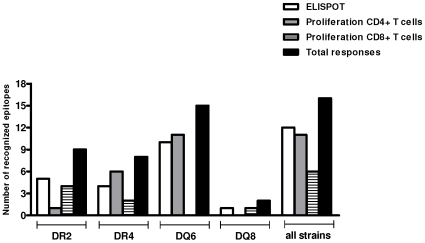
Figure 4. Number of recognized epitopes by spleen cells from HIVBr18 immunized HLA-DR2, -DR4, -DQ6 and -DQ8 transgenic mice.
Overall peptide-specific responses observed with IFN-γ ELISPOT, CD4+ and CD8+ T cell proliferation assays in each HLA-transgenic mouse strain are depicted.

References

    1. Barouch DH, Korber B. HIV-1 vaccine development after STEP. Annu Rev Med. 2010;61:153–167. - PMC - PubMed
    1. Rerks-Ngarm S, Pitisuttithum P, Nitayaphan S, Kaewkungwal J, Chiu J, et al. Vaccination with ALVAC and AIDSVAX to prevent HIV-1 infection in Thailand. N Engl J Med. 2009;361:2209–2220. - PubMed
    1. Hansen SG, Vieville C, Whizin N, Coyne-Johnson L, Siess DC, et al. Effector memory T cell responses are associated with protection of rhesus monkeys from mucosal simian immunodeficiency virus challenge. Nat Med. 2009;15:293–299. - PMC - PubMed
    1. Liu J, O'Brien KL, Lynch DM, Simmons NL, La Porte A, et al. Immune control of an SIV challenge by a T-cell-based vaccine in rhesus monkeys. Nature. 2009;457:87–91. - PMC - PubMed
    1. Wilson NA, Keele BF, Reed JS, Piaskowski SM, MacNair CE, et al. Vaccine-induced cellular responses control simian immunodeficiency virus replication after heterologous challenge. J Virol. 2009;83:6508–6521. - PMC - PubMed

Publication types

MeSH terms