


Spontaneous lead breakage in implanted spinal cord stimulation systems
- PMID: 20552080
- PMCID: PMC2884218
- DOI: 10.3344/kjp.2010.23.1.78
Spontaneous lead breakage in implanted spinal cord stimulation systems
Abstract
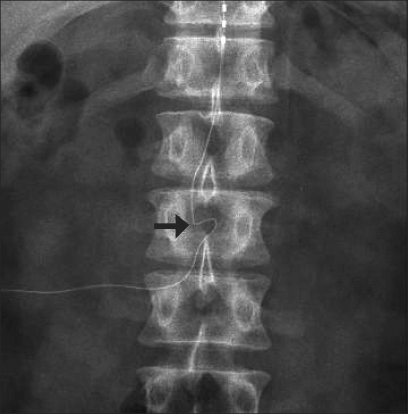
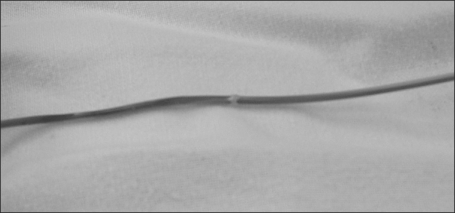
Spinal cord stimulation (SCS) has become an established clinical option for treatment of refractory chronic pain. Current hardware and implantation techniques for SCS are already highly developed and continuously improving; however, equipment failures over the course of long-term treatment are still encountered in a relatively high proportion of the cases treated with it. Percutaneous SCS leads seem to be particularly prone to dislocation and insulation failures. We describe our experience of lead breakage in the inserted spinal cord stimulator to a complex regional pain syndrome patient who obtained satisfactory pain relief after the revision of SCS.
Keywords: complication; lead breakage; spinal cord stimulation.
Figures
References
-
- Kim WY, Moon DE, Choi JH, Park CM, Han SM, Kim SH. The effect of spinal cord stimulation in patients with complex regional pain syndrome. Korean J Pain. 2006;19:152–158.
-
- Kumar K, Wilson JR, Taylor RS, Gupta S. Complications of spinal cord stimulation, suggestions to improve outcome, and financial impact. J Neurosurg Spine. 2006;5:191–203. - PubMed
-
- North RB, Wetzel FT. Spinal cord stimulation for chronic pain of spinal origin: a valuable long-term solution. Spine. 2002;27:2584–2591. - PubMed
-
- Oakley JC. Spinal cord stimulation: patient selection, technique, and outcomes. Neurosurg Clin N Am. 2003;14:365–380. - PubMed
-
- Quigley DG, Arnold J, Eldridge PR, Cameron H, McIvor K, Miles JB, et al. Long-term outcome of spinal cord stimulation and hardware complications. Stereotact Funct Neurosurg. 2003;81:50–56. - PubMed
Publication types
LinkOut - more resources
Full Text Sources
Other Literature Sources