


REVIEW: Genome-wide findings in schizophrenia and the role of gene-environment interplay
- PMID: 20553308
- PMCID: PMC6493802
- DOI: 10.1111/j.1755-5949.2010.00155.x
REVIEW: Genome-wide findings in schizophrenia and the role of gene-environment interplay
Abstract
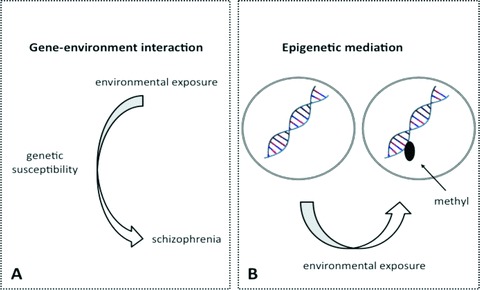
The recent advent of genome-wide mass-marker technology has resulted in renewed optimism to unravel the genetic architecture of psychotic disorders. Genome-wide association studies have identified a number of common polymorphisms robustly associated with schizophrenia, in ZNF804A, transcription factor 4, major histocompatibility complex, and neurogranin. In addition, copy number variants (CNVs) in 1q21.1, 2p16.3, 15q11.2, 15q13.3, 16p11.2, and 22q11.2 were convincingly implicated in schizophrenia risk. Furthermore, these studies have suggested considerable genetic overlap with bipolar disorder (particularly for common polymorphisms) and neurodevelopmental disorders such as autism (particularly for CNVs). The influence of these risk variants on relevant intermediate phenotypes needs further study. In addition, there is a need for etiological models of psychosis integrating genetic risk with environmental factors associated with the disorder, focusing specifically on environmental impact on gene expression (epigenetics) and convergence of genes and environment on common biological pathways bringing about larger effects than those of genes or environment in isolation (gene-environment interaction). Collaborative efforts that bring together expertise in statistics, genetics, epidemiology, experimental psychiatry, brain imaging, and clinical psychiatry will be required to succeed in this challenging task.
© 2010 Blackwell Publishing Ltd.
Conflict of interest statement
All authors declare that they have no conflicts of interest.
Figures
References
-
- Jablensky A, Sartorius N, Ernberg G, et al Schizophrenia: Manifestations, incidence and course in different cultures. A World Health Organization ten‐country study. Psychol Med Monogr Suppl 1992;20:1–97. - PubMed
-
- American Psychiatric Association . Diagnostic and statistical manual of mental disorders. Washington , DC : American Psychiatric Association, 1994.
-
- McCormick L, Flaum M. Diagnosing schizophrenia circa 2005: How and why? Curr Psychiatry Rep 2005;7:311–315. - PubMed
-
- Van Os J, Kapur S. Schizophrenia. Lancet 2009;374:635–645. - PubMed
-
- Cardno AG, Gottesman II. Twin studies of schizophrenia: From bow‐and‐arrow concordances to star wars Mx and functional genomics. Am J Med Genet 2000;97:12–17. - PubMed
Publication types
MeSH terms
LinkOut - more resources
Full Text Sources
Medical
