


Comparison of diabetes management in five countries for general and indigenous populations: an internet-based review
- PMID: 20553622
- PMCID: PMC2903584
- DOI: 10.1186/1472-6963-10-169
Comparison of diabetes management in five countries for general and indigenous populations: an internet-based review
Abstract
Background: The diabetes epidemic is associated with huge human and economic costs, with some groups, such as indigenous populations in industrialised countries, being at especially high risk. Monitoring and improving diabetes care at a population level are important to reduce diabetes-related morbidity and mortality. A set of diabetes indicators has been developed collaboratively among the Organisation for Economic Co-operation and Development (OECD) countries to monitor performance of diabetes care. The aim of this review was to provide an overview of diabetes management in five selected OECD countries (Australia, Canada, New Zealand, the US and the UK), based on data available for general and indigenous populations where appropriate.
Methods: We searched websites of health departments and leading national organisations related to diabetes care in each of the five countries to identify publicly released reports relevant to diabetes care. We collected data relevant to 6 OECD diabetes indicators on processes of diabetes care (annual HbA1c testing, lipid testing, renal function screening and eye examination) and proximal outcomes (HbA1c and lipid control).
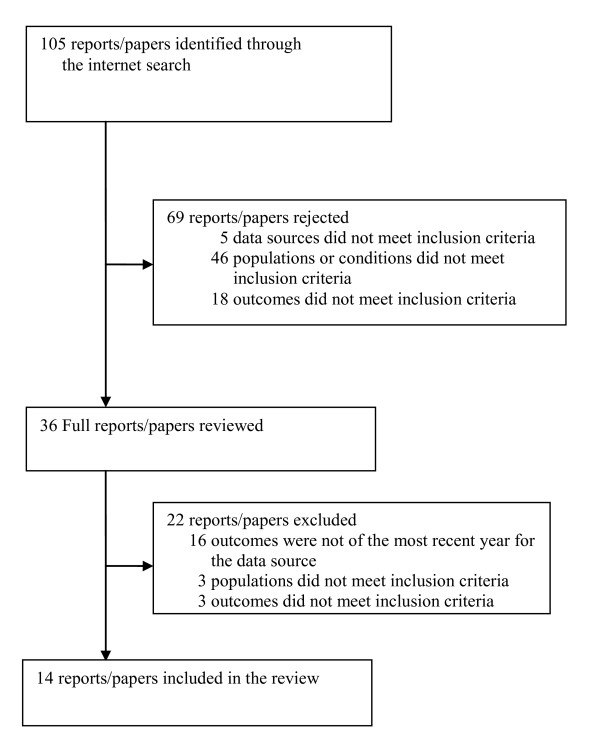
Results: Data were drawn from 29 websites, with 14 reports and 13 associated data sources included in this review. Australia, New Zealand, the US and the UK had national data available to construct most of the 6 OECD diabetes indicators, but Canadian data were limited to two indicators. New Zealand and the US had national level diabetes care data for indigenous populations, showing relatively poorer care among these groups when compared with general populations. The US and UK performed well across the four process indicators when compared with Australia and New Zealand. For example, annual HbA1c testing and lipid testing were delivered to 70-80% of patients in the US and UK; the corresponding figures for Australia and New Zealand were 50-60%. Regarding proximal outcomes, HbA1c control for patients in Australia and New Zealand tended to be relatively better than patients in the US and UK.
Conclusions: Substantial efforts have been made in the five countries to develop routine data collection systems to monitor performance of diabetes management. Available performance data identify considerable gaps in clinical care of diabetes across countries. Policy makers and health service providers across countries can learn from each other to improve data collection and delivery of diabetes care at the population level.
References
-
- National Centre for Monitoring Diabetes. Diabetes: Australian Facts. Canberra: AIHW; 2002.
-
- Australian Bureau of Statistics. Diabetes in Australia: A Snapshot (2006) http://www.abs.gov.au/ausstats/abs@.nsf/mf/4820.0.55.001
-
- Health Canada. Diabetes in Canada (2002) http://www.phac-aspc.gc.ca/publicat/dic-dac2/pdf/dic-dac2_en.pdf
-
- New Zealand Ministry of Health. Diabetes 2000. http://www.moh.govt.nz/moh.nsf/7004be0c19a98f8a4c25692e007bf833/4735077e...
-
- Diabetes UK. Diabetes in the UK 2004. http://www.diabetes.org.uk/Documents/Reports/in_the_UK_2004.doc
Publication types
MeSH terms
LinkOut - more resources
Full Text Sources
Medical
