


Antioxidant pre-treatment prevents omeprazole-induced toxicity in an in vitro model of infectious gastritis
- PMID: 20554018
- PMCID: PMC2910817
- DOI: 10.1016/j.freeradbiomed.2010.05.034
Antioxidant pre-treatment prevents omeprazole-induced toxicity in an in vitro model of infectious gastritis
Abstract
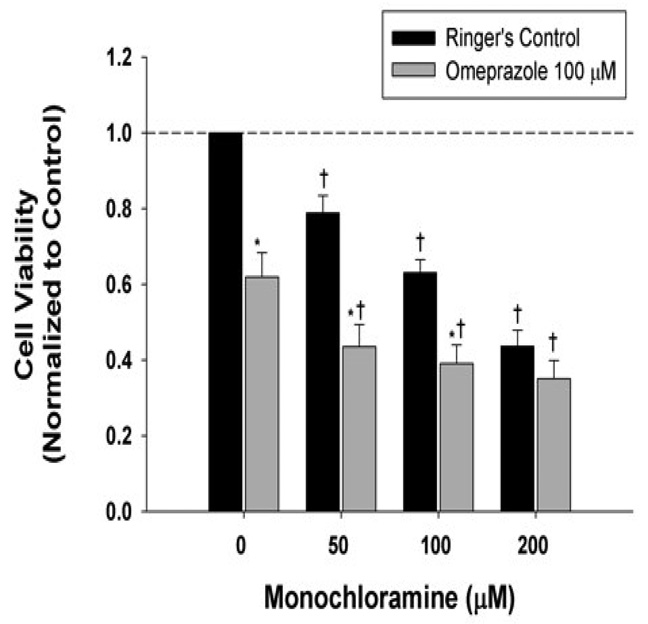
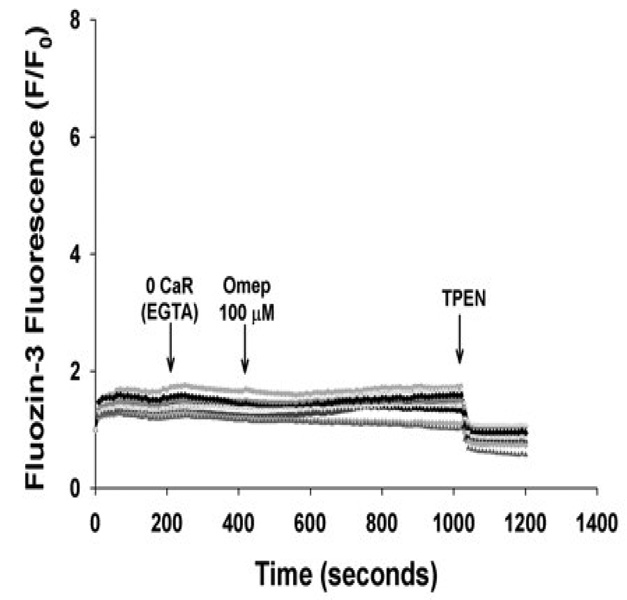
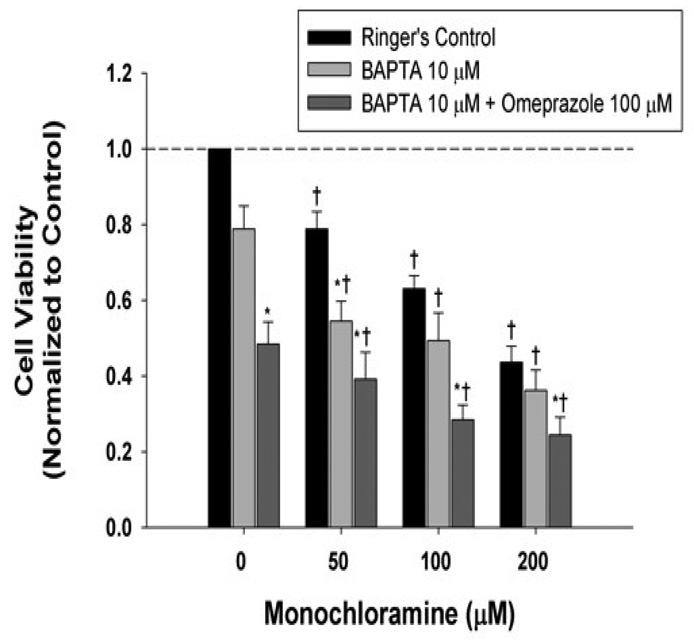
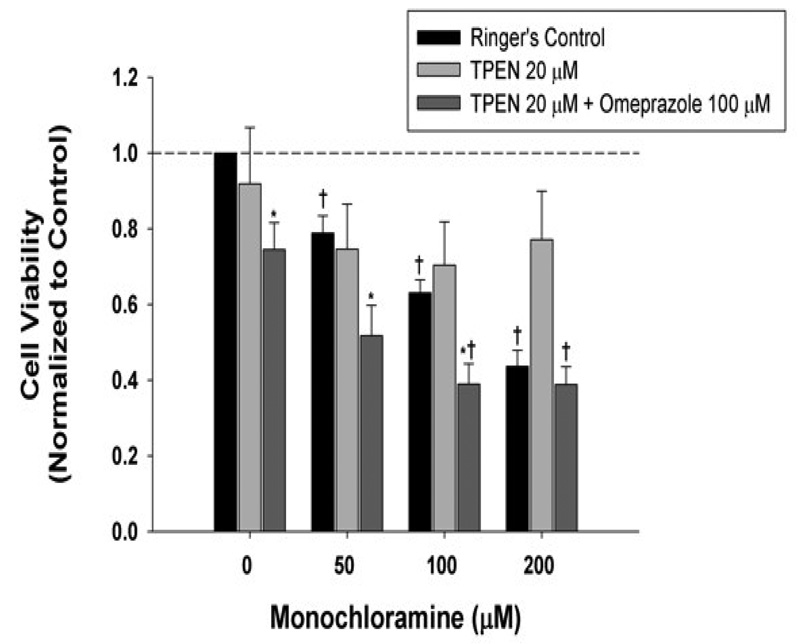
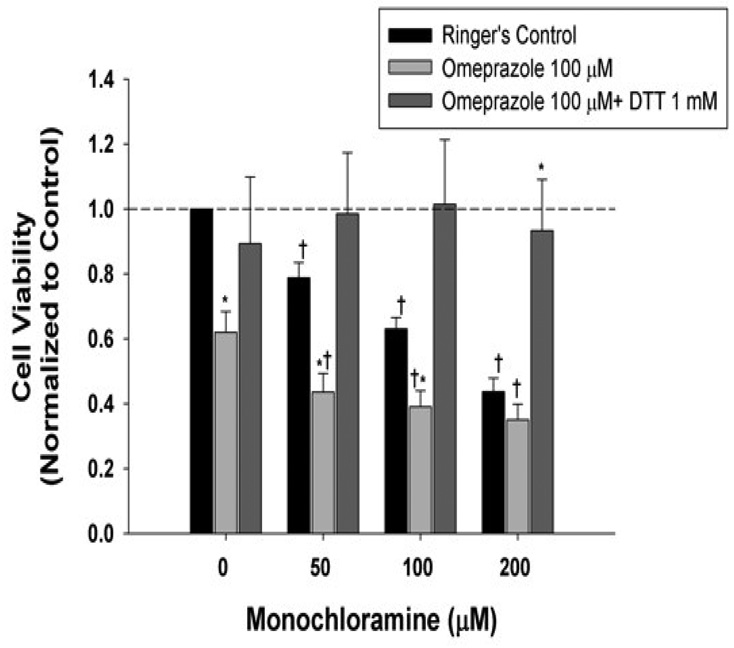
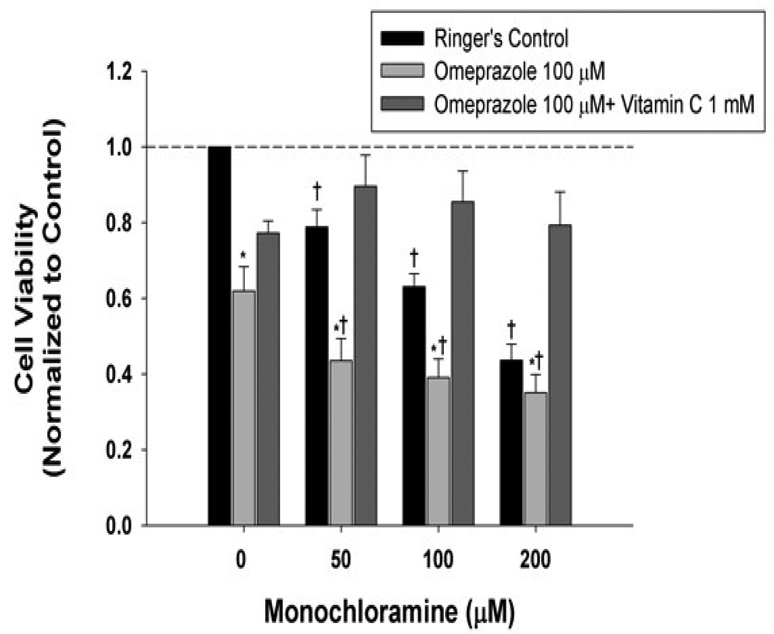
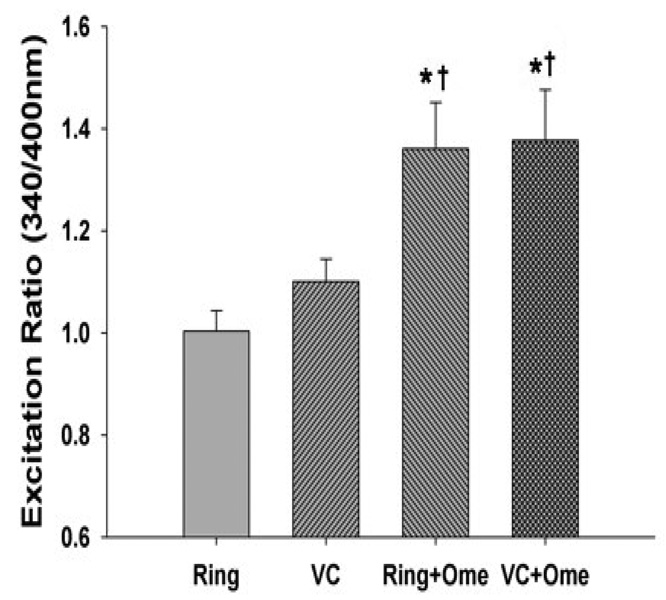
Omeprazole is a mainstay of therapy for gastroesophageal reflux disease (GERD) and gastritis, and is increasingly used as an over-the-counter remedy for dyspepsia. Omeprazole acts by selectively oxidizing thiol targets in the gastric proton pump, but it also appears to be toxic to the gastric mucosa. We hypothesized that omeprazole toxicity is due to non-specific oxidation of cell structures other than the proton pump, and tested the efficacy of antioxidants to prevent omeprazole-induced toxicity in isolated rabbit gastric glands. Toxicity was measured by uptake and converstion of calcein-AM, following three hours of exposure to omeprazole and a non-selective thiol-oxidant, monochloramine. Intracellular concentration of Zn(2+) and the capacity to maintain luminal acidity were monitored using the fluorescent reporters fluozin-3 and Lysosensor DND-160, respectively. Both omeprazole and monochloramine caused marked reduction in cell viability. The toxicity of omeprazole was independent of monochloramine toxicity. The thiol reducing agent dithiothreitol protected gastric glands from injury. The oxidant scavenger Vitamin C also protected, and did not impair the anti-secretory effects of omeprazole. Thus, omeprazole toxicity appears to be oxidative and preventable with antioxidant therapy, including Vitamin C. Vitamin C may be a safe and efficacious addition to treatments requiring the use of PPIs.
Copyright 2010 Elsevier Inc. All rights reserved.
Figures
References
-
- Dooley CP, Cohen H, Fitzgibbons PL, Bauer M, Appleman MD, Perez-Perez GI, Blaser MJ. Prevalence of Helicobacter pylori infection and histologic gastritis in asymptomatic persons. N Engl J Med. 1989;321:1562–1566. - PubMed
-
- Karam SM, Forte JG. Inhibiting gastric H(+)-K(+)-ATPase activity by omeprazole promotes degeneration and production of parietal cells. Am J Physiol. 1994;266:G745–G758. - PubMed
-
- Alvarez A, Ibiza MS, Andrade MM, Blas-Garcia A, Calatayud S. Gastric antisecretory drugs induce leukocyte-endothelial cell interactions through gastrin release and activation of CCK-2 receptors. J Pharmacol Exp Ther. 2007;323:406–413. - PubMed
-
- Kuipers EJ, Lundell L, Klinkenberg-Knol EC, Havu N, Festen HP, Liedman B, Lamers CB, Jansen JB, Dalenback J, Snel P, Nelis GF, Meuwissen SG. Atrophic gastritis and Helicobacter pylori infection in patients with reflux esophagitis treated with omeprazole or fundoplication. N Engl J Med. 1996;334:1018–1022. - PubMed
-
- Kuipers EJ, Uyterlinde AM, Pena AS, Hazenberg HJ, Bloemena E, Lindeman J, Klinkenberg-Knol EC, Meuwissen SG. Increase of Helicobacter pylori-associated corpus gastritis during acid suppressive therapy: implications for long-term safety. Am J Gastroenterol. 1995;90:1401–1406. - PubMed
Publication types
MeSH terms
Substances
Grants and funding
LinkOut - more resources
Full Text Sources
Medical
