


Interventions to improve disposal of human excreta for preventing diarrhoea
- PMID: 20556776
- PMCID: PMC6532559
- DOI: 10.1002/14651858.CD007180.pub2
Interventions to improve disposal of human excreta for preventing diarrhoea
Abstract
Background: Diarrhoeal diseases are a leading cause of mortality and morbidity, especially among young children in low-income countries, and are associated with exposure to human excreta.
Objectives: To assess the effectiveness of interventions to improve the disposal of human excreta for preventing diarrhoeal diseases.
Search strategy: We searched the Cochrane Infectious Disease Group Specialized Register; the Cochrane Central Register of Controlled Trials (CENTRAL), published in The Cochrane Library; MEDLINE; EMBASE; LILACS; the metaRegister of Controlled Trials (mRCT); and Chinese-language databases available under the Wan Fang portal, and the China National Knowledge Infrastructure (CNKI-CAJ). We also handsearched relevant conference proceedings, and contacted researchers and organizations working in the field, as well as checking references from identified studies.
Selection criteria: Randomized, quasi-randomized, and non-randomized controlled trials (RCTs) were selected, comparing interventions aimed at improving the disposal of human excreta to reduce direct or indirect human contact with no such intervention. Cluster (eg at the level of household or community) controlled trials were included.
Data collection and analysis: We determined study eligibility, extracted data, and assessed methodological quality in accordance with the methods prescribed by the protocol. We described the results and summarized the information in tables. Due to substantial heterogeneity among the studies in terms of study design and type of intervention, no pooled effects were calculated.
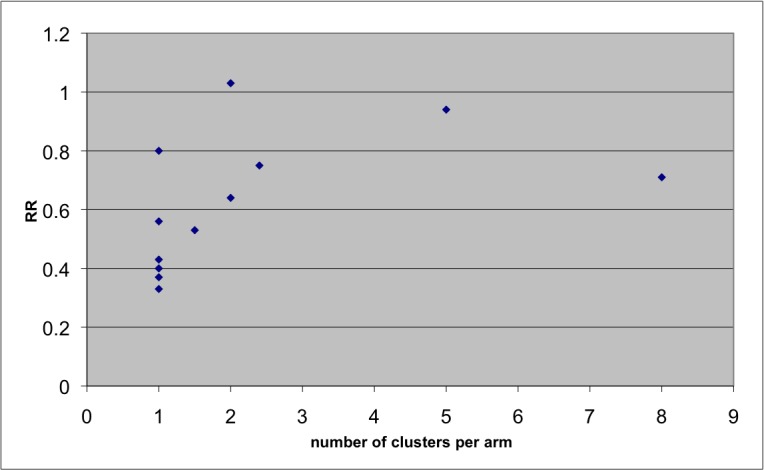
Main results: Thirteen studies from six countries covering over 33,400 children and adults in rural, urban, and school settings met the review's inclusion criteria. In all studies the intervention was allocated at the community level. While the studies reported a wide range of effects, 11 of the 13 studies found the intervention was protective against diarrhoea. Differences in study populations and settings, in baseline sanitation levels, water, and hygiene practices, in types of interventions, study methodologies, compliance and coverage levels, and in case definitions and outcome surveillance limit the comparability of results of the studies included in this review. The validity of most individual study results are further compromised by the non-random allocation of the intervention among study clusters, an insufficient number of clusters, the lack of adjustment for clustering, unclear loss to follow-up, potential for reporting bias and other methodological shortcomings.
Authors' conclusions: This review provides some evidence that interventions to improve excreta disposal are effective in preventing diarrhoeal disease. However, this conclusion is based primarily on the consistency of the evidence of beneficial effects. The quality of the evidence is generally poor and does not allow for quantification of any such effect. The wide range of estimates of the effects of the intervention may be due to clinical and methodological heterogeneity among the studies, as well as to other important differences, including exposure levels, types of interventions, and different degrees of observer and respondent bias. Rigorous studies in multiple settings are needed to clarify the potential effectiveness of excreta disposal on diarrhoea.
Conflict of interest statement
None known.
Figures
Update of
References
References to studies included in this review
-
- Aziz KMA, Hoque BA, Hasan KZ, Patwary MY, Huttly SRA, Rahman MM, et al. Reduction in diarrhoeal diseases in children in rural Bangladesh by environmental and behavioural modifications. Transactions of the Royal Society of Tropical Medicine and Hygiene 1990;84(3):433‐8. - PubMed
- Hasan KZ, Briend A, Aziz KMA, Hoque BA, Patwary My, Huttly SRA. Lack of impact of a water and sanitation intervention on the nutritional status of children in rural Bangladesh. European Journal of Clinical Nutrition 1989;43(12):837‐43. - PubMed
- Hoque BA, Juncker T, Sack RB, Ali M, Aziz KMA. Sustainability of a water, sanitation and hygiene education project in rural Bangladesh: a 5‐year follow‐up. Bulletin World Health Organization 1995;74(4):431‐37. - PMC - PubMed
-
- Hu X‐R, Liu G, Liu S‐P, Yan‐Xin H, Zhang X‐M, Fan Y‐Y, et al. [Field evaluation of the effect of diarrhoea control of methanogenesis treatment of human and animal faeces and rubbish of cellulose nature in the rural areas of Xiang Cheng]. Henan Yu Fang Yi Xue Za Zhi [Henan Journal of Preventative Medicine] 1988;1988:11‐13.
-
- Blum D, Emeh R. Evaluation of the UNICEF‐assisted Imo State water supply and sanitation project: epidemiological and fieldwork methods. In: Briscoe J, Feachem RG, Rahaman MM editor(s). Evaluating Health Impacts: Water Supply, Sanitation and Hygiene Education. Toronto: International Development Research Centre Canada, 1986.
- Huttly SR, Blum D, Kirkwood BR, Emeh RN, Feachem RG. The epidemiology of acute diarrhoea in a rural community in Imo State, Nigeria. Transactions of the Royal Society of Tropical Medicine and Hygiene 1987;81(5):865‐70. - PubMed
- Huttly SR, Blum D, Kirkwood BR, Emeh RN, Okeke N, Ajala M, et al. The Imo State (Nigeria) drinking water supply and sanitation project, 2: impact on dracunculiasis, diarrhoea and nutritional status. Transactions of the Royal Society of Tropical Medicine and Hygiene 1990;84(2):316‐21. - PubMed
- The Imo State Evaluatin Team. Evaluating water and sanitation projects: lessons from Imo State, Nigeria. Health Policy and Planning 1989;4(1):40‐9.
References to studies excluded from this review
-
- Asaolu SO, Ofoezie IE, Odumuyiwa PA, Sowemimo OA, Oguniyi TA. Effect of water supply and sanitation on the prevalence and intensity of Ascaris lumbricodes among pre‐school‐age children in Ajebandele and Ifewara, Osun State, Nigeria. Tranactions of the Royal Society of Tropical Medicine and Hygiene 2002;96(6):600‐4. - PubMed
-
- Beck MD, Munoz JA, Scrimshaw NS. Studies on diarrheal diseases in Central America I: preliminary findings on cultural surveys of normal populations groups in Guatemala. The American Journal of Tropical Medicine and Hygiene 1957;6(1):62‐71. - PubMed
-
- Butz WP, Habicht J‐P, DaVanzo J. Environmental factors in the relationship between breast‐feeding and infant mortality: the role of sanitation and water in Malaysia. American Journal of Epidemiology 1984;119(4):516‐25. - PubMed
Additional references
-
- Baqui AH, Black RE, Sack RB, Chowdhury HR, Yunus M, Siddique AK. Malnutrition, cell‐mediated immune deficiency, and diarrhea: a community‐based longitudinal study in rural Bangladeshi children. American Journal of Epidemiology 1993;137(3):355‐65. - PubMed
-
- Bennett S, Parpia T, Hayes R, Cousens S. Methods for the analysis of incidence rates in cluster randomized trials. International Journal of Epidemiology 2002;31(4):839‐46. - PubMed
-
- Blum D, Feachem RG. Measuring the impact of water supply and sanitation investments on diarrhoeal diseases: problems in methodology. International Journal of Epidemiology 1983;12(3):357‐65. - PubMed
Publication types
MeSH terms
LinkOut - more resources
Full Text Sources
Medical
Miscellaneous
