. 2010 Nov;12(11):1576-88.
doi: 10.1111/j.1462-5822.2010.01490.x. Epub 2010 Jun 16.

Activation of brain endothelium by pneumococcal neuraminidase NanA promotes bacterial internalization

Affiliations

Activation of brain endothelium by pneumococcal neuraminidase NanA promotes bacterial internalization

Anirban Banerjee et al. Cell Microbiol. 2010 Nov.

Abstract

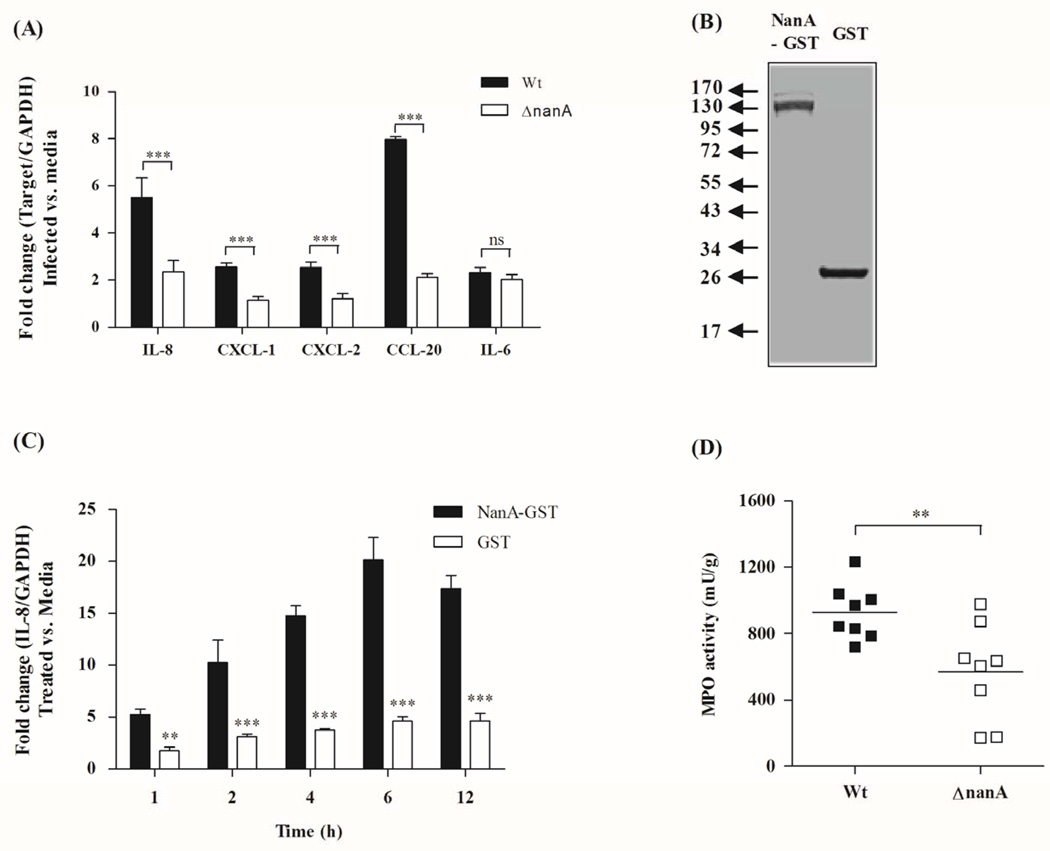
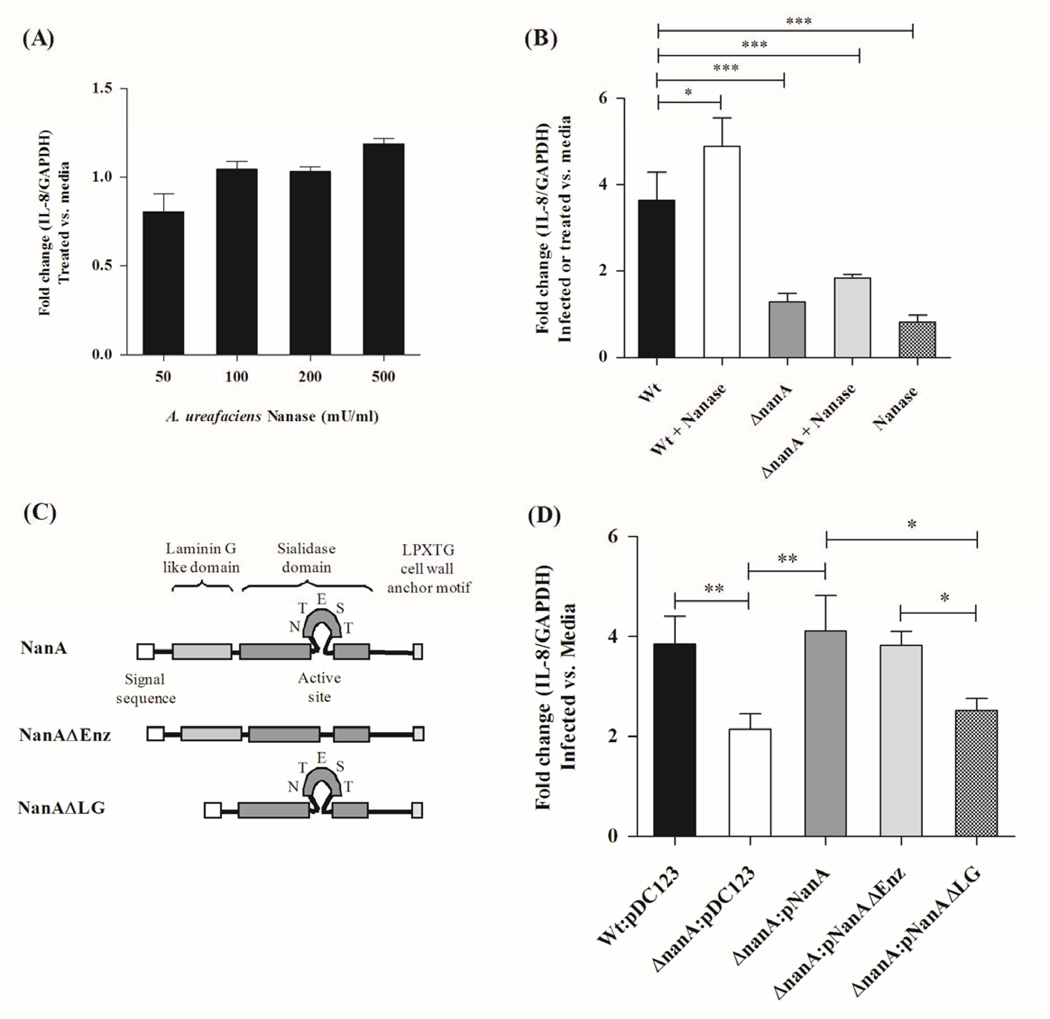
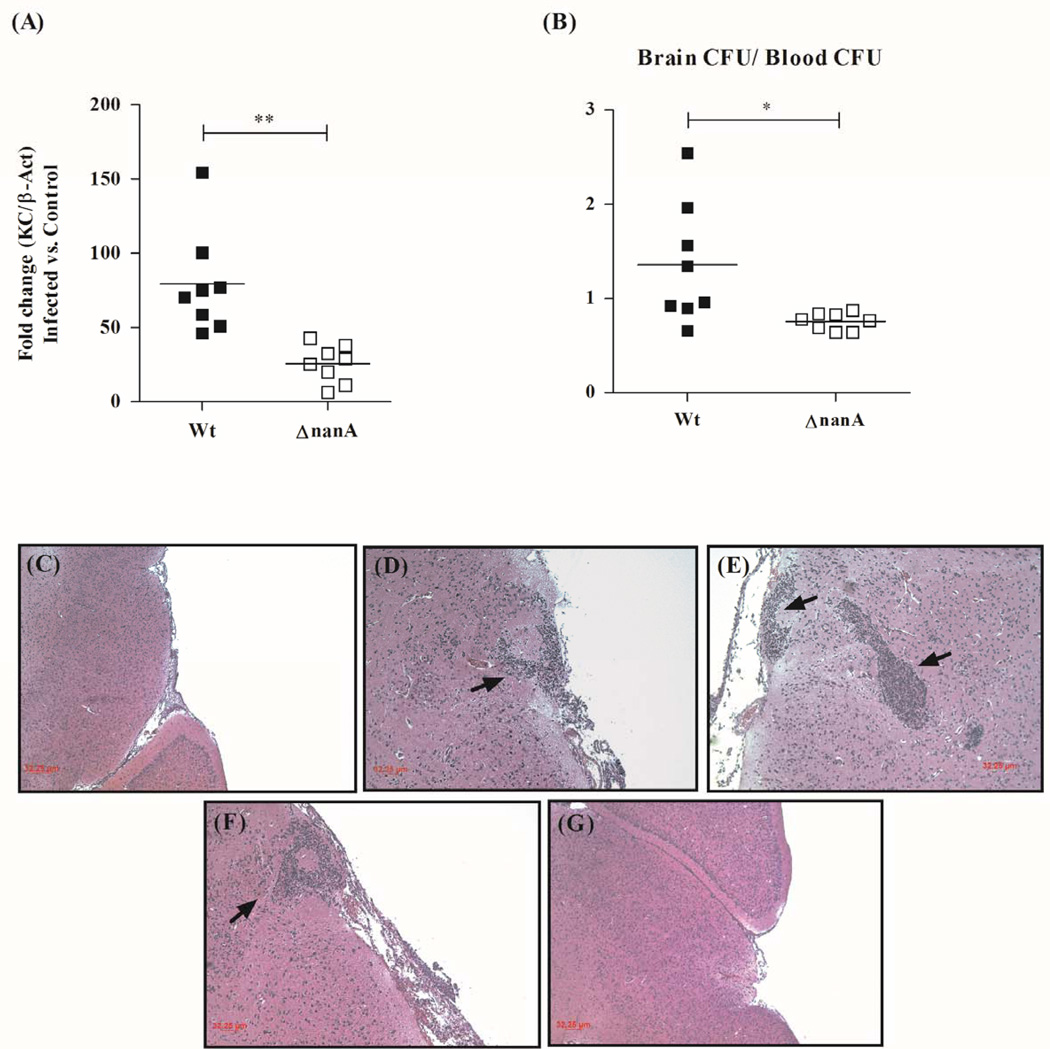
Streptococcus pneumoniae (SPN), the leading cause of meningitis in children and adults worldwide, is associated with an overwhelming host inflammatory response and subsequent brain injury. Here we examine the global response of the blood-brain barrier to SPN infection and the role of neuraminidase A (NanA), an SPN surface anchored protein recently described to promote central nervous system tropism. Microarray analysis of human brain microvascular endothelial cells (hBMEC) during infection with SPN or an isogenic NanA-deficient (ΔnanA) mutant revealed differentially activated genes, including neutrophil chemoattractants IL-8, CXCL-1, CXCL-2. Studies using bacterial mutants, purified recombinant NanA proteins and in vivo neutrophil chemotaxis assays indicated that pneumococcal NanA is necessary and sufficient to activate host chemokine expression and neutrophil recruitment during infection. Chemokine induction was mapped to the NanA N-terminal lectin-binding domain with a limited contribution of the sialidase catalytic activity, and was not dependent on the invasive capability of the organism. Furthermore, pretreatment of hBMEC with recombinant NanA protein significantly increased bacterial invasion, suggesting that NanA-mediated activation of hBMEC is a prerequisite for efficient SPN invasion. These findings were corroborated in an acute murine infection model where we observed less inflammatory infiltrate and decreased chemokine expression following infection with the ΔnanA mutant.


Figures

Figure 1
Figure 1
(A) Real time RT-PCR analysis of chemokines IL-8, CXCL1, CXCL2, CCL20 in hBMEC 6 h post infection with WT SPN or isogenic ΔnanA mutant. Transcript levels were normalized to GAPDH and fold change was determined as described in Material and Methods. Bars represent mean and standard deviation of one representative experiment. (B) NanA was expressed as GST tagged fusion protein and purified using Glutathione Sepharose affinity chromatography. The recombinant protein was >95% pure as demonstrated by SDS-PAGE. (C) Treatment of hBMEC with NanA-GST induced significant IL-8 expression over time compared to GST control. (D) Neutrophil recruitment was assessed by measuring myeloperoxidase (MPO) activity in skin homogenates 4 h post subcutaneous injection with either SPN WT or ΔnanA mutant. Bars indicate mean levels of neutrophil recruitment. ** p<0.005, *** p<0.001.
Figure 2
Figure 2
Measurement of IL-8 transcript after 6 h treatment of hBMEC with exogenous sialidase from Arthrobacter urefaciencs alone (A) or with concurrent infection with the WT and ΔnanA mutant (B). Schematic diagram of NanA showing different protein domains including the signal sequence, laminin G like domain, catalytic domain and LPXTG motif (C). IL-8 transcript abundance following infection with SPN WT and the ΔnanA mutant complemented with WT nanA or deletion mutants lacking the active catalytic site (pNanAΔEnz) or the laminin G domain (pNanAΔLG) (D). Data represent mean and standard deviation of triplicate wells of a representative experiment performed three times. * p<0.05, ** p<0.005, *** p<0.001.
Figure 3
Figure 3
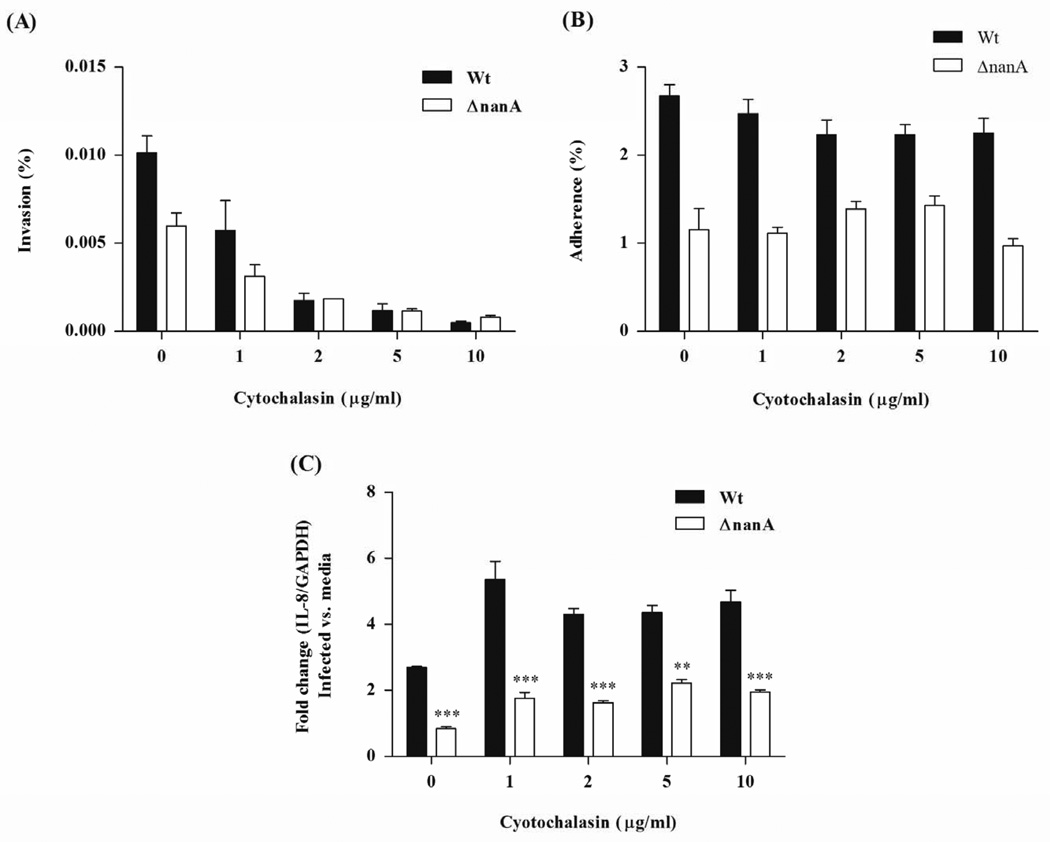
Determination of bacterial invasion (A), adherence (B), and IL-8 transcript abundance (C) following cytochalasin D treatment. HBMEC monolayers were treated with indicated concentrations of cytochalasin D for 30 min prior to infection with WT SPN or the ΔnanA mutant. IL-8 transcript levels were measured by real time RT-PCR following 6 h infection. Experiments were performed three times in triplicate. ** p<0.005, *** p<0.001.
Figure 4
Figure 4
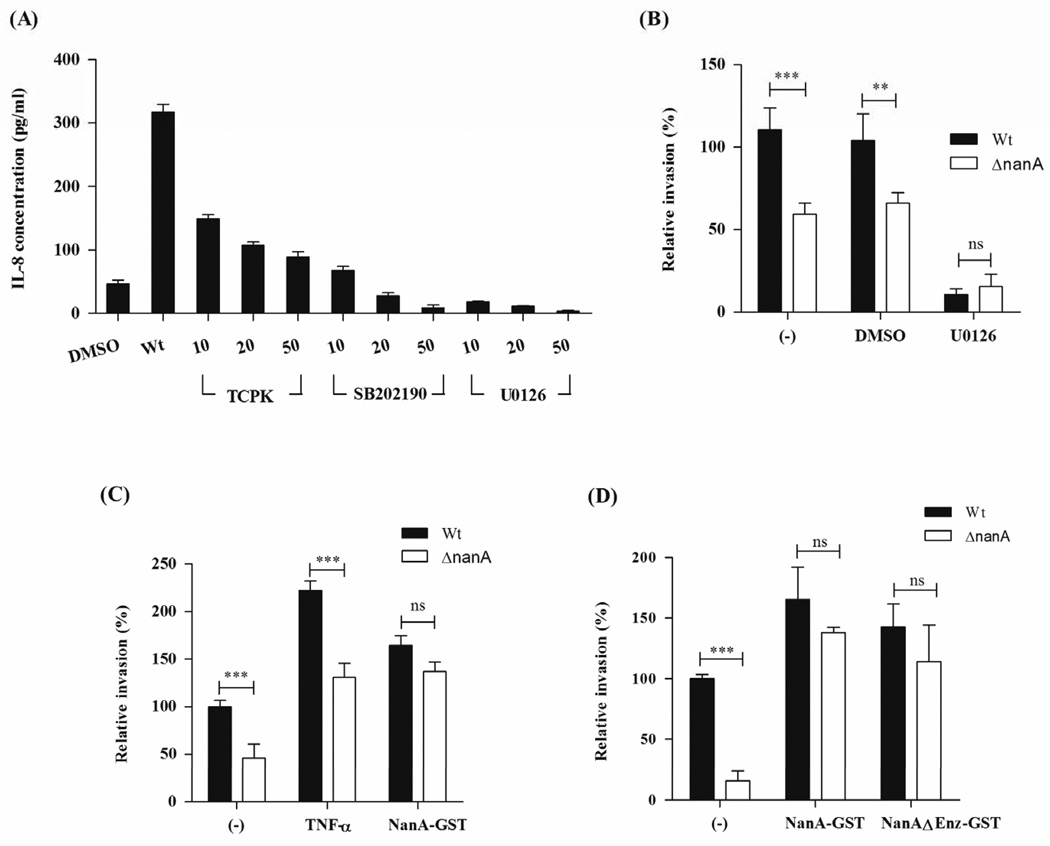
(A) HBMEC monolayers were treated with signaling pathway inhibitors TCPK, SB202190 and U0126 for 30 min prior to infection with SPN. Protein expression of IL-8 in hBMEC supernatants, 6 h post infection was determined using ELISA. Quantification of bacterial invasion following hBMEC treatment with U0126 (30 min) compared to DMSO control (B), TNFα and NanA-GST (C) or NanA-GST and NanAΔEnz-GST (D). Experiments were performed three times in triplicate. Bars represent mean and standard deviation of one representative experiment. ** p<0.005, *** p<0.001.
Figure 5
Figure 5
(A) Transcript abundance of murine chemokine KC in total RNA isolated from mice brain 6h post intravenous (i.v.) injection with WT SPN or ΔnanA mutant. Transcript levels were normalized to β-Actin and expressed as fold change compared to mice injected with PBS only. (B) Ratio of brain bacterial counts (CFU) to blood CFU 24h post infection with WT SPN or ΔnanA mutant. Mice were injected with 5×10⁴ CFU of WT SPN or ΔnanA mutant intravenously and 24h post injection animals were sacrificed. Histopathology of H&E stained representative brain tissue samples following infection with WT SPN (C–F), depicting areas of areas of leukocyte infiltration and microabscess formation (arrows), and ΔnanA mutant (G) ** p<0.005, *** p<0.001.

References

    1. Bernatoniene J, Zhang Q, Dogan S, Mitchell TJ, Paton JC, Finn A. Induction of CC and CXC chemokines in human antigen-presenting dendritic cells by the pneumococcal proteins pneumolysin and CbpA, and the role played by toll-like receptor 4, NF-kappaB, and mitogen-activated protein kinases. J Infect Dis. 2008;198:1823–1833. - PubMed
    1. Berry AM, Yother J, Briles DE, Hansman D, Paton JC. Reduced virulence of a defined pneumolysin-negative mutant of Streptococcus pneumoniae. Infect. Immun. 1989;57:2037–2042. - PMC - PubMed
    1. Betz AL. An overview of the multiple functions of the blood-brain barrier. NIDA Res Monogr. 1992;120:54–72. - PubMed
    1. Betz AL, Goldstein GW. Specialized properties and solute transport in brain capillaries. Annu Rev Physiol. 1986;48:241–250. - PubMed
    1. Bradley PP, Priebat DA, Christensen RD, Rothstein G. Measurement of cutaneous inflammation: estimation of neutrophil content with an enzyme marker. J. Invest. Dermatol. 1982;78:206–209. - PubMed

Publication types

MeSH terms

LinkOut - more resources