


Biomechanics laboratory-based prediction algorithm to identify female athletes with high knee loads that increase risk of ACL injury
- PMID: 20558526
- PMCID: PMC4019975
- DOI: 10.1136/bjsm.2009.069351
Biomechanics laboratory-based prediction algorithm to identify female athletes with high knee loads that increase risk of ACL injury
Abstract
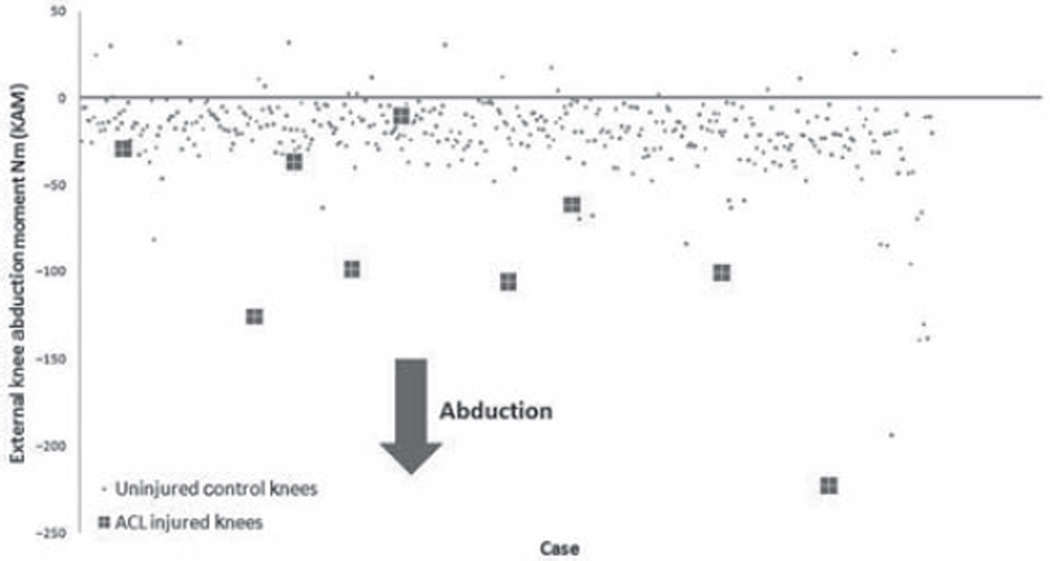
Objective: Knee abduction moment (KAM) during landing predicts non-contact anterior cruciate ligament (ACL) injury risk with high sensitivity and specificity in female athletes. The purpose of this study was to employ sensitive laboratory (lab-based) tools to determine predictive mechanisms that underlie increased KAM during landing.
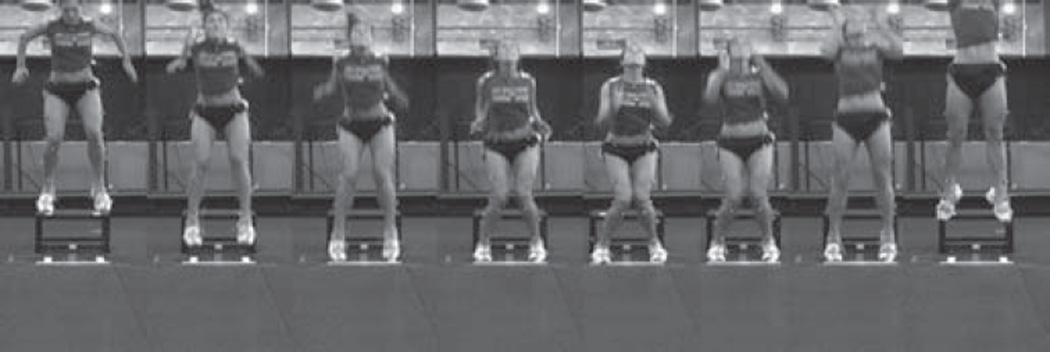
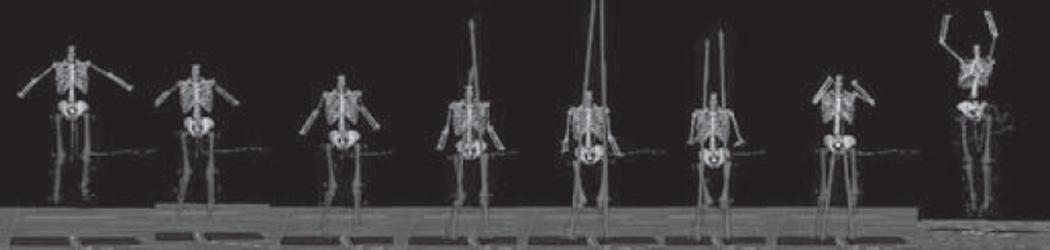
Methods: Female basketball and soccer players (N=744) from a single county public school district were recruited to participate in testing of anthropometrics, maturation, laxity/flexibility, strength and landing biomechanics. Linear regression was used to model KAM, and logistic regression was used to examine high (>25.25 Nm of KAM) versus low KAM as surrogate for ACL injury risk.
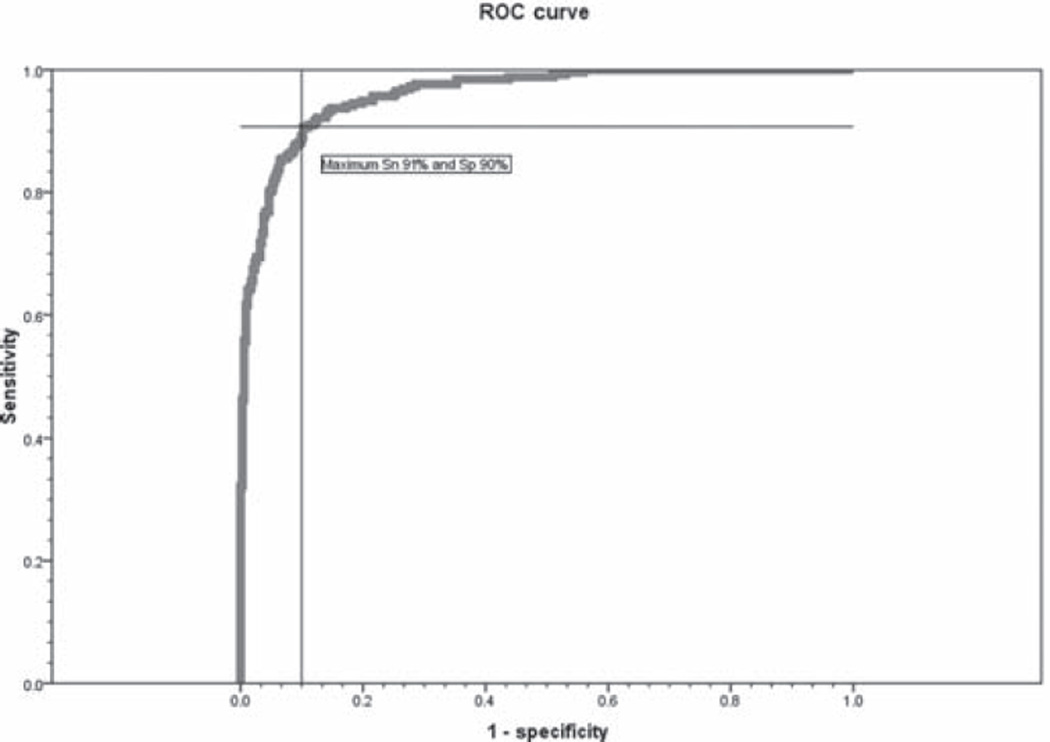
Results: The most parsimonious model included independent predictors (β±1 SE) (1) peak knee abduction angle (1.78±0.05; p<0.001), (2) peak knee extensor moment (0.17±0.01; p<0.001), (3) knee flexion range of motion (0.15±0.03; p<0.01), (4) body mass index (BMI) Z-score (-1.67±0.36; p<0.001) and (5) tibia length (-0.50±0.14; p<0.001) and accounted for 78% of the variance in KAM during landing. The logistic regression model that employed these same variables predicted high KAM status with 85% sensitivity and 93% specificity and a C-statistic of 0.96.
Conclusions: Increased knee abduction angle, quadriceps recruitment, tibia length and BMI with decreased knee flexion account for 80% of the measured variance in KAM during a drop vertical jump.
Clinical relevance: Females who demonstrate increased KAM are more responsive and more likely to benefit from neuromuscular training. These findings should significantly enhance the identification of those at increased risk and facilitate neuromuscular training targeted to this important risk factor (high KAM) for ACL injury.
Figures
References
-
- Arendt E, Dick R. Knee injury patterns among men and women in collegiate basketball and soccer. NCAA data and review of literature. Am J Sports Med. 1995;23:694–701. - PubMed
-
- Malone TR, Hardaker WT, Garrett WE, et al. Relationship of gender to anterior cruciate ligament injuries in intercollegiate basketball players. J South Orthop Assoc. 1993;2:36–39.
-
- Ford KR, Myer GD, Hewett TE. Valgus knee motion during landing in high school female and male basketball players. Med Sci Sports Exerc. 2003;35:1745–1750. - PubMed
-
- Ford KR, Myer GD, Toms HE, et al. Gender differences in the kinematics of unanticipated cutting in young athletes. Med Sci Sports Exerc. 2005;37:124–129. - PubMed
-
- Hewett TE, Myer GD, Ford KR, et al. Biomechanical measures of neuromuscular control and valgus loading of the knee predict anterior cruciate ligament injury risk in female athletes: a prospective study. Am J Sports Med. 2005;33:492–501. - PubMed
Publication types
MeSH terms
Grants and funding
LinkOut - more resources
Full Text Sources
Other Literature Sources
Miscellaneous
