


Evolution of the sweet taste receptor gene Tas1r2 in bats
- PMID: 20558596
- PMCID: PMC2981487
- DOI: 10.1093/molbev/msq152
Evolution of the sweet taste receptor gene Tas1r2 in bats
Abstract
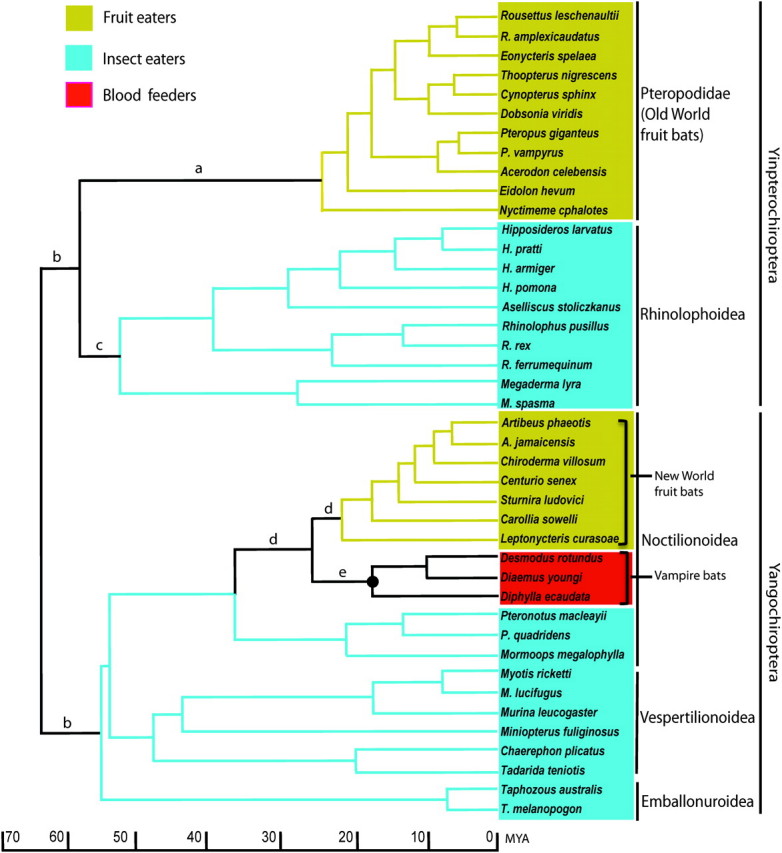
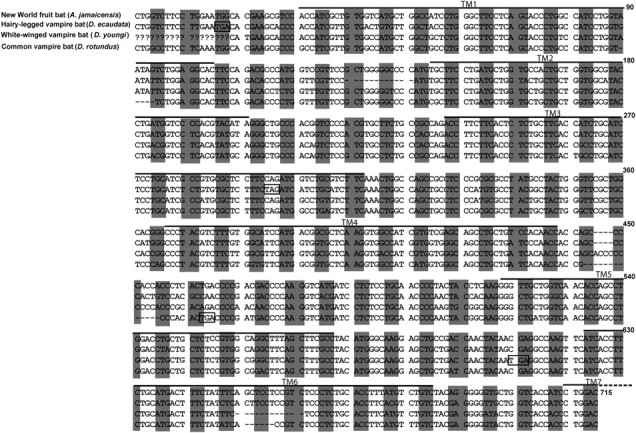
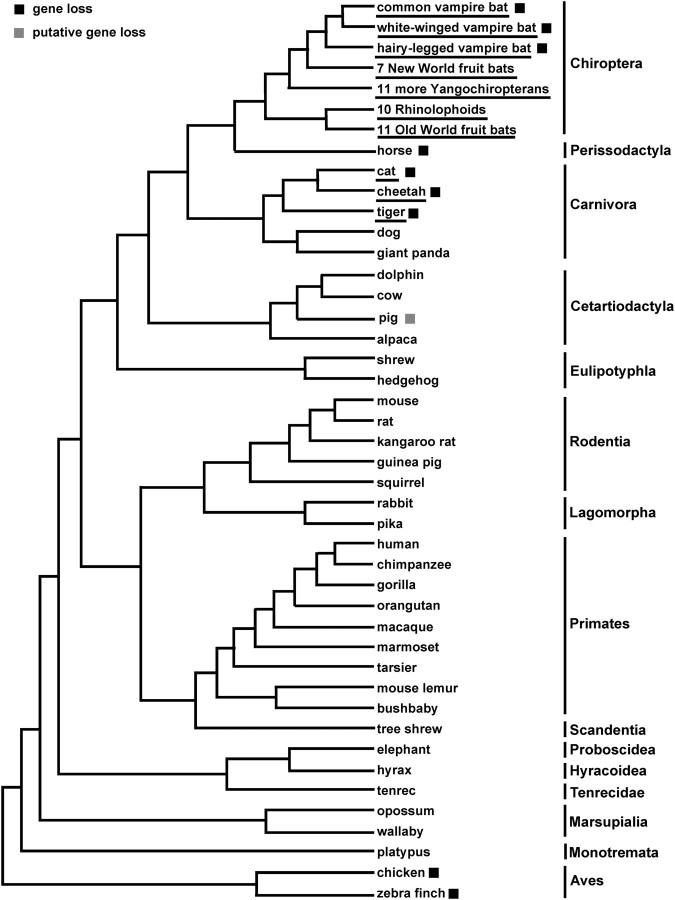
Taste perception is an important component of an animal's fitness. The identification of vertebrate taste receptor genes in the last decade has enabled molecular genetic studies of the evolution of taste perception in the context of the ecology and dietary preferences of organisms. Although such analyses have been conducted in a number of species for bitter taste receptors, a similar analysis of sweet taste receptors is lacking. Here, we survey the sole sweet taste-specific receptor gene Tas1r2 in 42 bat species that represent all major lineages of the order Chiroptera, one of the most diverse groups of mammals in terms of diet. We found that Tas1r2 is under strong purifying selection in the majority of the bats studied, with no significant difference in the strength of the selection between insect eaters and fruit eaters. However, Tas1r2 is a pseudogene in all three vampire bat species and the functional relaxation likely started in their common ancestor, probably due to the exclusive feeding of vampire bats on blood and their reliance on infrared sensors rather than taste perception to locate blood sources. Our survey of available genome sequences, together with previous reports, revealed additional losses of Tas1r2 in horse, cat, chicken, zebra finch, and western clawed frog, indicating that sweet perception is not as conserved as previously thought. Nonetheless, we found no common dietary pattern among the Tas1r2-lacking vertebrates, suggesting different causes for the losses of Tas1r2 in different species. The complexity of the ecological factors that impact the evolution of Tas1r2 calls for a better understanding of the physiological roles of sweet perception in different species.
Figures

References
-
- Adler E, Hoon MA, Mueller KL, Chandrashekar J, Ryba NJ, Zuker CS. A novel family of mammalian taste receptors. Cell. 2000;100:693–702. - PubMed
-
- Altringham JD. Oxford University Press Oxford: 1996. Bats: Biology and Behavior.
-
- Bahlman JW, Kelt DA. Use of olfaction during prey location by the common vampire bat. Biotropica. 2006;39:147–149.
-
- Chandrashekar J, Mueller KL, Hoon MA, Adler E, Feng L, Guo W, Zuker CS, Ryba NJ. T2Rs function as bitter taste receptors. Cell. 2000;100:703–711. - PubMed
Publication types
MeSH terms
Substances
LinkOut - more resources
Full Text Sources
Miscellaneous
