


Role of protein transamidation in serotonin-induced proliferation and migration of pulmonary artery smooth muscle cells
- PMID: 20558776
- PMCID: PMC3095926
- DOI: 10.1165/rcmb.2010-0078OC
Role of protein transamidation in serotonin-induced proliferation and migration of pulmonary artery smooth muscle cells
Abstract
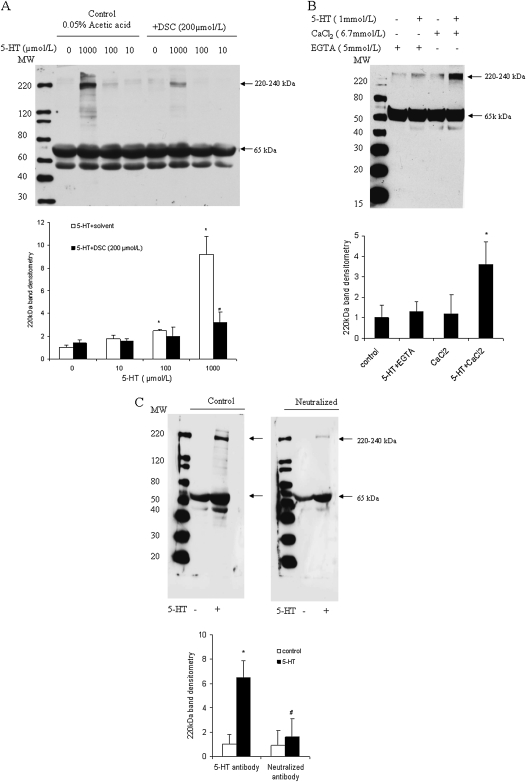
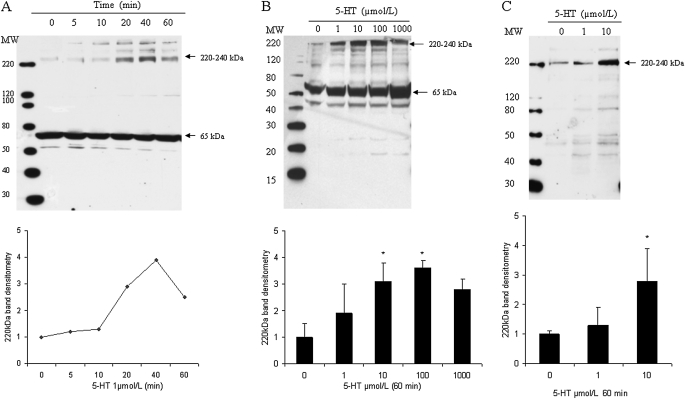
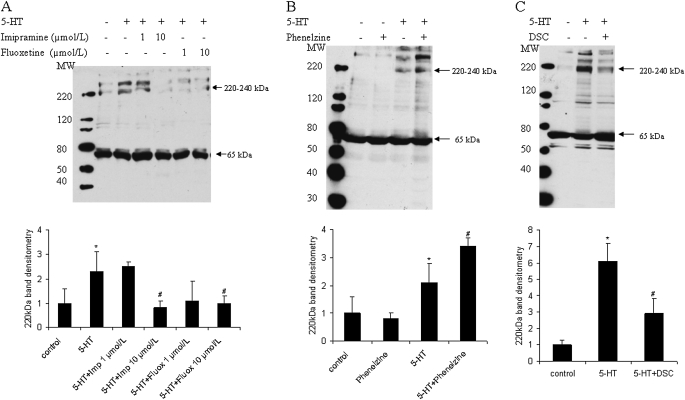
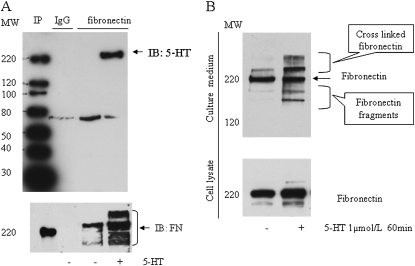
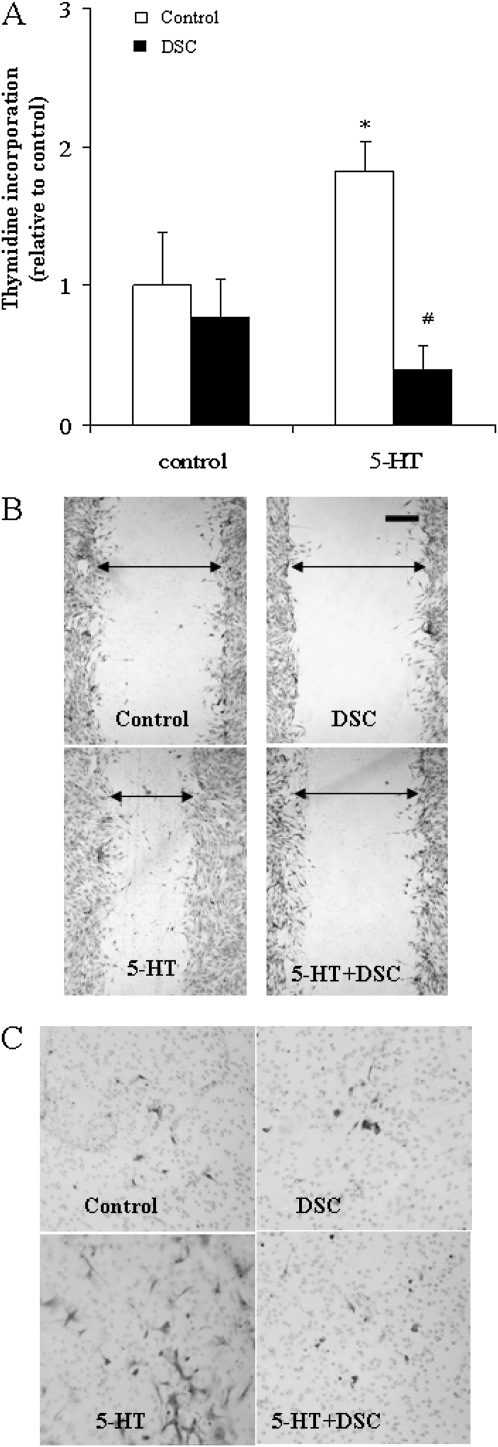
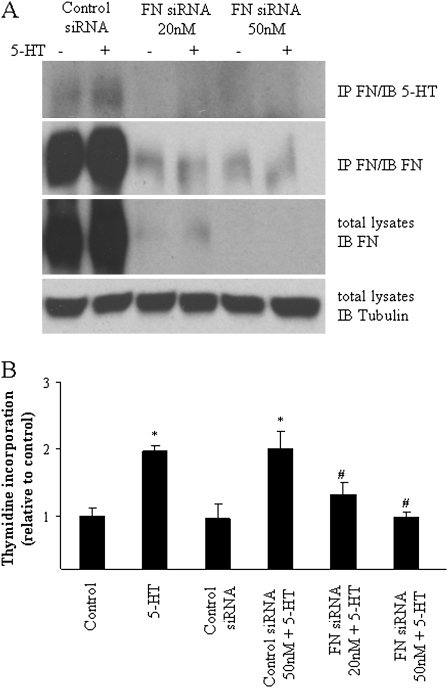
Pulmonary hypertension is characterized by elevated pulmonary artery pressure and pulmonary artery smooth muscle cell (SMC) proliferation and migration. Clinical and experimental evidence suggests that serotonin (5-HT) is important in these responses. We previously demonstrated the participation of the 5-HT transporter and intracellular 5-HT (5-HTi) in the pulmonary vascular SMC-proliferative response to 5-HT. However, the mechanism underlying the intracellular actions of 5-HT is unknown. We speculated that 5-HTi activates SMC growth by post-translational transamidation of proteins via transglutaminase (TGase) activity, a process referred to as serotonylation. To test this hypothesis, serotonylation of pulmonary artery SMC proteins, and their role in 5-HT-induced proliferative and migratory responses, were assessed. 5-HT caused dose- and time-dependent increase in serotonylation of multiple proteins in both bovine and rat pulmonary artery SMCs. Inhibition of TGase with dansylcadaverin blocked this activity, as well as SMC-proliferative and migratory responses to 5-HT. Serotonylation of proteins also was blocked by 5-HT transporter inhibitors, and was enhanced by inhibition of monoamine oxidase, an enzyme known to degrade 5-HTi, indicating that 5-HTi levels regulate serotonylation. Immunoprecipitation assays and HPLC-mass spectral peptide sequencing revealed that a major protein serotonylated by TGase was fibronectin (FN). 5-HT-stimulated SMC serotonylation and proliferation were blocked by FN small interfering (si) RNA. These findings, together with previous observations that FN expression in the lung strongly correlates with the progression of pulmonary hypertension in both experimental animals and humans, suggest an important role of FN serotonylation in the pathogenesis of this disease.
Figures

References
-
- Rudolph AM, Paul MH. Pulmonary and systemic vascular response to continuous infusion of 5-hydroxytryptamine (serotonin) in the dog. Am J Physiol 1957;189:263–268. - PubMed
-
- Lee SL, Simon AR, Wang WW, Fanburg BLH. (2)O(2) signals 5-HT–induced ERK MAP kinase activation and mitogenesis of smooth muscle cells. Am J Physiol 2001;281:L646–L652. - PubMed
-
- Lee SL, Wang WW, Lanzillo JJ, Fanburg BL. Regulation of serotonin-induced DNA synthesis of bovine pulmonary artery smooth muscle cells. Am J Physiol 1994;266:L53–L60. - PubMed
-
- Coatrieux C, Sanson M, Negre-Salvayre A, Parini A, Hannun Y, Itohara S, Salvayre R, Auge N. MAO-A–induced mitogenic signaling is mediated by reactive oxygen species, MMP-2, and the sphingolipid pathway. Free Radic Biol Med 2007;43:80–89. - PubMed
-
- Eddahibi S, Guignabert C, Barlier-Mur AM, Dewachter L, Fadel E, Dartevelle P, Humbert M, Simonneau G, Hanoun N, Saurini F, et al. Cross talk between endothelial and smooth muscle cells in pulmonary hypertension: critical role for serotonin-induced smooth muscle hyperplasia. Circulation 2006;113:1857–1864. - PubMed
Publication types
MeSH terms
Substances
Grants and funding
LinkOut - more resources
Full Text Sources
Miscellaneous
