


Serum 25-hydroxyvitamin d and the incidence of acute viral respiratory tract infections in healthy adults
- PMID: 20559424
- PMCID: PMC2885414
- DOI: 10.1371/journal.pone.0011088
Serum 25-hydroxyvitamin d and the incidence of acute viral respiratory tract infections in healthy adults
Abstract
Background: Declining serum concentrations of 25-hydroxyvitamin D seen in the fall and winter as distance increases from the equator may be a factor in the seasonal increased prevalence of influenza and other viral infections. This study was done to determine if serum 25-hydroxyvitamin D concentrations correlated with the incidence of acute viral respiratory tract infections.
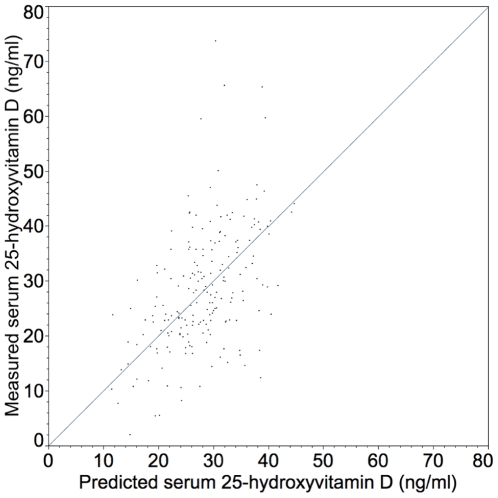
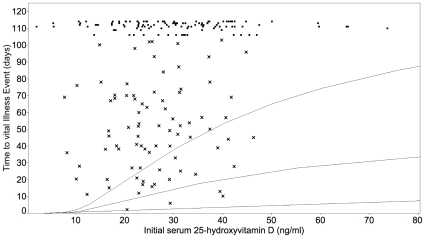
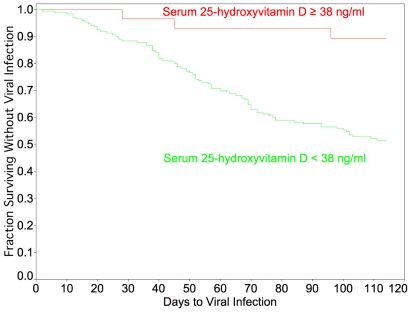
Methodology/findings: In this prospective cohort study serial monthly concentrations of 25-hydroxyvitamin D were measured over the fall and winter 2009-2010 in 198 healthy adults, blinded to the nature of the substance being measured. The participants were evaluated for the development of any acute respiratory tract infections by investigators blinded to the 25-hydroxyvitamin D concentrations. The incidence of infection in participants with different concentrations of vitamin D was determined. One hundred ninety-five (98.5%) of the enrolled participants completed the study. Light skin pigmentation, lean body mass, and supplementation with vitamin D were found to correlate with higher concentrations of 25-hydroxyvitamin D. Concentrations of 38 ng/ml or more were associated with a significant (p<0.0001) two-fold reduction in the risk of developing acute respiratory tract infections and with a marked reduction in the percentages of days ill.
Conclusions/significance: Maintenance of a 25-hydroxyvitamin D serum concentration of 38 ng/ml or higher should significantly reduce the incidence of acute viral respiratory tract infections and the burden of illness caused thereby, at least during the fall and winter in temperate zones. The findings of the present study provide direction for and call for future interventional studies examining the efficacy of vitamin D supplementation in reducing the incidence and severity of specific viral infections, including influenza, in the general population and in subpopulations with lower 25-hydroxyvitamin D concentrations, such as pregnant women, dark skinned individuals, and the obese.
Conflict of interest statement
Figures
Comment in
-
Vitamin D dosing for infectious and immune disorders.Thorax. 2015 Oct;70(10):919-20. doi: 10.1136/thoraxjnl-2015-207334. Epub 2015 Jul 2. Thorax. 2015. PMID: 26138735 No abstract available.
References
-
- Reichert TA, Simonsen L, Sharma A, Pardo SA, Fedson DS, et al. Influenza and the winter increase in mortality in the United States, 1959–1999. AM J Epidemiol. 2004;160:492–502. - PubMed
-
- Panozzo CA, Fowlkes AL, Anderson LJ. Variation in timing of respiratory syncytial virus outbreaks: lessons from national surveillance. Pediatr Infect Dis J. 2007;26(11 suppl):S41–45. - PubMed
-
- Gwaltney JM, Jr, Hendley JO, Simon G, Jordan Ws., Jr Rhinovirus infection in an industrialized population: I. the occurrence of illness. N Engl J Med. 1966;275:1261–1268. - PubMed
-
- Schaffer FL, Soergel ME, Straube DC. Survival of airborne influenza virus: effects of propagating host, relative humidity, and composition of spray fluids. Arch Virol. 1976;51:263–273. - PubMed
Publication types
MeSH terms
Substances
LinkOut - more resources
Full Text Sources
Medical
Miscellaneous
