. 2010 Jul;31(7):831-8.
doi: 10.1038/aps.2010.62. Epub 2010 Jun 21.

Protective effects of luteolin against lipopolysaccharide-induced acute lung injury involves inhibition of MEK/ERK and PI3K/Akt pathways in neutrophils

Affiliations

Protective effects of luteolin against lipopolysaccharide-induced acute lung injury involves inhibition of MEK/ERK and PI3K/Akt pathways in neutrophils

Jen-pei Lee et al. Acta Pharmacol Sin. 2010 Jul.

Abstract

Aim: To investigate whether luteolin, the major polyphenolic components of Lonicera japonica, has beneficial effects against lipopolysaccharide (LPS)-induced acute lung injury (ALI) and to determine whether the protective mechanism involves anti-inflammatory effects on neutrophils.

Methods: ALI was induced with intratracheal instillation of LPS in mice. The level of ALI was determined by measuring the cell count and protein content in bronchoalveolar lavage (BAL) fluid. Neutrophils were stimulated with formyl-Met-Leu-Phe (fMLP) or LPS in vitro. Chemotaxis and superoxide anion generation were measured to evaluate neutrophil activation. The potential involvement of intracellular signaling molecules in regulating neutrophil activation was analyzed by using Western blot.

Results: LPS induced ALI in mice, as evidenced with leukocyte infiltration and protein leakage into the lungs. Luteolin attenuated LPS-induced leukocyte infiltration and protein extravasation. In cell studies, luteolin attenuated the fMLP-induced neutrophil chemotaxis and respiratory burst (IC(50) 0.2+/-0.1 micromol/L and 2.2+/-0.8 micromol/L, respectively), but had a negligible effect on superoxide anion generation during phorbol myristate acetate stimulation. Furthermore luteolin effectively blocked MAPK/ERK kinase 1/2 (MEK), extracellular signal-regulated kinase (ERK), and Akt phosphorylation in fMLP- and LPS-stimulated neutrophils.

Conclusion: These results indicate that luteolin has beneficial effects against LPS-induced ALI in mice, and the attenuation of neutrophil chemotaxis and respiratory burst by luteolin involves the blockade of MEK-, ERK-, and Akt-related signaling cascades.


Figures
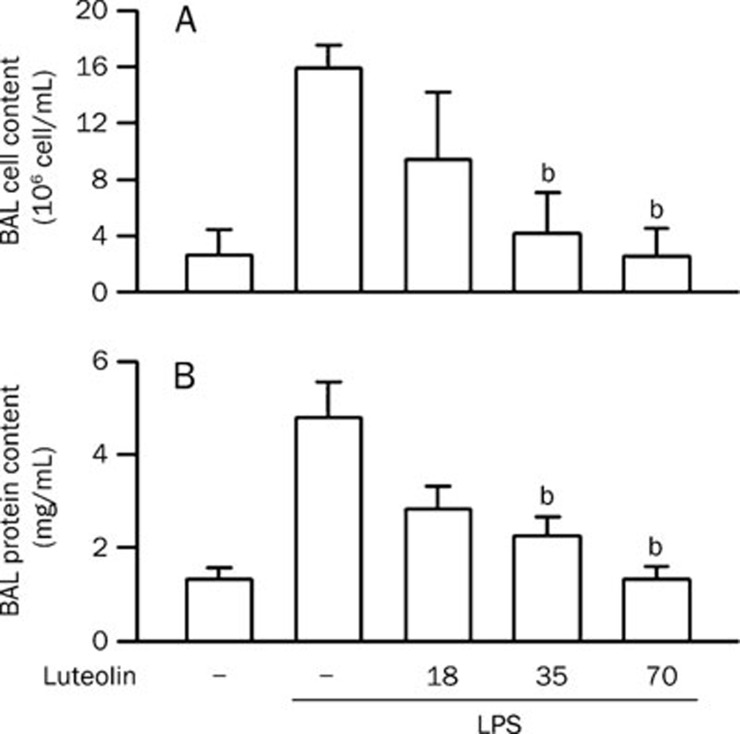
Figure 1
Figure 1
Effect of luteolin on LPS-induced ALI in mice. (A) Normal saline or various doses of luteolin (18−70 μmol/kg) were intraperitoneally administered 0.5 h prior to intratracheal instillation of LPS (100 μg/50 μL saline) or normal saline in mice. Six hours later, the mice were sacrificed and used to collect BAL fluid for leukocyte counts. (B) Lung permeability was determined by quantitating the protein content in cell-free BAL. Values are expressed as means±SD. n=5. bP<0.05 vs corresponding LPS-challenged control values (column 2).
Figure 2
Figure 2
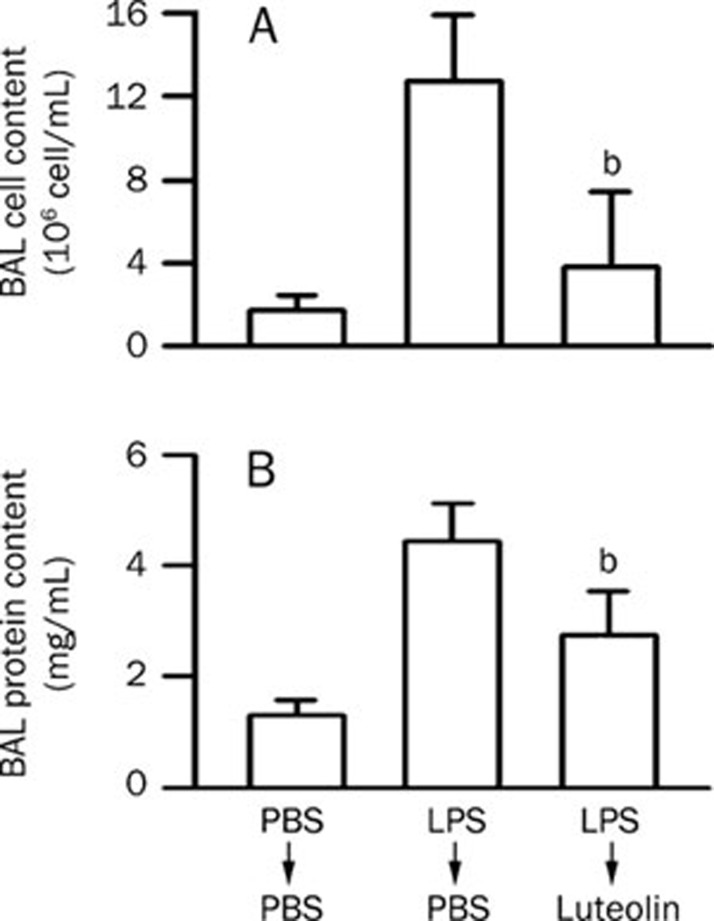
Therapeutic effect of luteolin on LPS-induced ALI in mice. (A) LPS or normal saline were intratracheally injected 5 min prior to intraperitoneal administration of 70 μmol/kg luteolin or normal saline in mice. Six hours later, the mice were sacrificed and used to collect BAL fluid for leukocyte counts. (B) Lung permeability was determined by quantitating the protein content in cell-free BAL. Values are expressed as means±SD. n=5. bP<0.05 vs LPS-challenged control values (column 2).
Figure 3
Figure 3
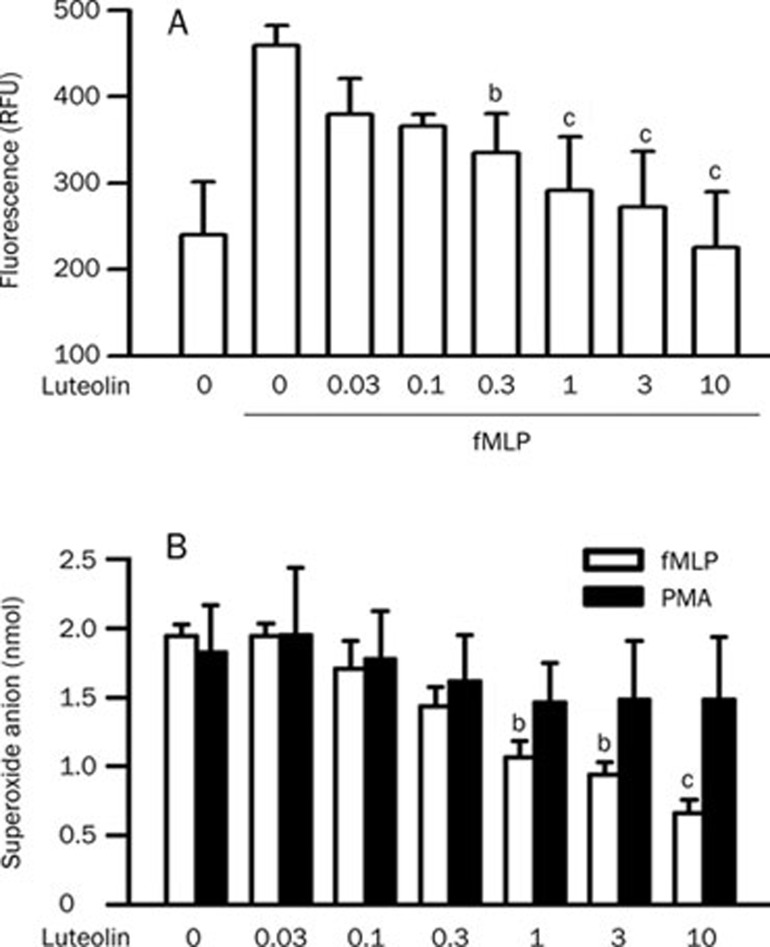
Effects of luteolin on chemotaxis and respiratory burst in fMLP-stimulated neutrophils. (A) Calcein-loaded cells were incubated with DMSO or various concentrations of luteolin (0.03−10 μmol/L) for 10 min. Cells were then placed in FluoroBlok Inserts in the presence or absence of 0.1 μmol/L fMLP for 2 h. The fluorescence intensity in the lower chamber was determined. Values are expressed as means±SD. n=4. bP<0.05, cP<0.01 vs activated control values (column 2). (B) Cells were preincubated with DMSO or various concentrations of luteolin (0.03−10 μmol/L) for 10 min in the presence of dihydrocytochalasin B (5 mg/mL) prior to stimulation with 1 μmol/L fMLP. The superoxide anion generation was then determined. Values are expressed as means±SD. n=4. bP<0.05, cP<0.01 vs activated control values (column 1).
Figure 4
Figure 4
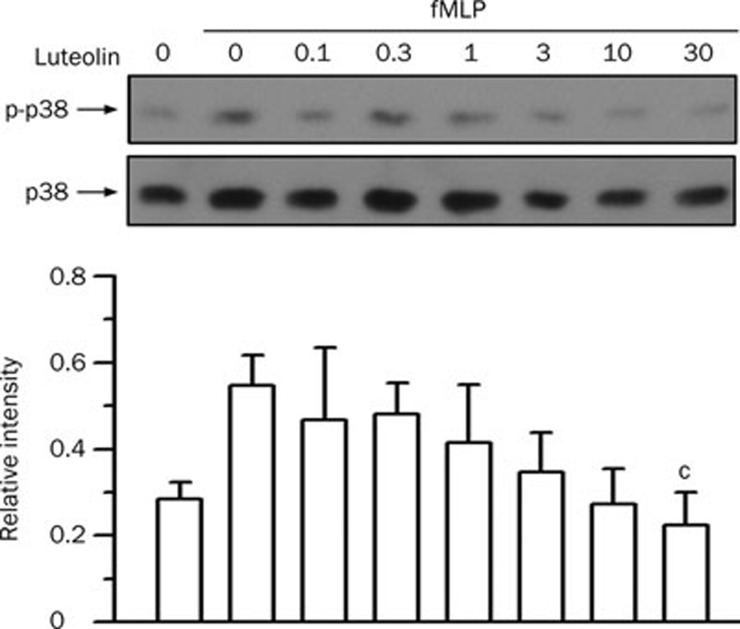
Effect of luteolin on p38 MAPK activation in fMLP-stimulated neutrophils. Cells were preincubated with DMSO or various concentrations of luteolin (1−30 μmol/L) for 10 min in the presence of dihydrocytochalasin B (5 μg/mL) before stimulation with 1 μmol/L fMLP or no stimulation for 1 min. Cell lysates were immunoblotted with anti-phospho-p38 MAPK (p-p38) antibody. The blot was then stripped and reprobed with anti-p38 MAPK (p38) antibody. The immunointensity ratio of p-p38 to p38 was calculated. Values are expressed as means±SD. n=3. bP<0.05 vs activated control values (lane 2).
Figure 5
Figure 5
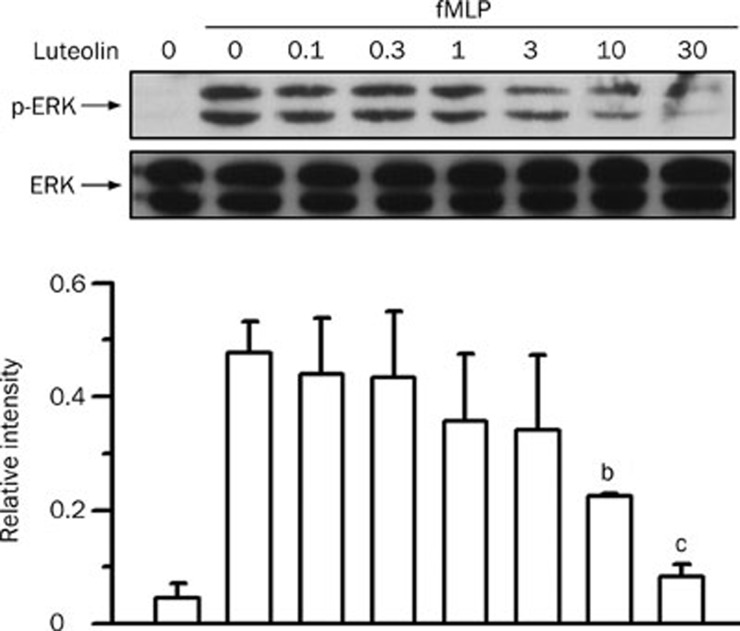
Effect of luteolin on ERK activation in fMLP-stimulated neutrophils. Cells were preincubated with DMSO or various concentrations of luteolin (1−30 μmol/L) for 10 min in the presence of dihydrocytochalasin B (5 μg/mL) before stimulation with 1 μmol/L fMLP or no stimulation for 1 min. Cell lysates were immunoblotted with anti-phospho-ERK (P-ERK) antibody. The blot was then stripped and reprobed with anti-ERK (ERK) antibody. The immunointensity ratio of p-ERK to ERK was calculated. Values are expressed as means±SD. n=3. bP<0.05, cP<0.01 vs activated control values (lane 2).
Figure 6
Figure 6
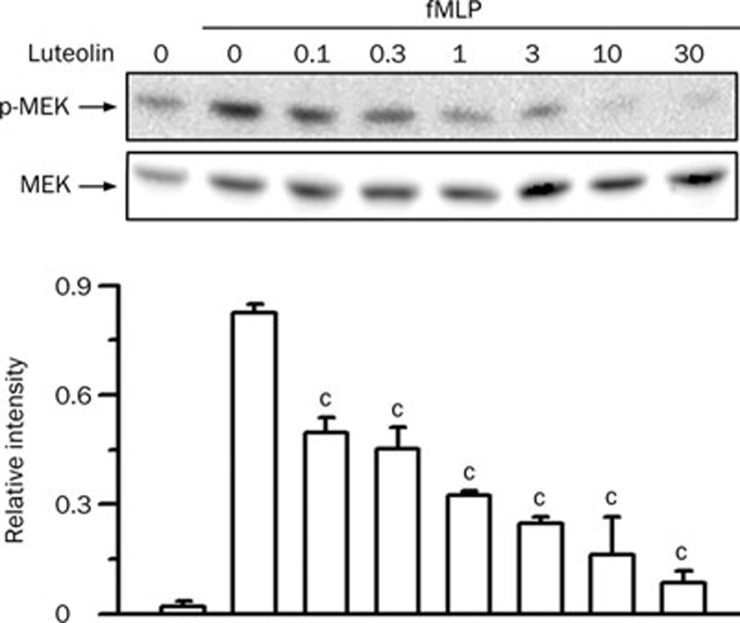
Effect of luteolin on MEK activation in fMLP-stimulated neutrophils. Cells were preincubated with DMSO or various concentrations of luteolin (1−30 μmol/L) for 10 min in the presence of dihydrocytochalasin B (5 μg/mL) before stimulation with 1 μmol/L fMLP or no stimulation for 1 min. Cell lysates were immunoblotted with anti-phospho-MEK (p-MEK) antibody. The blot was then stripped and reprobed with anti-MEK (MEK) antibody. The immunointensity ratio of p-MEK to MEK was calculated. Values are expressed as means±SD. n=3. cP<0.01 vs activated control values (lane 2).
Figure 7
Figure 7
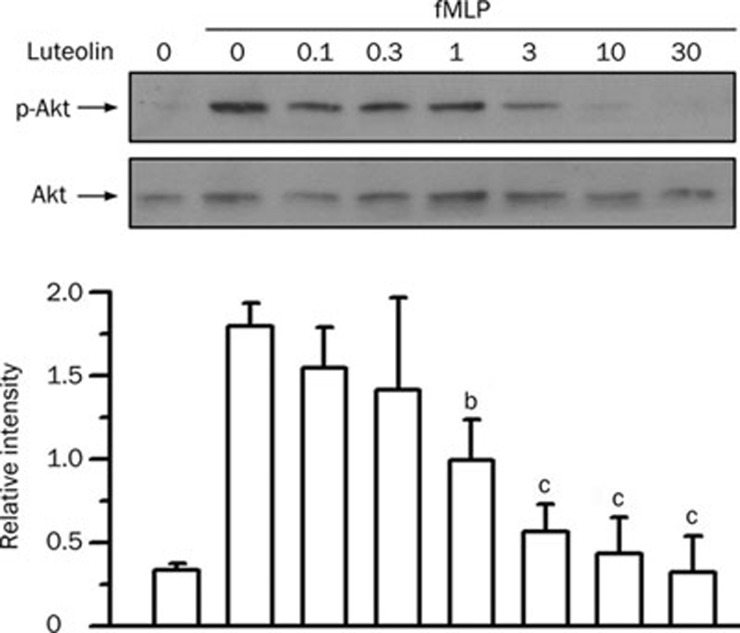
Effect of luteolin on Akt activation in fMLP-stimulated neutrophils. Cells were preincubated with DMSO or various concentrations of luteolin (1−30 μmol/L) for 10 min in the presence of dihydrocytochalasin B (5 μg/mL) before stimulation or no stimulation with 1 μmol/L fMLP for 1 min. Cell lysates were immunoblotted with anti-phospho-Akt (p-Akt) antibody. The blot was then stripped and reprobed with anti-Akt (Akt) antibody. The immunointensity ratio of p-Akt to Akt was calculated. Values are expressed as means±SD. n=3. bP<0.05, cP<0.01 vs activated control values (lane 2).
Figure 8
Figure 8
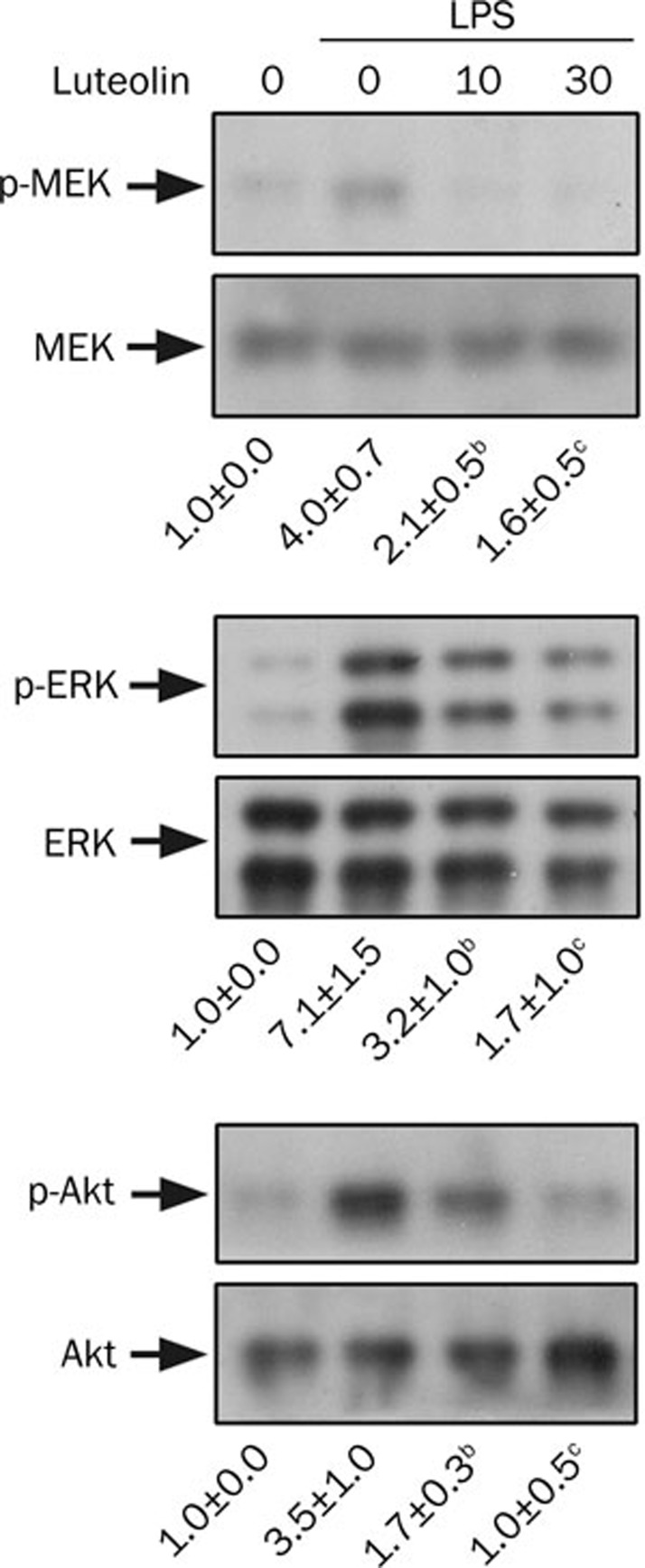
Effect of luteolin on MEK, ERK, and Akt activation in LPS-stimulated neutrophils. Cells were preincubated with DMSO or various concentrations of luteolin (10 and 30 μmol/L) for 10 min before stimulation with 100 ng/mL LPS or no stimulation for 1 h. Cell lysates were subjected to Western blot analysis using antibodies against phosphorylated and total MEK, ERK, and Akt. The immunointensity ratio of the phosphorylated to total protein was calculated. The ratio of the control group was defined as 1.0. Values are expressed as means±SD. n=3. bP<0.05, cP<0.01 vs activated control values (lane 2).

References

    1. Ware LB, Matthay MA. The acute respiratory distress syndrome. N Engl J Med. 2000;342:1334–49. - PubMed
    1. Brigham KL, Meyrick B. Endotoxin and lung injury. Am Rev Respir Dis. 1986;133:913–27. - PubMed
    1. Mei SHJ, McCarter SD, Deng Y, Parker CH, Liles CW, Stewart DJ. Prevention of LPS-induced acute lung injury in mice by mesenchymal stem cells overexpressing angiopoietin 1. PLOS Med. 2007;4:1525–7. - PMC - PubMed
    1. Moraes TJ, Zurawska JH, Downey GP. Neutrophil granule contents in the pathogenesis of lung injury. Curr Opin Hematol. 2006;13:21–7. - PubMed
    1. Guo RF, Ward PA. Role of oxidants in lung injury during sepsis. Antioxid Redox Sign. 2007;9:1991–2002. - PubMed

Publication types

MeSH terms

Substances