


9.3 KDa components of the injected venom of Conus purpurascens define a new five-disulfide conotoxin framework
- PMID: 20564010
- PMCID: PMC3619398
- DOI: 10.1002/bip.21406
9.3 KDa components of the injected venom of Conus purpurascens define a new five-disulfide conotoxin framework
Abstract
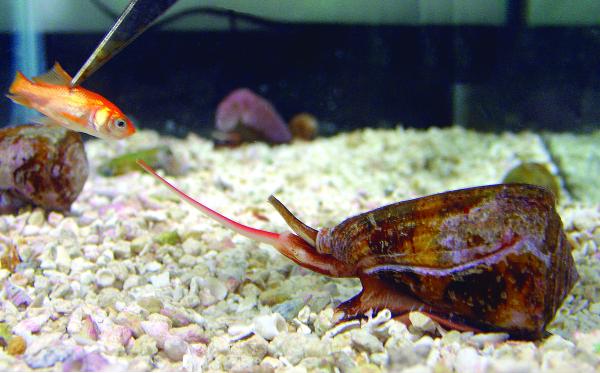
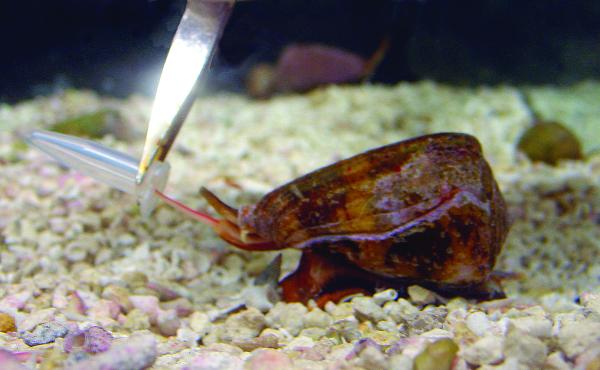
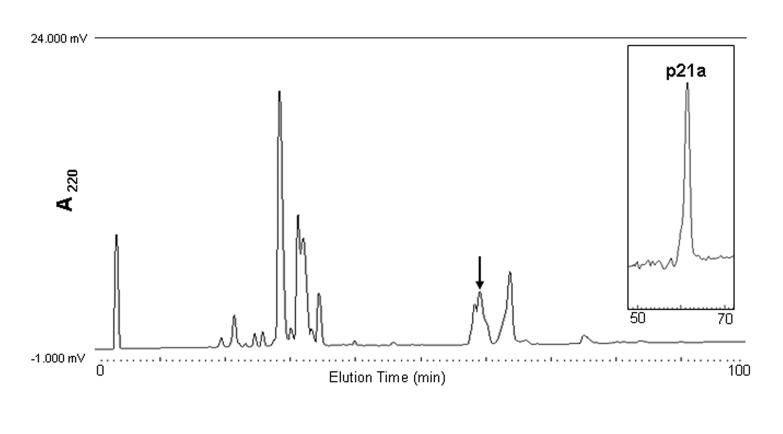
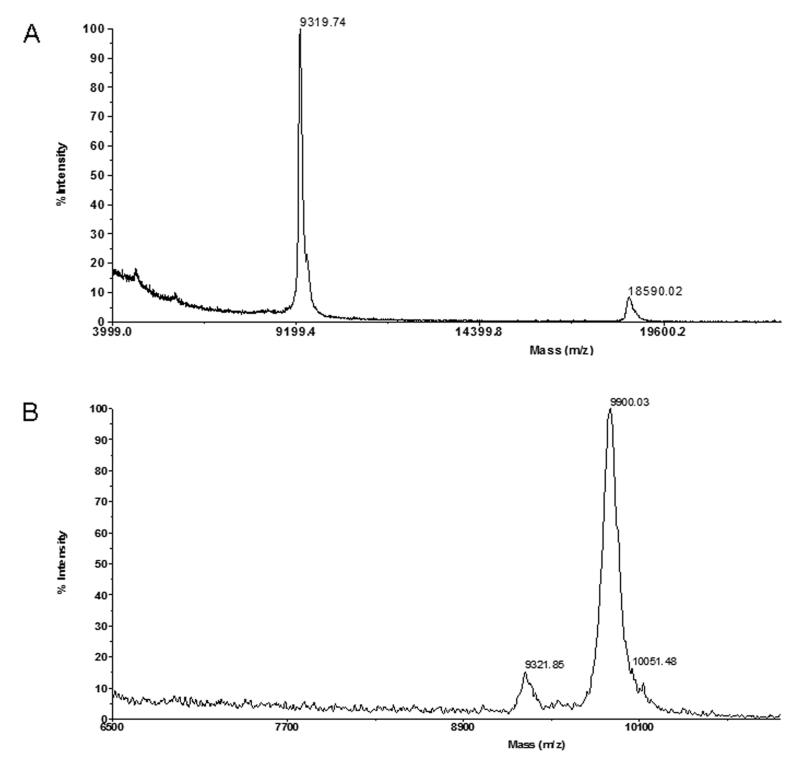
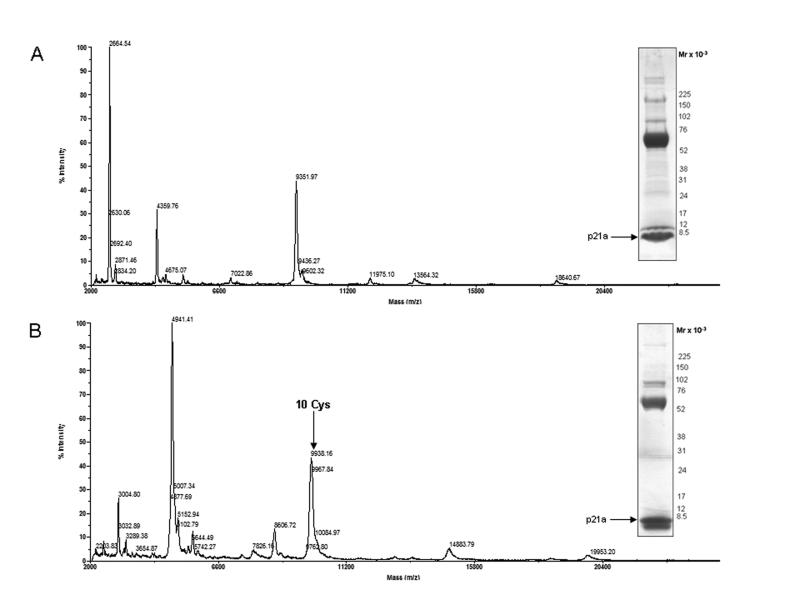
The 83-residue conopeptide (p21a) and its corresponding nonhydroxylated analog were isolated from the injected venom of Conus purpurascens. The complete conopeptide sequences were derived from Edman degradation sequencing of fragments from tryptic, chymotryptic and cyanogen bromide digestions, p21a has a unique, 10-cystine/5-disulfide 7-loop framework with extended 10-residue N-terminus and a 5-residue C-terminus tails, respectively. p21a has a 48% sequence homology with a recently described 13-cystine conopeptide, con-ikot-ikot, isolated from the dissected venom of the fish-hunting snail Conus striatus. However, unlike con-ikot-ikot, p21a does not form a dimer of dimers. MALDI-TOF mass spectrometry suggests that p21a may form a noncovalent dimer. p21a is an unusually large conotoxin and in so far is the largest isolated from injected venom. p21a provides evidence that the Conus venom arsenal includes larger molecules that are directly injected into the prey. Therefore, cone snails can utilize toxins that are comparable in size to the ones commonly found in other venomous animals.
Figures
References
-
- Olivera BM, Imperial JS, Bulaj G. Perspectives in Molecular Toxinology. 2002:143–158.
-
- Terlau H, Shon K-J, Grilley M, Stocker M, Stuehmer W, Olivera BM. Nature. 1996;381:148–151. - PubMed
-
- Bingham J-P, Jones A, Lewis RJ, Andrews PR, Alewood PF. Biochemical Aspects of Marine Pharmacology. 1996:13–27.
Publication types
MeSH terms
Substances
Grants and funding
LinkOut - more resources
Full Text Sources
Research Materials
