


Inhibition of 5alpha-reductase enhances testosterone-induced expression of U19/Eaf2 tumor suppressor during the regrowth of LNCaP xenograft tumor in nude mice
- PMID: 20564326
- PMCID: PMC3076187
- DOI: 10.1002/pros.21193
Inhibition of 5alpha-reductase enhances testosterone-induced expression of U19/Eaf2 tumor suppressor during the regrowth of LNCaP xenograft tumor in nude mice
Abstract
Background: Intermittent androgen deprivation therapy (IADT) was developed to improve the quality of life and retard prostate cancer progression to castration resistance. IADT involves regrowth of the tumor during the off cycle upon testosterone recovery. Our previous studies showed that testosterone is more potent than dihydrotestosterone (DHT) in the induction of a subset of androgen-responsive genes during rat prostate regrowth. However, it is not clear if the same phenomenon would occur during androgen-induced regrowth of prostate tumors. Understanding the differences between testosterone and DHT in inducing androgen-responsive genes during prostate tumor regrowth may provide new insight for improving IADT.
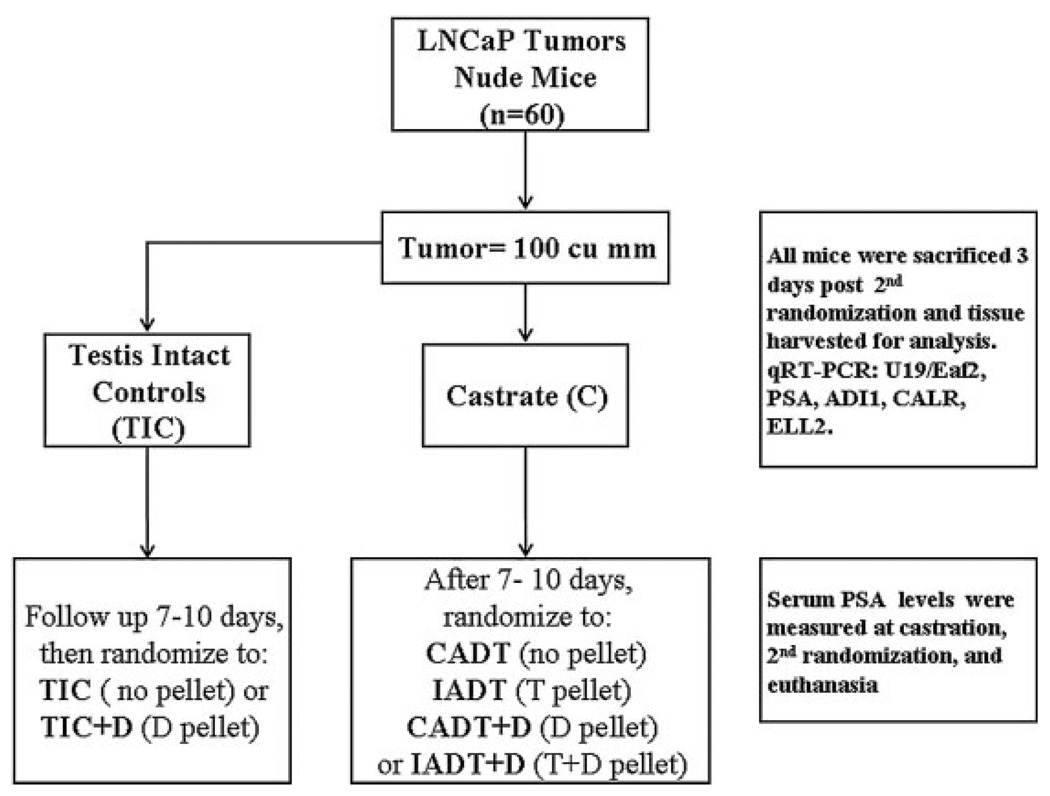
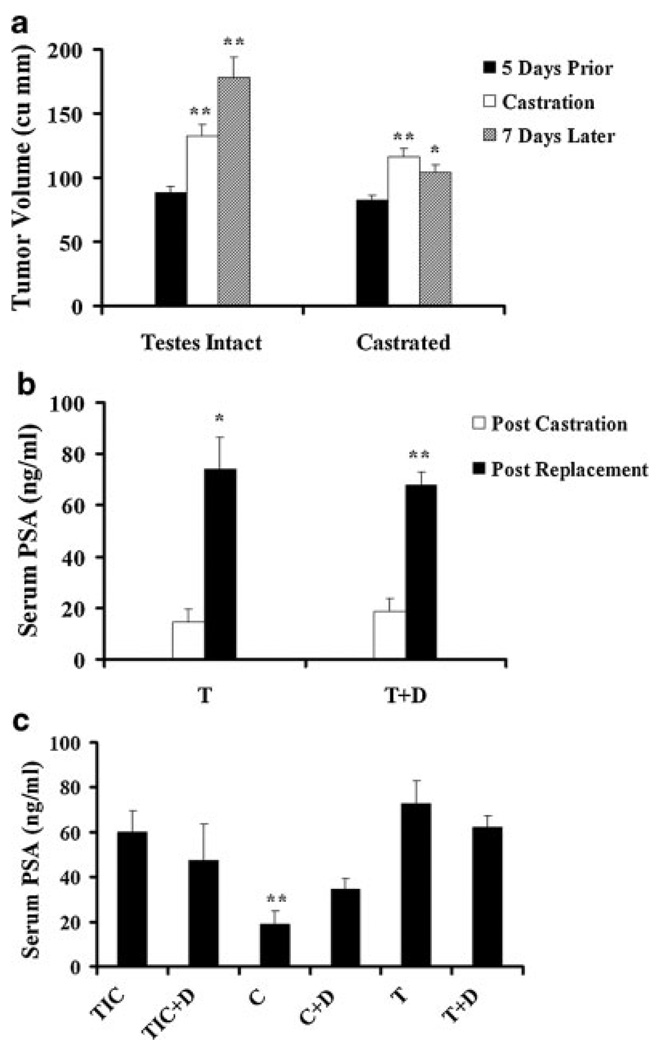
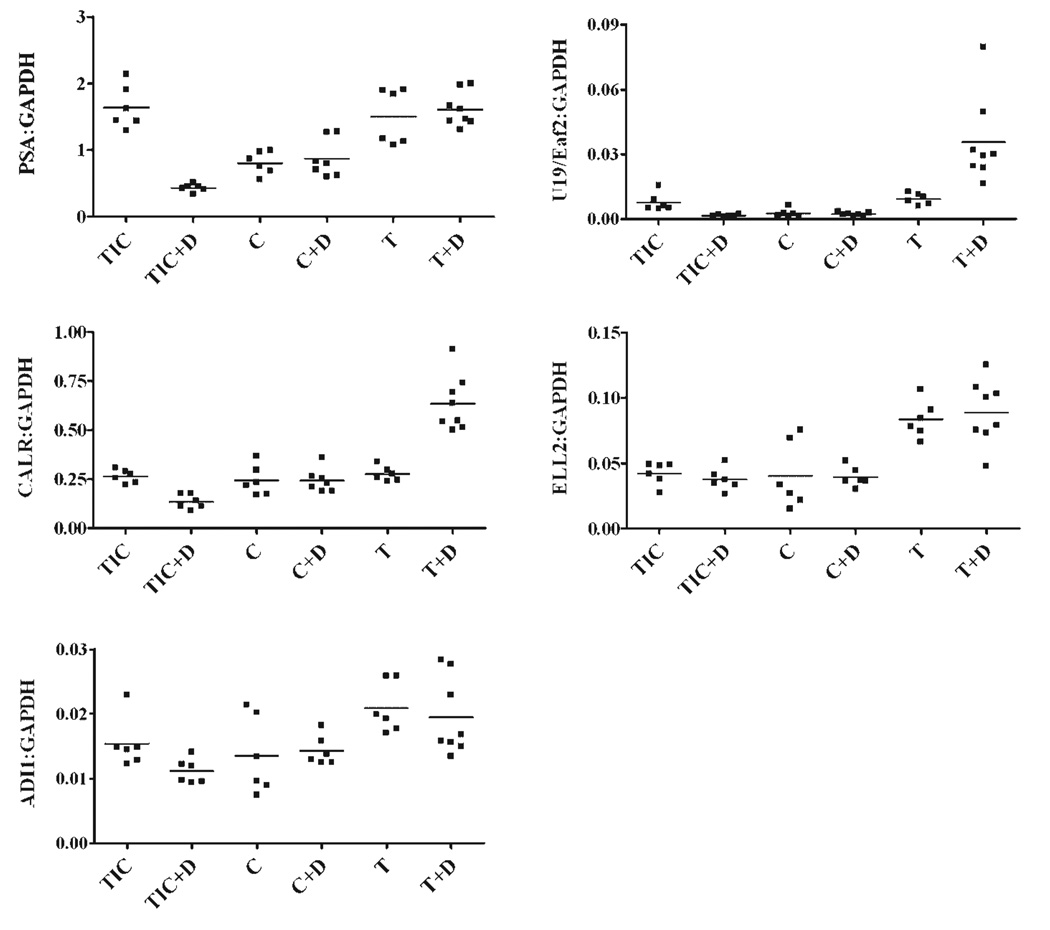
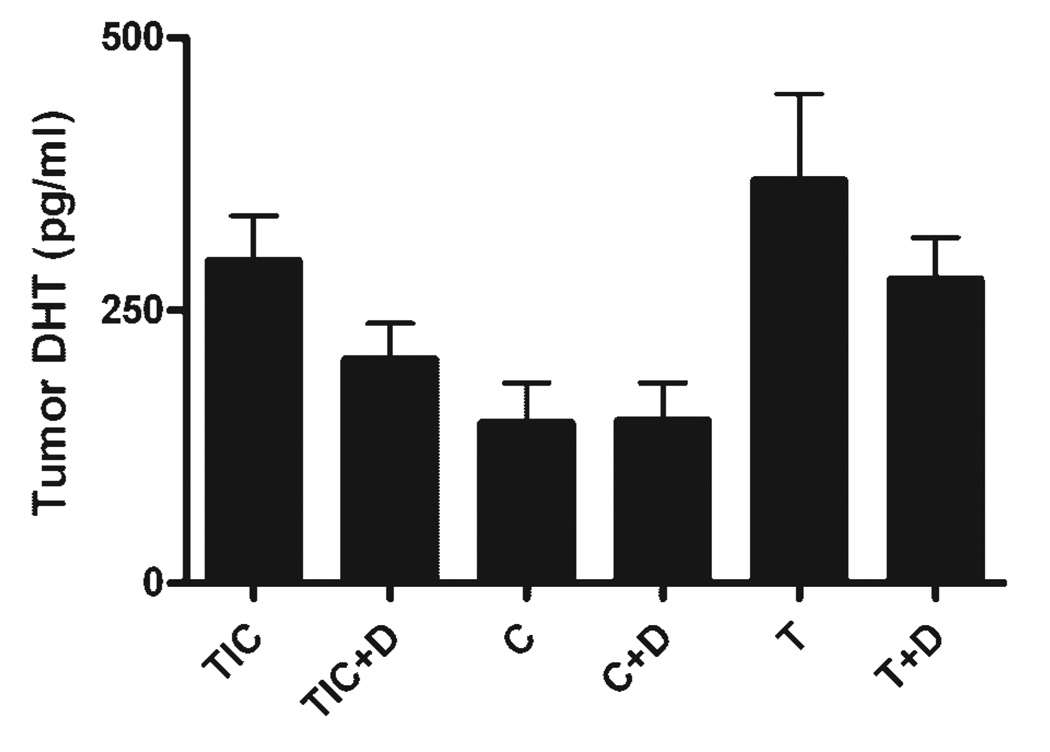
Methods: Nude mice bearing androgen-sensitive LNCaP xenograft were castrated and followed up for 7-10 days before being randomized into various androgen manipulations, consisting of continuous castration (C) or testosterone replacement (T) in the absence or presence of dutasteride (D), a 5alpha-reductase inhibitor that blocks the conversion of testosterone to DHT. Testes-intact animals in the absence or presence of D were used as controls. The expression of five androgen-responsive genes, including the tumor suppressor U19/Eaf2, was determined using real-time RT-PCR, 3 days after randomization.
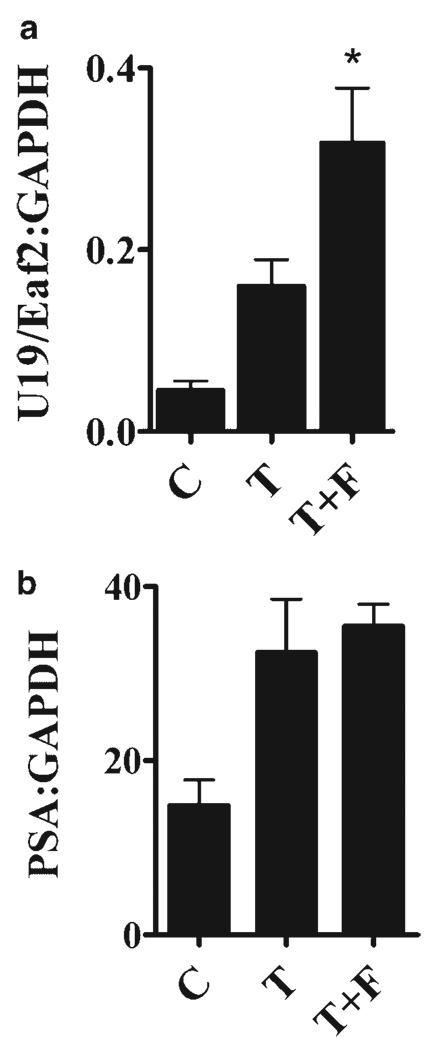
Results: In LNCaP tumors, the expression of U19/Eaf2 was higher in the T+D group as compared with T alone (2.87-fold, P < 0.05). In contrast, dutasteride treatment in testes-intact animals inhibited the expression of U19/Eaf2.
Conclusions: Inhibition of 5alpha-reductase during LNCaP tumor regrowth enhanced the expression of U19/Eaf2, an androgen-regulated tumor suppressor. This finding suggests that off cycle 5alpha-reductase inhibition may enhance the efficacy of IADT.
(c) 2010 Wiley-Liss, Inc.
Figures
References
-
- Huggins C, Hodges C. Studies on prostatic cancer. I. The effects of castration of estrogen and of androgen injection on serum phosphatases in metastatic carcinoma of the prostate. Cancer Res. 1941;1:293–297. - PubMed
-
- Huggins C, Stevens RJ, Hodges C. Studies on prostatic cancer II. The effects of castration on advanced carcinoma of the prostate gland. Arch Surg. 1941;43:209–223.
-
- Klotz LH, Herr HW, Morse MJ, Whitmore WF., Jr Intermittent endocrine therapy for advanced prostate cancer. Cancer. 1986;58(11):2546–2550. - PubMed
-
- Akakura K, Bruchovsky N, Goldenberg SL, Rennie PS, Buckley AR, Sullivan LD. Effects of intermittent androgen suppression on androgen-dependent tumors. Apoptosis and serum prostate-specific antigen. Cancer. 1993;71:2782–2790. - PubMed
-
- Bruchovsky N, Klotz LH, Sadar M, Crook JM, Hoffart D, Godwin L, Warkentin M, Gleave ME, Goldenberg SL. Intermittent androgen suppression for prostate cancer: Canadian Prospective Trial and related observations. Mol Urol. 2000;4(3):191–199. discussion 201. - PubMed
Publication types
MeSH terms
Substances
Grants and funding
LinkOut - more resources
Full Text Sources
Medical
