


Nuclear factor kappaB transcription factors are coexpressed and convey a poor outcome in ovarian cancer
- PMID: 20564628
- PMCID: PMC2946598
- DOI: 10.1002/cncr.25190
Nuclear factor kappaB transcription factors are coexpressed and convey a poor outcome in ovarian cancer
Abstract
Background: Recent work has suggested a role for nuclear factor kappaB (NF-kappaB) in the propagation of ovarian cancer cell lines, but the significance and mechanism of NF-kappaB in ovarian cancer is unknown. The authors hypothesized that the NF-kappaB pathway is over activated in aggressive ovarian cancers.
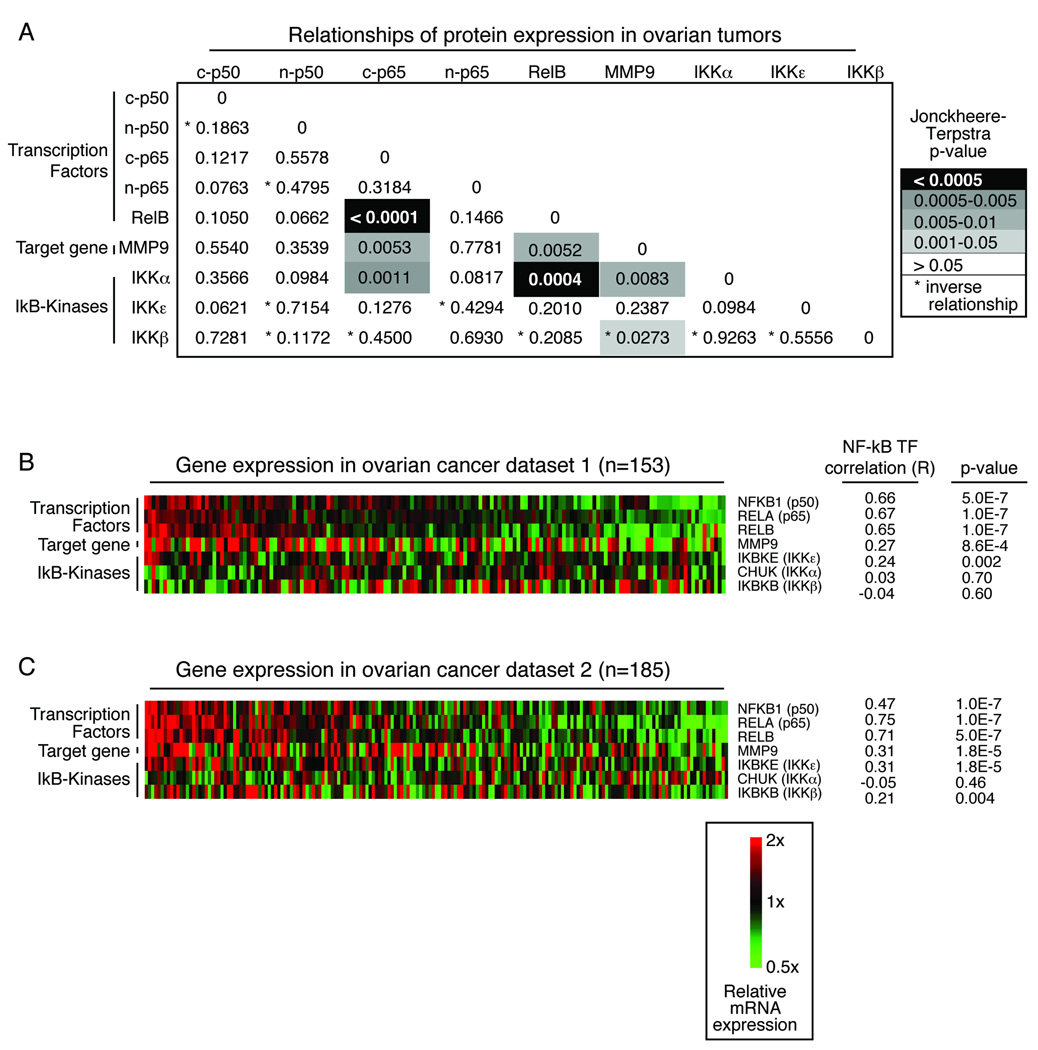
Methods: The levels of 3 NF-kappaB transcription factors, the activating inhibitors of NF-kappaB (IkappaB) kinases, and the NF-kappaB target matrix metalloproteinase 9 (MMP9) were assessed by immunohistochemistry in specimens of ovarian cancer that were obtained at diagnosis from a cohort of 33 patients who subsequently received combined paclitaxel, cisplatin, and cyclophosphamide. Associations were made between NF-kappaB pathway proteins and outcome. The validation of coexpression was performed at the gene level in 2 independently collected cohorts of 185 and 153 ovarian cancers.
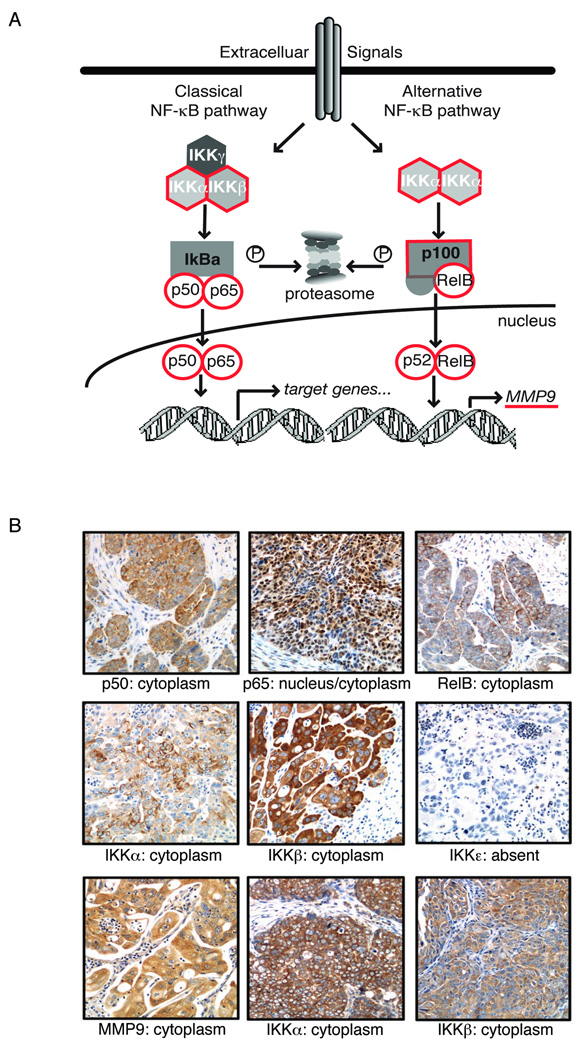
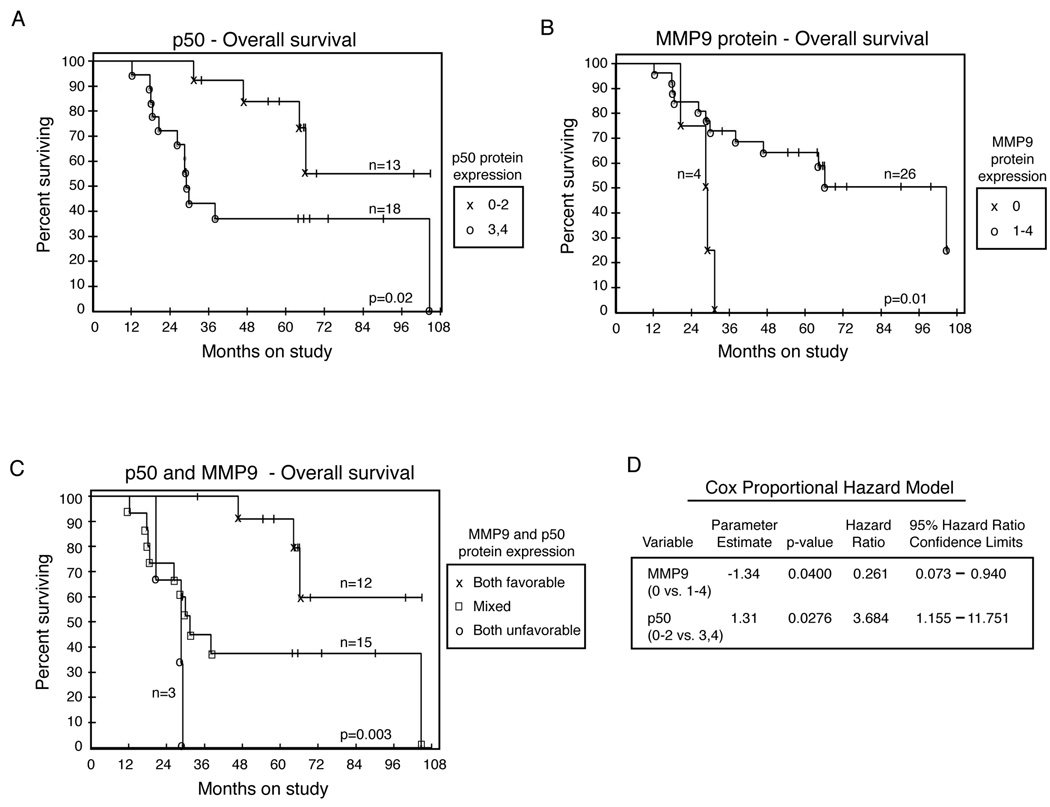
Results: The presence of NF-kappaB proteins in newly diagnosed advanced ovarian cancers was established, and a potential association with overall survival was identified. Transcription factors p65 and v-rel reticuloendotheliosis viral oncogene homolog B (RelB) were coexpressed with IkappaB kinase alpha, 1 component of a key trimolecular regulatory complex. Coexpression of the NF-kappaB machinery suggested activity of NF-kappaB signaling in these ovarian tumors. A significant association of p50 with poor overall survival was observed (P = .02). MMP9 expression had the opposite association, in which patients who had tumors without MMP9 staining had the poorest prognosis (P = .01), and this association held true at the gene expression level in an independently collected cohort of 185 ovarian cancers.
Conclusions: The deregulation of NF-kappaB activity may influence outcome in women who receive standard therapy for advanced ovarian cancer. Modification of the NF-kappaB pathway may present an opportunity to improve outcome in the subset of women who have pathway activity.
Figures
References
-
- Karin M. Nuclear factor-kappaB in cancer development and progression. Nature. 2006;441(7092):431–436. Available from http://www.ncbi.nlm.nih.gov/entrez/query.fcgi?cmd=Retrieve&db=PubMed&dop.... - PubMed
-
- Lin YG, Kunnumakkara AB, Nair A, Merritt WM, Han LY, Armaiz-Pena GN, et al. Curcumin inhibits tumor growth and angiogenesis in ovarian carcinoma by targeting the nuclear factor-kappaB pathway. Clin Cancer Res. 2007;13(11):3423–3430. Available from http://www.ncbi.nlm.nih.gov/entrez/query.fcgi?cmd=Retrieve&db=PubMed&dop.... - PubMed
-
- Kelly MG, Alvero AB, Chen R, Silasi DA, Abrahams VM, Chan S, et al. TLR-4 signaling promotes tumor growth and paclitaxel chemoresistance in ovarian cancer. Cancer Res. 2006;66(7):3859–3868. Available from http://www.ncbi.nlm.nih.gov/entrez/query.fcgi?cmd=Retrieve&db=PubMed&dop.... - PubMed
-
- Liu GH, Wang SR, Wang B, Kong BH. Inhibition of nuclear factor-kappaB by an antioxidant enhances paclitaxel sensitivity in ovarian carcinoma cell line. Int J Gynecol Cancer. 2006;16(5):1777–17782. Available from http://www.ncbi.nlm.nih.gov/entrez/query.fcgi?cmd=Retrieve&db=PubMed&dop.... - PubMed
-
- Solomon LA, Ali S, Banerjee S, Munkarah AR, Morris RT, Sarkar FH. Sensitization of ovarian cancer cells to cisplatin by genistein: the role of NF-kappaB. J Ovarian Res. 2008;1(1):9. Available from http://www.ncbi.nlm.nih.gov/entrez/query.fcgi?cmd=Retrieve&db=PubMed&dop.... - PMC - PubMed
Publication types
MeSH terms
Substances
Grants and funding
LinkOut - more resources
Full Text Sources
Medical
Research Materials
Miscellaneous
