


Intensity-modulated radiation therapy versus para-aortic field radiotherapy to treat para-aortic lymph node metastasis in cervical cancer: prospective study
- PMID: 20564766
- PMCID: PMC2897095
- DOI: 10.3325/cmj.2010.51.229
Intensity-modulated radiation therapy versus para-aortic field radiotherapy to treat para-aortic lymph node metastasis in cervical cancer: prospective study
Abstract
Aim: To compare dosimetry, efficacy, and toxicity of intensity-modulated radiation therapy (IMRT) with para-aortic field radiotherapy in patients with para-aortic lymph node (PALN) metastasis of cervical cancer.
Methods: This prospective study examined 60 patients with cervical cancer with PALN metastasis who underwent whole-pelvis radiotherapy followed by brachytherapy between November 1, 2004 and May 31, 2008. After 3 cycles of chemotherapy, patients were serially allocated into two groups and treated with IMRT or para-aortic field RT at doses of 58-68 Gy and 45-50 Gy, respectively. Treatment response was evaluated and toxicities were assessed. Patients in the IMRT group were treated with both para-aortic field RT and IMRT in order to compare the exposure dose of organs at risk.
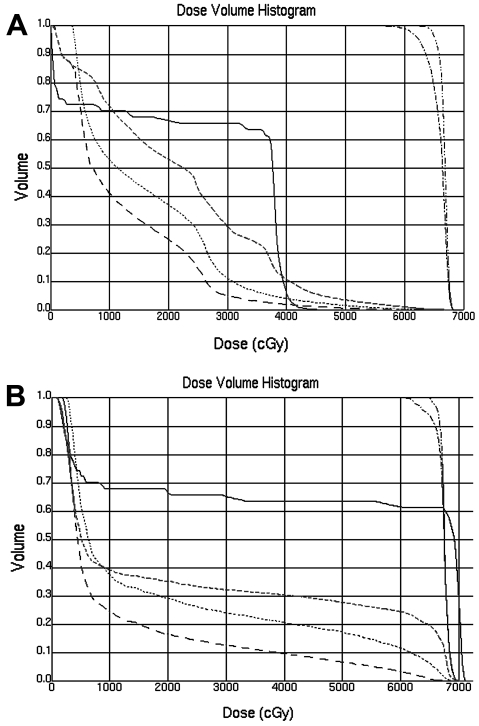
Results: In the IMRT group, the mean dose delivered to the planning target volume was 67.5 Gy. At least 99% of the gross tumor volume received effective coverage and radical dose (median, 63.5 Gy; range, 54.5-66) during treatment. IMRT plans yielded better dose conformity to the target and better sparing of the spinal cord and small intestine than para-aortic field RT. The IMRT patients experienced less acute and chronic toxicities. The IMRT group also had higher 2- and 3-year survival rates than the para-aortic RT group (2-year, 58.8% vs 25.0%, P = 0.019; 3-year, 36.4% vs 15.6%, P = 0.016). However, no significant difference was found in 1-year survival (67.7% vs 51.3%, P =0.201). The median survival in the IMRT group was 25 months (range, 3 to 37 months). The actuarial overall survival, disease-free survival, and locoregional control rates at 2 years were 67%, 77%, and 88%, respectively, in the IMRT group.
Conclusions: IMRT provides better clinical outcomes than para-aortic field radiotherapy in patients with PALN metastasis. However, cervical local and distal recurrence remain a problem. Long-term follow-up and studies involving more patients are needed to confirm our results.
Figures


References
-
- Hong JH, Tsai CS, Lai CH, Chang TC, Wang CC, Chou HH, et al. Recurrent squamous cell carcinoma of cervix after definitive radiotherapy. Int J Radiat Oncol Biol Phys. 2004;60:249–57. - PubMed
-
- Chou HH, Wang CC, Lai CH, Hong JH, Ng KK, Chang TC, et al. Isolated paraaortic lymph node recurrence after definitive irradiation for cervical carcinoma. Int J Radiat Oncol Biol Phys. 2001;51:442–8. - PubMed
-
- Fletcher GH, Rutledge FN. Extended field technique in the management of the cancer of the uterine cervix. Am J Roent Rad Therapy Nucle Med. 1972;114:116–22. - PubMed
-
- Ahamad A, D'Souza W, Salehpour M, Iyer R, Tucker SL, Jhingran A, et al. Intensity-modulated radiation therapy after hysterectomy: comparison with conventional treatment and sensitivity of the normal-tissue-sparing effect to margin size. Int J Radiat Oncol Biol Phys. 2005;62:1117–24. - PubMed
