


Introducing a multi-site program for early diagnosis of HIV infection among HIV-exposed infants in Tanzania
- PMID: 20565786
- PMCID: PMC2907368
- DOI: 10.1186/1471-2431-10-44
Introducing a multi-site program for early diagnosis of HIV infection among HIV-exposed infants in Tanzania
Abstract
Background: In Tanzania, less than a third of HIV infected children estimated to be in need of antiretroviral therapy (ART) are receiving it. In this setting where other infections and malnutrition mimic signs and symptoms of AIDS, early diagnosis of HIV among HIV-exposed infants without specialized virologic testing can be a complex process. We aimed to introduce an Early Infant Diagnosis (EID) pilot program using HIV DNA Polymerase Chain Reaction (PCR) testing with the intent of making EID nationally available based on lessons learned in the first 6 months of implementation.
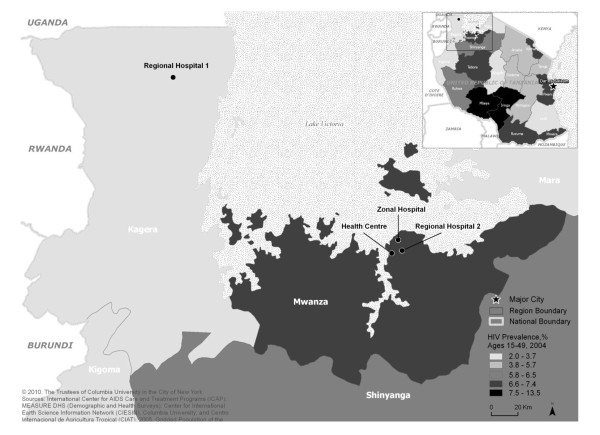
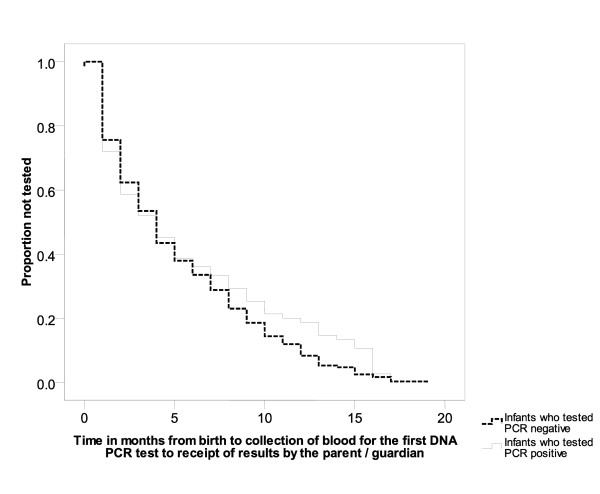
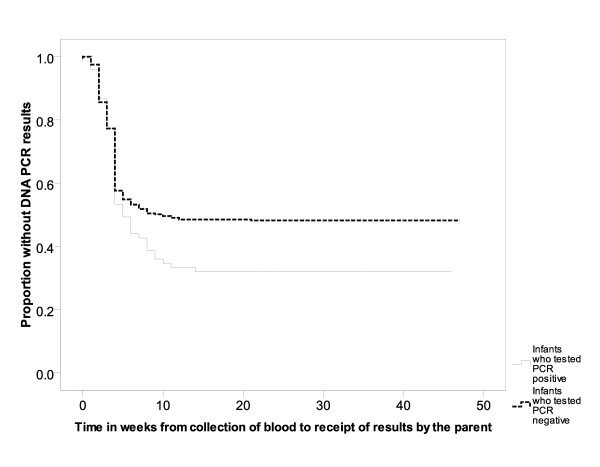
Methods: In September 2006, a molecular biology laboratory at Bugando Medical Center was established in order to perform HIV DNA PCR testing using Dried Blood Spots (DBS). Ninety-six health workers from 4 health facilities were trained in the identification and care of HIV-exposed infants, HIV testing algorithms and collection of DBS samples. Paper-based tracking systems for monitoring the program that fed into a simple electronic database were introduced at the sites and in the laboratory. Time from birth to first HIV DNA PCR testing and to receipt of test results were assessed using Kaplan-Meier curves.
Results: From October 2006 to March 2007, 510 HIV-exposed infants were identified from the 4 health facilities. Of these, 441(87%) infants had an HIV DNA PCR test at a median age of 4 months (IQR 1 to 8 months) and 75(17%) were PCR positive. Parents/guardians for a total of 242(55%) HIV-exposed infants returned to receive PCR test results, including 51/75 (68%) of those PCR positive, 187/361 (52%) of the PCR negative, and 4/5 (80%) of those with indeterminate PCR results. The median time between blood draw for PCR testing and receipt of test results by the parent or guardian was 5 weeks (range <1 week to 14 weeks) among children who tested PCR positive and 10 weeks (range <1 week to 21 weeks) for those that tested PCR negative.
Conclusions: The EID pilot program successfully introduced systems for identification of HIV-exposed infants. There was a high response as hundreds of HIV-exposed infants were registered and tested in a 6 month period. Challenges included the large proportion of parents not returning for PCR test results. Experience from the pilot phase has informed the national roll-out of the EID program currently underway in Tanzania.
Figures
References
-
- UNAIDS. 2008 Report on the global AIDS epidemic. Geneva; 2008. http://www.unaids.org/en/KnowledgeCentre/HIVData/GlobalReport/2008/defau...
-
- WHO, UNAIDS, UNICEF. TOWARDS UNIVERSAL ACCESS Scaling up priority HIV/AIDS interventions in the health sector 2009. 2009. http://www.who.int/hiv/pub/tuapr_2009_en.pdf
-
- Mphatswe W, Blanckenberg N, Tudor-Williams G, Prendergast A, Thobakgale C, Mkhwanazi N, McCarthy N, Walker BD, Kiepiela P, Goulder P. High frequency of rapid immunological progression in African infants infected in the era of perinatal HIV prophylaxis. AIDS. 2007;21(10):1253–1261. doi: 10.1097/QAD.0b013e3281a3bec2. - DOI - PubMed
Publication types
MeSH terms
Substances
Grants and funding
LinkOut - more resources
Full Text Sources
Medical
