


An up-date on the prevalence of sickle cell trait in Eastern and Western Uganda
- PMID: 20569434
- PMCID: PMC2905339
- DOI: 10.1186/1471-2326-10-5
An up-date on the prevalence of sickle cell trait in Eastern and Western Uganda
Abstract
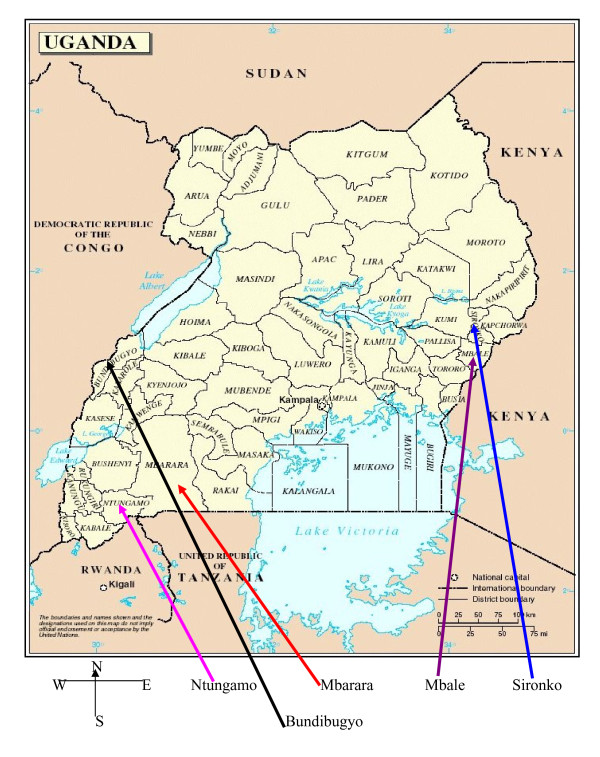
Background: The first survey on sickle cell disease (SCD) done in Uganda in 1949, reported the district of Bundibugyo in Western Uganda to have the highest sickle cell trait (SCT) prevalence (45%). This is believed to be the highest in the whole world. According to the same survey, the prevalence of SCT in the districts of Mbale and Sironko in the East was 20-28%, whilst the districts of Mbarara and Ntungamo in the West had 1-5%. No follow-up surveys have been conducted over the past 60 years. SCA accounts for approximately 16.2% of all pediatric deaths in Uganda. The pattern of SCT inheritance, however, predicts likely changes in the prevalence and distribution of the SCT. The objective of the study therefore was to establish the current prevalence of the SCT in Uganda.
Methods: This study was a cross sectional survey which was carried out in the districts of Mbale and Sironko in the Eastern, Mbarara/Ntungamo and Bundibugyo in Western Uganda. The participants were children (6 months-5 yrs). Blood was collected from each subject and analyzed for hemoglobin S using cellulose acetate Hb electrophoresis.
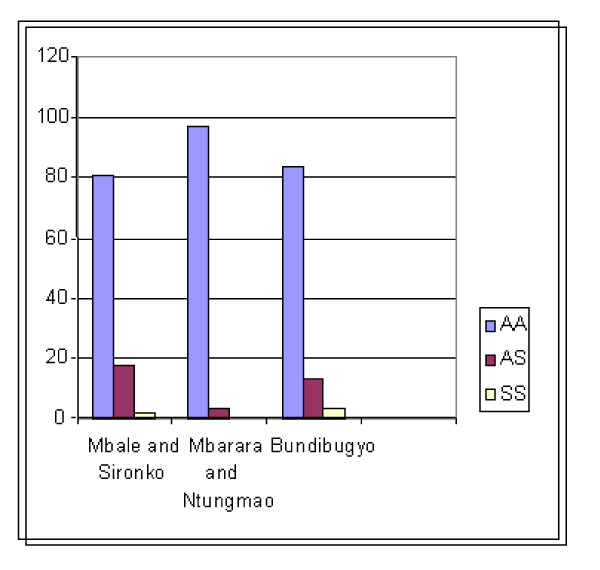
Results: The established prevalence of the SCT (As) in Eastern Uganda was 17.5% compared to 13.4% and 3% in Bundibugyo and Mbarara/Ntungamo respectively. 1.7% of the children in Eastern Uganda tested positive for haemoglobin ss relative to 3% in Bundibugyo, giving gene frequencies of 0.105 and 0.097 for the recessive gene respectively. No ss was detected in Mbarara/Ntungamo.
Conclusions: A shift in the prevalence of the SCT and ss in Uganda is notable and may be explained by several biological and social factors. This study offers some evidence for the possible outcome of intermarriages in reducing the incidence of the SCT.
Figures
References
-
- Kwaku O. Newborn Screening for Sickle Cell Disease in Ghana. 10 Years of Testing, Tracking and Follow-up. http://www.ghanaweb.com/Ghana/HomePage/NewsArcive/artkel.php?
-
- Rahimy MC, Gangbo A, Ahouignan G, Adjou R, Deguenon C, Goussanou S, Alihonou E. Effect of a comprehensive clinical care programme on disease course in severely ill children with sickle cell anemia in a sub-Saharan Africa setting. Blood. 2003;102:834–838. doi: 10.1182/blood-2002-05-1453. - DOI - PubMed
-
- Akinjanju OO. Sickle cell disorders. The Nigeria Family Practice. 1994;3:24–30.
LinkOut - more resources
Full Text Sources
Research Materials
Miscellaneous
