


Endovascular treatment of incoercible epistaxis and epidural cerebral hematoma. A case report
- PMID: 20569576
- PMCID: PMC3354540
- DOI: 10.1177/159101990601200305
Endovascular treatment of incoercible epistaxis and epidural cerebral hematoma. A case report
Abstract
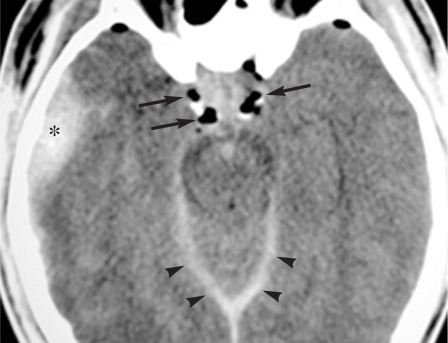
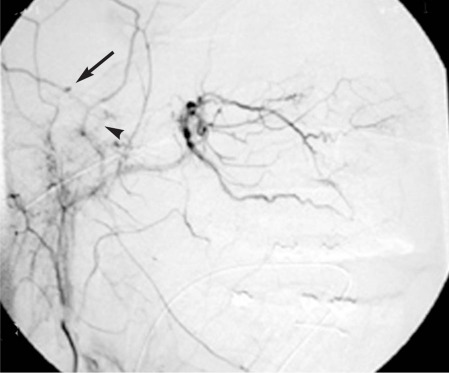
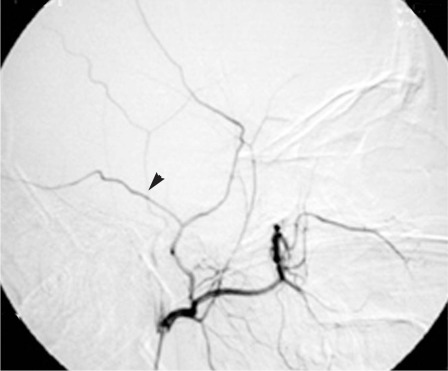
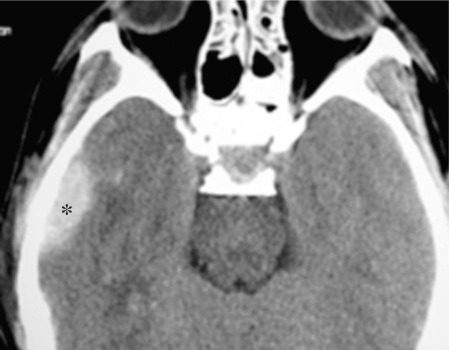
A young patient with a facial trauma after a road accident was admitted to our department with incoercible epistaxis. A CT scan showed a right pterional acute epidural hematoma (EDH). Angiography demonstrated multiple sources of bleeding of the right sphenopalatine arteries, cause of the epistaxis, and an intracranial leakage of the right middle meningeal artery, responsible for the EDH. The patient immediately underwent embolization of the right internal maxillary artery and right middle meningeal artery. The procedure stopped the epistaxis and no further enlargement of the EDH was observed, avoiding its surgical treatment. Endovascular surgery may be an effective procedure to stop the arterial meningeal bleeding sustaining acute EDH and may be a useful tool in the management of special cases of post traumatic EDH.
Figures
References
-
- Bejjani GK, Donahue DJ, Rusin J. Radiological and clinical criteria for the management of epidural hematomas in children. Pediatr Neurosurg. 1996;25:302–308. - PubMed
-
- Bezircioglu H, Ersahin Y, et al. Nonoperative treatment of acute extradural hematomas: analysis of 80 cases. J Trauma. 1996;41:696–698. - PubMed
-
- Bricolo AP, Pasut LM. Extradural hematoma: toward zero mortality. Neurosurgery. 1984;14:8–12. - PubMed
-
- Bullock R, Smith RM, Dellen JR. Non-operative management of extradural hematoma. Neurosurgery. 1985;16:602–605. - PubMed
-
- Chen TY, Wong CW, et al. The expectant treatment of "asymptomatic" supratentorial epidural hematomas. Neurosurgery. 1993;32:176–179. - PubMed
LinkOut - more resources
Full Text Sources
