


Oxidative damage to RNA but not DNA in the hippocampus of patients with major mental illness
- PMID: 20569644
- PMCID: PMC2928282
- DOI: 10.1503/jpn.090083
Oxidative damage to RNA but not DNA in the hippocampus of patients with major mental illness
Abstract
Background: Oxidative damage in the central nervous system is increasingly recognized as an important pathological process in many diseases. Previously, our laboratory found that oxidative damage to lipids and proteins was increased in postmortem brain tissue from patients with bipolar disorder and schizophrenia. In the current study, we analyzed oxidative damage to nucleic acids in the CA1, CA3 and dentate gyrus regions of postmortem hippocampus tissue from patients with bipolar disorder, schizophrenia and major depression.
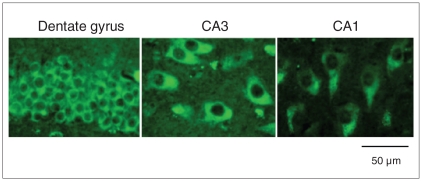
Methods: We examined oxidative damage to nucleic acids by performing immunohistochemistry with a monoclonal antibody that recognizes both 8-hydroxy-guanosine in RNA and 8-hydroxy-2'-deoxyguanosine in DNA.
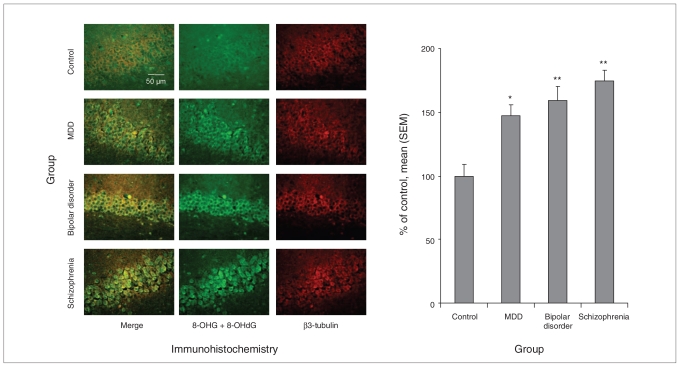
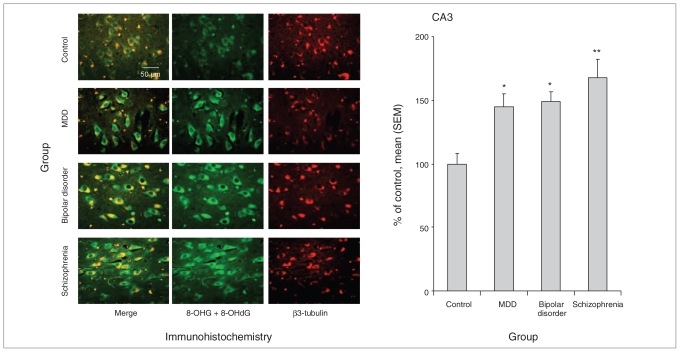
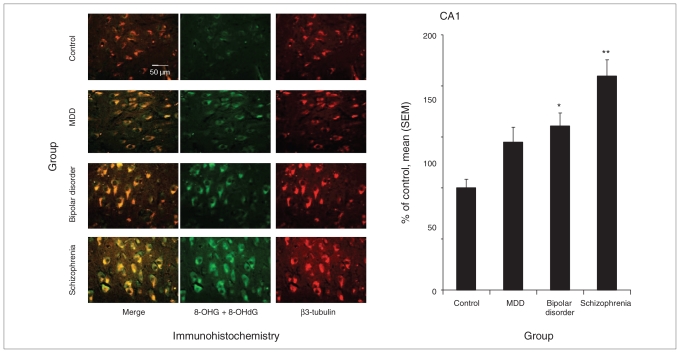
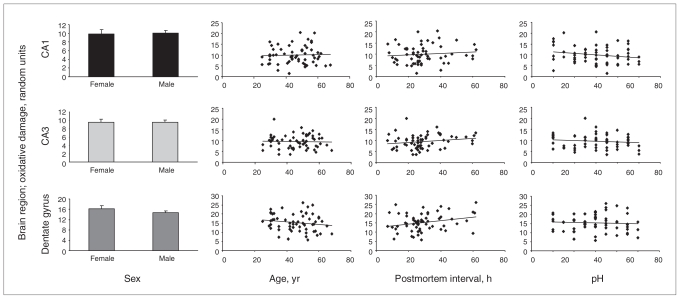
Results: We found that the amount of oxidative damage to nucleic acids was elevated in the CA1, CA3 and dentate gyrus regions of the hippocampus among patients with bipolar disorder, schizophrenia and major depressive disorder. This damage was predominantly in the cytoplasm, suggesting that the damage was primarily to RNA. Compared with oxidative damage in control samples, the magnitude of damage was high in patients with schizophrenia, modest in patients with bipolar disorder and lower in patients with major depression.
Limitations: The interpretation of our results is limited by a number of factors, including the retrospective review of patient history, the relatively small sample size and the inclusion of patients who had substance abuse and were undergoing various drug treatments at the time of death.
Conclusion: Our results suggest that oxidative damage to RNA, rather than to DNA, occurs in vulnerable neurons of the brain in patients with major mental illness and may contribute to the pathology of these disorders. The magnitude of RNA oxidative damage may be associated with the severity of mental illness.
Figures
References
-
- Henchcliffe C, Beal MF. Mitochondrial biology and oxidative stress in Parkinson disease pathogenesis. Nat Clin Pract Neurol. 2008;4:600–9. - PubMed
-
- Nunomura A, Moreira PI, Lee HG, et al. Neuronal death and survival under oxidative stress in Alzheimer and Parkinson diseases. CNS Neurol Disord Drug Targets. 2007;6:411–23. - PubMed
-
- Kuloglu M, Ustundag B, Atmaca M, et al. Lipid peroxidation and antioxidant enzyme levels in patients with schizophrenia and bipolar disorder. Cell Biochem Funct. 2002;20:171–5. - PubMed
-
- Ranjekar PK, Hinge A, Hegde MV, et al. Decreased antioxidant enzymes and membrane essential polyunsaturated fatty acids in schizophrenic and bipolar mood disorder patients. Psychiatry Res. 2003;121:109–22. - PubMed
-
- Benes FM, Matzilevich D, Burke RE, et al. The expression of proapoptosis genes is increased in bipolar disorder, but not in schizophrenia. Mol Psychiatry. 2006;11:241–51. - PubMed
Publication types
MeSH terms
Substances
Grants and funding
LinkOut - more resources
Full Text Sources
Medical
Miscellaneous